Susan B. Anthony Votes Illegally in the 1872 U.S. Presidential Election
1872 · Rochester, United States
Susan B. Anthony voted illegally in the U.S. presidential election, leading to her arrest and trial.
May 15, 1869
Susan B. Anthony and Elizabeth Cady Stanton formed the National Woman Suffrage Association in New York City, advocating for women's voting rights in the United States.
New York City, United States | National Woman Suffrage Association
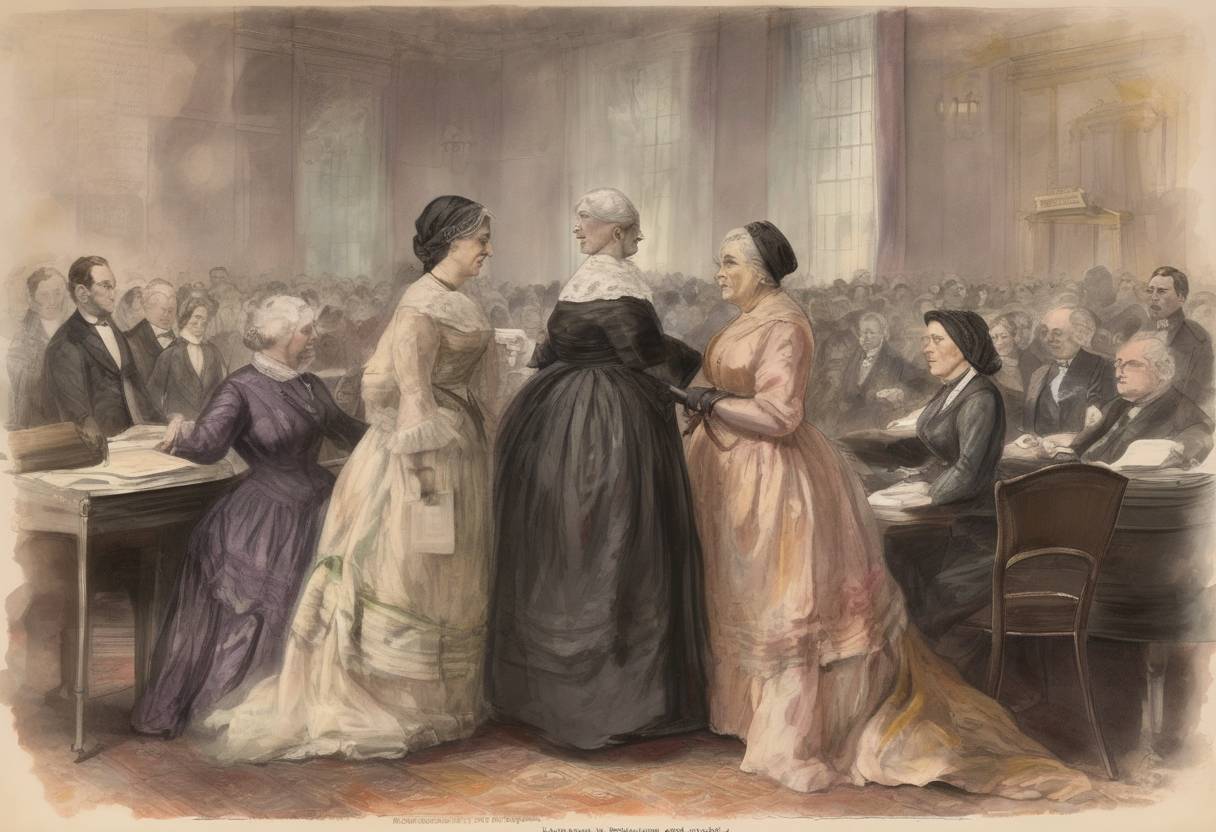
On May 15, 1869, two prominent figures in the American women’s suffrage movement, Susan B. Anthony and Elizabeth Cady Stanton, founded the National Woman Suffrage Association (NWSA) in New York City. This pivotal event marked a significant moment in the struggle for women’s voting rights in the United States.
The mid-19th century was a period of intense social reform in the United States, with movements advocating for abolition, temperance, and women’s rights gaining momentum. Elizabeth Cady Stanton and Susan B. Anthony emerged as leading advocates for women’s suffrage, having worked together since the early 1850s. Their collaboration was instrumental in organizing the first women’s rights convention at Seneca Falls in 1848, which produced the Declaration of Sentiments, a document demanding equal rights for women, including the right to vote.
The formation of the NWSA was partly a response to the 15th Amendment, which granted African American men the right to vote but did not extend this right to women. Stanton and Anthony, who were disappointed by the exclusion of women from this amendment, decided to create an organization that would focus solely on securing women’s suffrage at the national level.
The NWSA aimed to achieve its goals through a variety of strategies, including lobbying Congress for a constitutional amendment, challenging laws in court, and raising public awareness through speeches and publications. Unlike other suffrage organizations of the time, the NWSA was open to both men and women, although it was led primarily by women.
Constitutional Amendment: The NWSA’s primary objective was to secure a federal constitutional amendment that would grant women the right to vote. This approach differed from other groups that focused on achieving suffrage state by state.
Public Advocacy: The association organized national conventions, delivered lectures, and published articles to educate the public and garner support for women’s suffrage.
Legal Challenges: The NWSA also pursued legal strategies, including court cases that challenged voting restrictions based on gender.
The NWSA played a crucial role in the women’s suffrage movement, laying the groundwork for future successes. In 1890, the NWSA merged with the American Woman Suffrage Association (AWSA), which had focused on state-level suffrage efforts, to form the National American Woman Suffrage Association (NAWSA). This unification strengthened the movement, eventually leading to the passage of the 19th Amendment in 1920, which granted women the right to vote.
The efforts of Susan B. Anthony and Elizabeth Cady Stanton, through the NWSA, were instrumental in advancing the cause of women’s rights and have left a lasting legacy in the fight for gender equality in the United States.
Source: en.wikipedia.org