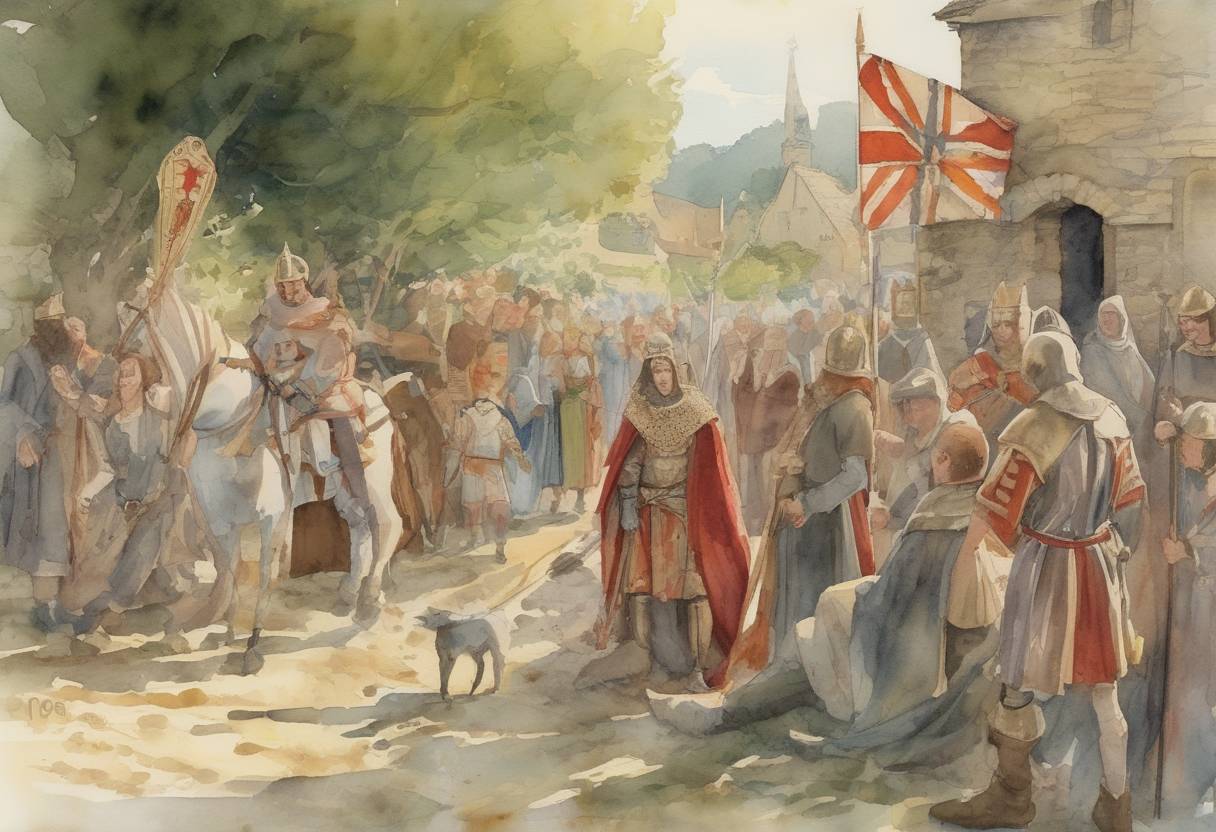
The Death of Saint Kenelm
Historical Context
Saint Kenelm, a figure shrouded in legend and medieval hagiography, is traditionally believed to have died on July 17, 709. He was a child king of Mercia, a powerful Anglo-Saxon kingdom in what is now central England. His story, though embellished over centuries, reflects the complex interplay of politics, religion, and folklore in early medieval England.
The Legend of Saint Kenelm
According to the legend, Kenelm was the son of King Coenwulf of Mercia. Upon his father’s death, Kenelm, still a child, ascended to the throne. His youth and innocence made him a vulnerable figure, and his story is marked by betrayal and intrigue.
The Betrayal
The most popular version of Kenelm’s story involves his ambitious sister, Cwenthryth, who allegedly plotted to murder him to seize power. She is said to have conspired with Kenelm’s tutor, Ascebert, to carry out the deed. The young king was taken to the Clent Hills, where he was killed while hunting.
The Vision and Discovery
The legend further narrates that Kenelm had a prophetic dream foretelling his death, which he shared with his nurse. After his murder, a white dove is said to have flown to Rome, delivering a message to the Pope about the crime. This miraculous event led to the discovery of Kenelm’s body, which was found thanks to a divine revelation.
Veneration as a Saint
Kenelm’s story quickly spread, and he was venerated as a martyr and saint. His shrine at Winchcombe became a popular pilgrimage site during the medieval period. The narrative of his life and death was recorded in various medieval texts, including the 12th-century “South English Legendary.”
Cultural Impact
The legend of Saint Kenelm became a part of the rich tapestry of English folklore and religious tradition. His story was included in the “Golden Legend,” a collection of hagiographies that was widely read in medieval Europe. Kenelm’s tale reflects the medieval fascination with martyrdom, innocence, and divine justice.
Historical Significance
While the historical accuracy of Kenelm’s story is debated, its significance lies in its reflection of the values and beliefs of medieval society. The narrative underscores themes of innocence, betrayal, and divine intervention, which were central to the medieval worldview. Kenelm’s veneration as a saint highlights the importance of local cults and the role of hagiography in shaping religious and cultural identity in medieval England.
In summary, the legend of Saint Kenelm, though rooted in folklore, offers insights into the medieval imagination and the ways in which stories of martyrdom and sainthood were used to convey moral and spiritual lessons.