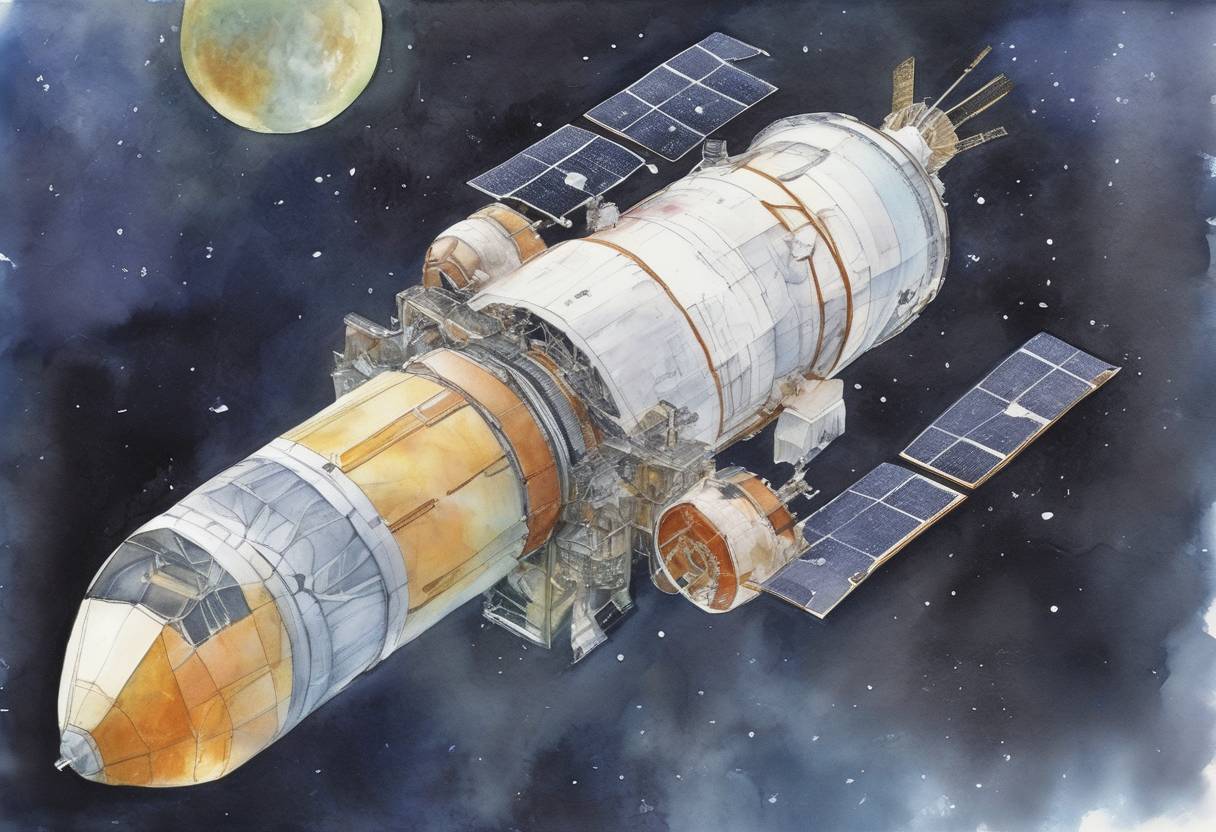
SMART-1 Spacecraft Launch: September 27, 2003
On September 27, 2003, the European Space Agency (ESA) launched the SMART-1 spacecraft, marking a significant milestone as Europe’s first mission to the Moon. The mission was primarily aimed at testing innovative technologies in space exploration, particularly focusing on propulsion and communication systems.
Key Objectives and Technologies
1. Ion Propulsion System
SMART-1 was equipped with a solar-powered ion propulsion system, a pioneering technology at the time. This system used electricity generated by solar panels to ionize xenon gas, creating thrust. The ion engine was more efficient than traditional chemical propulsion, allowing the spacecraft to travel longer distances with less fuel.
2. Communication Technologies
The mission also tested new communication technologies, including advanced data transmission techniques. These innovations were crucial for improving the efficiency and reliability of communication between spacecraft and ground stations.
3. Scientific Goals
In addition to technological demonstrations, SMART-1 carried scientific instruments to study the Moon’s surface. It aimed to map the lunar surface, analyze its composition, and search for water ice in permanently shadowed craters.
Mission Timeline and Achievements
- Launch: SMART-1 was launched aboard an Ariane 5 rocket from the Guiana Space Centre in French Guiana.
- Journey to the Moon: The spacecraft used its ion propulsion system to gradually spiral out from Earth’s orbit to the Moon, a journey that took approximately 13 months.
- Lunar Orbit: SMART-1 successfully entered lunar orbit in November 2004.
- Scientific Operations: Over the course of its mission, SMART-1 conducted detailed observations of the Moon, providing valuable data for future lunar exploration.
Aftermath and Legacy
SMART-1 concluded its mission on September 3, 2006, when it was deliberately crashed into the Moon’s surface. This planned impact provided additional data on the lunar surface composition.
The mission was considered a success, demonstrating the viability of ion propulsion for long-duration space missions and contributing to the development of future ESA lunar and planetary exploration missions. The technologies tested on SMART-1 have since been incorporated into other space missions, underscoring its lasting impact on space exploration.
Overall, SMART-1 represented a significant step forward for the European Space Agency, showcasing Europe’s growing capabilities in space technology and exploration.