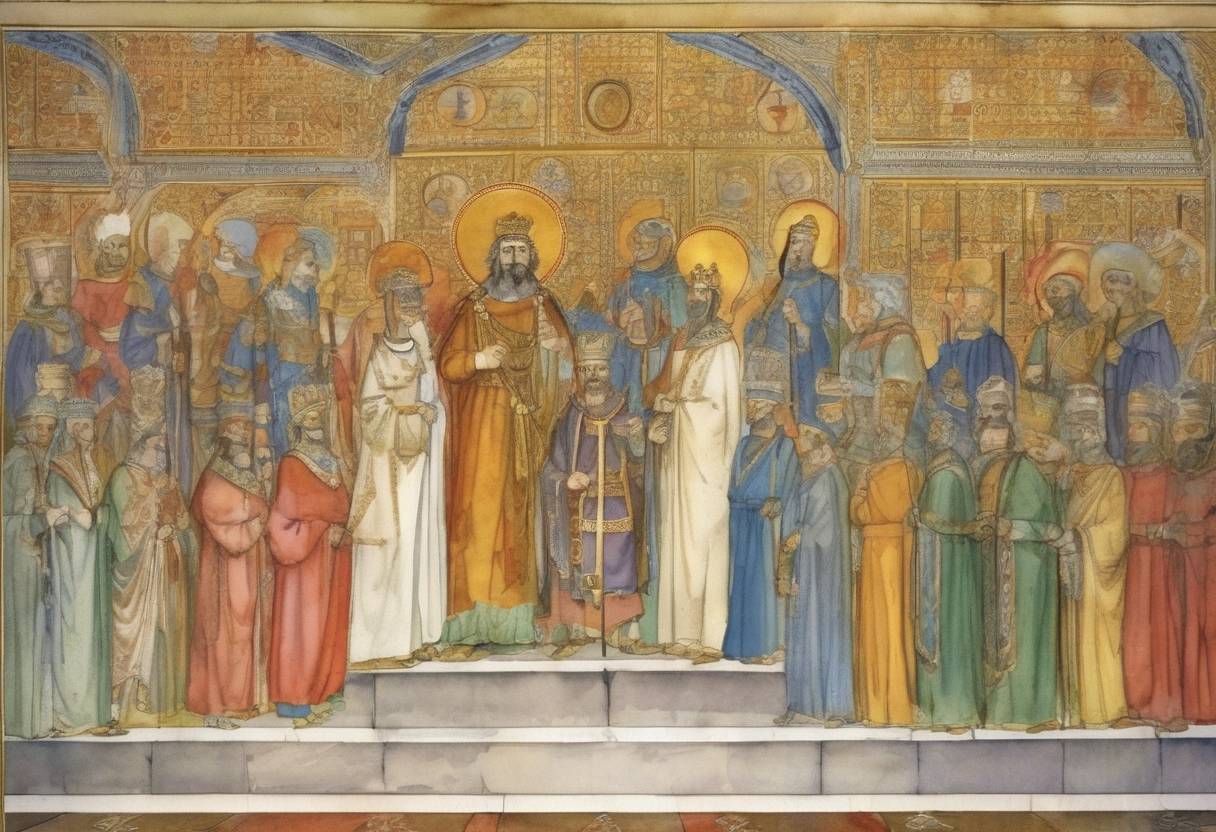
Nikephoros II Phokas Crowned Emperor of the Byzantine Empire
On August 16, 963, Nikephoros II Phokas was crowned Emperor of the Byzantine Empire, marking the beginning of a significant reign characterized by military prowess and internal reforms.
Background
Nikephoros Phokas was born into a prominent military family, the Phokas clan, which had a long history of service to the Byzantine Empire. His father, Bardas Phokas, was a distinguished general, and Nikephoros followed in his footsteps, gaining fame for his military successes, particularly against the Arabs in the East. His reputation as a formidable general was solidified with the recapture of Crete in 961, a major victory for the Byzantine Empire.
Ascension to the Throne
The Byzantine Empire was in a period of instability following the death of Emperor Romanos II in 963. Romanos left behind two young sons, Basil II and Constantine VIII, who were too young to rule. This power vacuum led to a struggle for control, with Nikephoros emerging as a leading candidate due to his military success and support from the army.
Nikephoros was proclaimed emperor by his troops and marched to Constantinople, where he was crowned on August 16, 963. His ascension was supported by the powerful regent and mother of the young emperors, Empress Theophano, whom Nikephoros later married, further solidifying his claim to the throne.
Reign and Achievements
Nikephoros II Phokas’ reign was marked by several key achievements:
Military Campaigns: He continued his military campaigns against the Arabs, securing the eastern frontiers of the empire. His efforts expanded Byzantine territory and strengthened its borders.
Naval Reforms: Nikephoros invested in the Byzantine navy, enhancing its capabilities and ensuring the empire’s dominance in the Mediterranean Sea.
Economic and Administrative Reforms: He implemented fiscal reforms to stabilize the empire’s economy, including measures to curb corruption and improve tax collection.
Religious Policies: Nikephoros was known for his piety and support of monasticism, which influenced his domestic policies. However, his religious zeal sometimes led to tensions with the church hierarchy.
Downfall and Legacy
Despite his successes, Nikephoros II Phokas faced opposition from various factions within the empire, including the aristocracy and the church. His austere lifestyle and heavy taxation policies made him unpopular among the nobility and the populace.
In December 969, Nikephoros was assassinated in a palace coup orchestrated by his former friend and general, John Tzimiskes, with the complicity of Empress Theophano. His death marked the end of his ambitious plans for the empire.
Nikephoros II Phokas is remembered as a warrior emperor whose military and administrative reforms left a lasting impact on the Byzantine Empire. His reign set the stage for the future successes of the Macedonian dynasty, particularly under the rule of Basil II.