The Battle of Worcester: September 3, 1651
1651 · Worcester, England
The Battle of Worcester took place, marking the final battle of the English Civil War, where Oliver Cromwell's Parliamentarian forces defeated the Royalists.
September 3, 1650
The Battle of Dunbar took place during the Third English Civil War, where Oliver Cromwell's forces defeated the Scottish army.
Dunbar, Scotland | Parliamentary Army
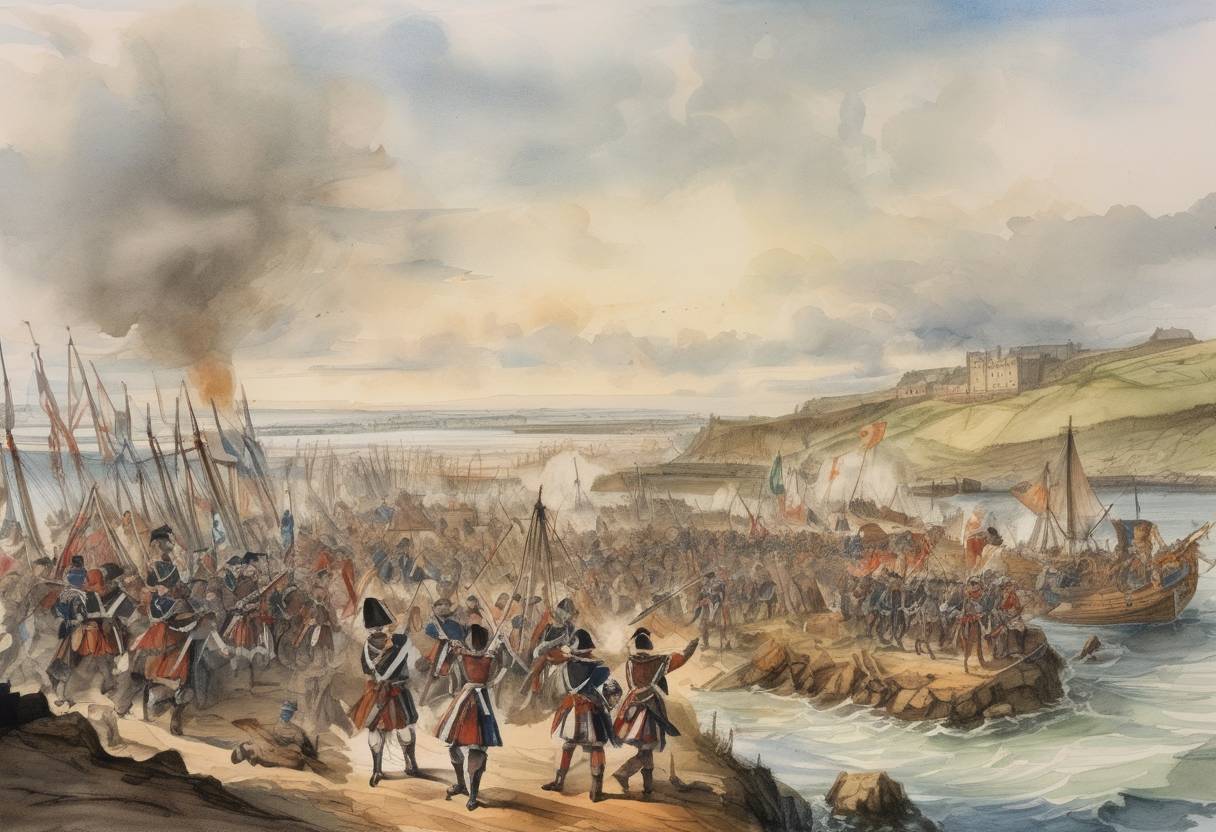
The Battle of Dunbar, fought on September 3, 1650, was a pivotal engagement during the Third English Civil War, marking a significant victory for Oliver Cromwell and his New Model Army against the Scottish Covenanters. This battle not only showcased Cromwell’s military acumen but also had profound implications for the political landscape of Britain.
The Third English Civil War (1649-1651) was a continuation of the conflicts that had embroiled England, Scotland, and Ireland in the mid-17th century. Following the execution of King Charles I in 1649, the English Parliament declared England a Commonwealth. However, the Scots, who had been allies of the English Parliamentarians earlier, were appalled by the regicide and proclaimed Charles II, the son of the executed king, as their monarch.
In response, Oliver Cromwell led a campaign into Scotland to preemptively neutralize the threat posed by the Scottish forces supporting Charles II. The Scots, under the command of David Leslie, were determined to defend their territory and restore the monarchy.
The victory at Dunbar was a turning point in the Third English Civil War. It effectively dismantled the immediate Scottish threat to the English Commonwealth and solidified Cromwell’s reputation as a formidable military leader. The defeat weakened the Royalist cause in Scotland, and Charles II was forced to flee, eventually leading to his exile in France.
The battle also had lasting consequences for Scotland. The defeat allowed Cromwell to establish control over the country, leading to its incorporation into the Commonwealth. This period saw significant political and religious changes, including the imposition of English governance and the suppression of Presbyterianism.
In summary, the Battle of Dunbar was not just a military triumph for Cromwell but a decisive moment that shaped the future of the British Isles, influencing the political and religious dynamics for years to come.
Source: en.wikipedia.org