1570 · Various Cities, Netherlands, England, Germany
The All Saints' Flood devastated parts of the Netherlands, England, and Germany, leading to significant loss of life and property.
November 18, 1421
A storm in the North Sea creates the St. Elizabeth's flood in the Netherlands, killing thousands.
, Netherlands
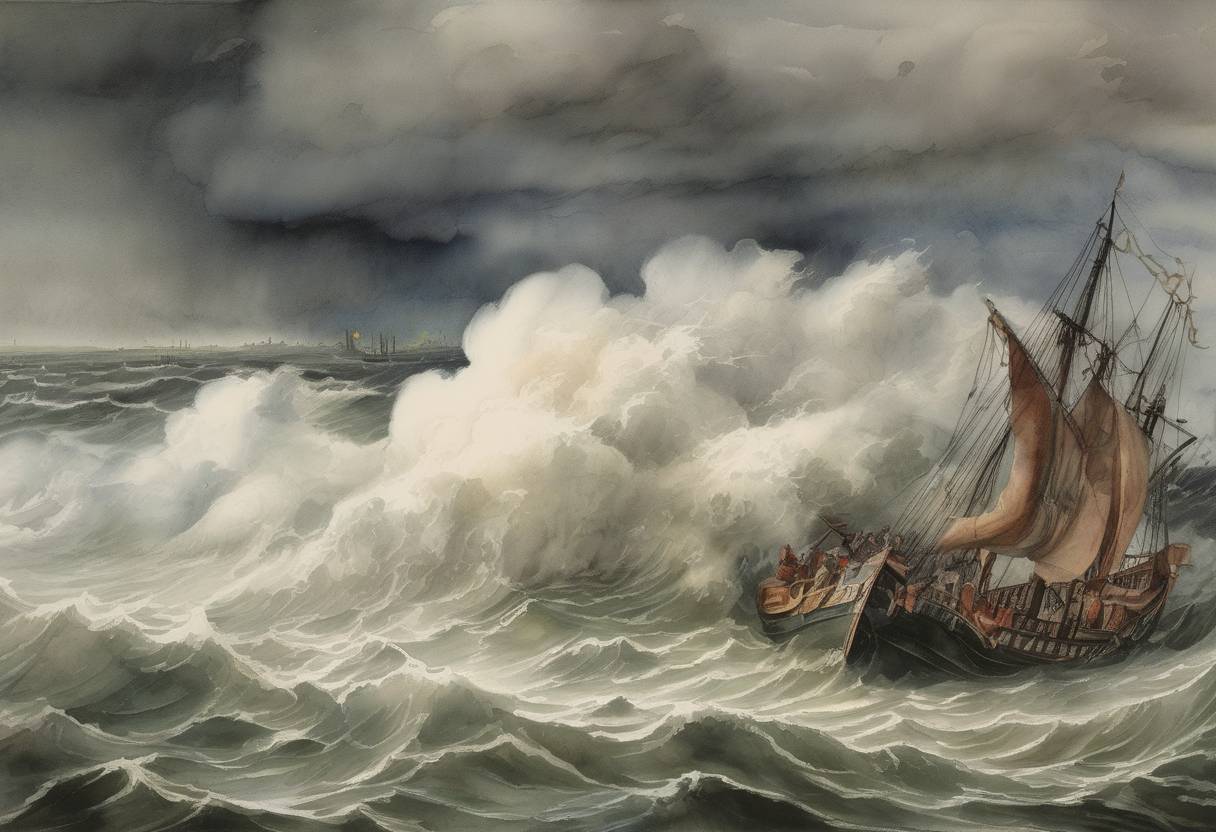
On November 18, 1421, a catastrophic storm in the North Sea led to one of the most devastating floods in Dutch history, known as the St. Elizabeth’s Flood. This natural disaster had profound impacts on the region, both immediate and long-lasting.
The Netherlands, characterized by its low-lying topography, has a long history of battling the sea. By the early 15th century, the region had developed an extensive system of dikes and drainage canals to protect against flooding. However, these defenses were not always sufficient against severe weather events.
The St. Elizabeth’s Flood was triggered by a powerful storm that struck the North Sea, causing water levels to rise dramatically. The storm surge overwhelmed the dikes in several areas, particularly affecting the provinces of Zeeland and South Holland. The floodwaters inundated vast tracts of land, including the polder regions, which were areas of reclaimed land below sea level.
In the wake of the disaster, efforts to improve flood defenses were intensified. The flood highlighted the vulnerabilities in the existing dike systems, prompting advancements in engineering and the construction of more robust barriers. This event also reinforced the Dutch commitment to water management, a legacy that continues to influence the country’s approach to flood prevention and land reclamation.
The St. Elizabeth’s Flood of 1421 is a poignant reminder of the Netherlands’ ongoing struggle with water management. It underscores the importance of resilient infrastructure and the need for continuous innovation in the face of natural challenges. The flood is also a testament to the resilience and adaptability of the Dutch people, who have historically turned adversity into an opportunity for improvement and growth.
In summary, the St. Elizabeth’s Flood was a pivotal event in Dutch history, shaping the nation’s relationship with its environment and laying the groundwork for future advancements in hydraulic engineering.
Source: en.wikipedia.org