The Burning of Washington and the Destruction of the Library of Congress
1814 · Washington, D.C., United States
British forces destroy the Library of Congress during the Burning of Washington in the War of 1812.
August 24, 1814
During the War of 1812, British forces capture Washington, D.C., and set fire to many public buildings, including the White House and the Capitol.
Washington, D.C., United States | British Army
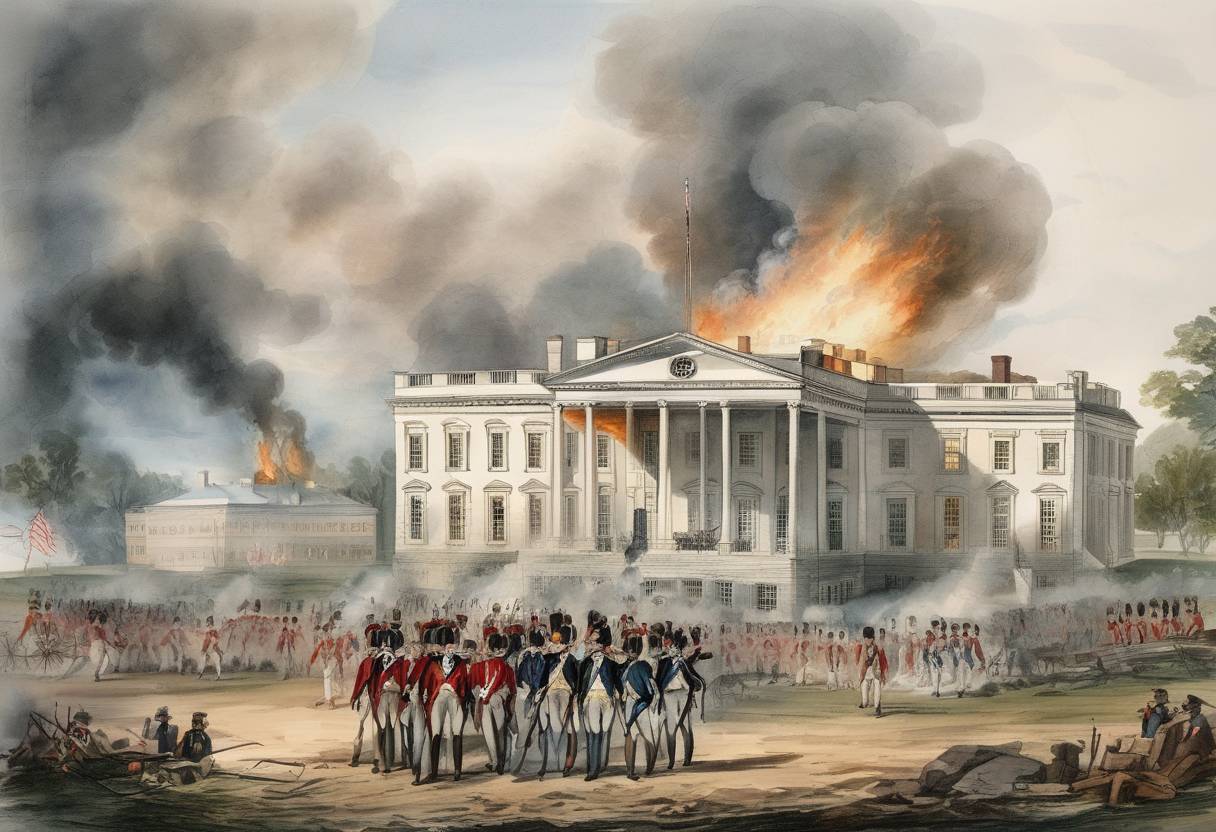
On August 24, 1814, during the War of 1812, British forces captured Washington, D.C., marking a significant and dramatic event in American history. This event is famously known as the Burning of Washington, where British troops set fire to multiple public buildings, including the White House and the Capitol.
The War of 1812, often called the “Second War of Independence,” was primarily fought between the United States and the British Empire. The conflict arose from issues such as trade restrictions due to Britain’s ongoing war with France, the impressment of American sailors into the British Navy, and American expansionist desires.
By 1814, the war had reached a critical point. The British, having defeated Napoleon in Europe, were able to redirect more resources and troops to the American front. This shift in focus allowed the British to launch a series of offensives along the American East Coast.
The British strategy involved a three-pronged attack aimed at the Chesapeake Bay, the Mississippi River, and the Great Lakes. The Chesapeake campaign, led by Major General Robert Ross and Rear Admiral George Cockburn, targeted Washington, D.C., as a symbolic blow to American morale.
On August 24, 1814, British forces, numbering around 4,500 troops, engaged American defenders at the Battle of Bladensburg, just outside Washington. Despite being outnumbered, the British decisively defeated the American forces, who were poorly organized and led. This victory opened the path to the nation’s capital.
Upon entering Washington, British troops set fire to several key government buildings:
The White House: Then known as the Presidential Mansion, it was set ablaze, destroying much of the interior and contents. First Lady Dolley Madison famously saved a portrait of George Washington before fleeing.
The Capitol: The British burned the Capitol building, which housed the Senate and House of Representatives, causing extensive damage.
Other Buildings: The British also targeted the Treasury Building and the War Department, among others.
The fires were a calculated act of retaliation for the American burning of York (modern-day Toronto) in 1813, where American forces had set fire to the Parliament Buildings of Upper Canada.
The burning of Washington was a significant psychological blow to the United States, highlighting vulnerabilities in its defense and governance. However, it also galvanized American resistance and unity. The event did not have a lasting strategic impact, as the British soon withdrew from Washington, partly due to a severe storm that extinguished the fires and caused further damage.
The War of 1812 continued until the Treaty of Ghent was signed on December 24, 1814, effectively ending the conflict. The burning of Washington remains a pivotal moment in American history, symbolizing resilience and the eventual rebuilding of the capital.
The capture and burning of Washington, D.C., on August 24, 1814, stands as a testament to the challenges faced by the young United States during the War of 1812. It underscored the importance of national defense and unity, lessons that would shape the country’s future policies and identity.
Source: en.wikipedia.org