December 16, 1960

A United Airlines DC-8 and a TWA Lockheed Super Constellation collided over Staten Island, New York City, killing all 128 people on both planes and six more on the ground.


New York City, United States | United Airlines, TWA
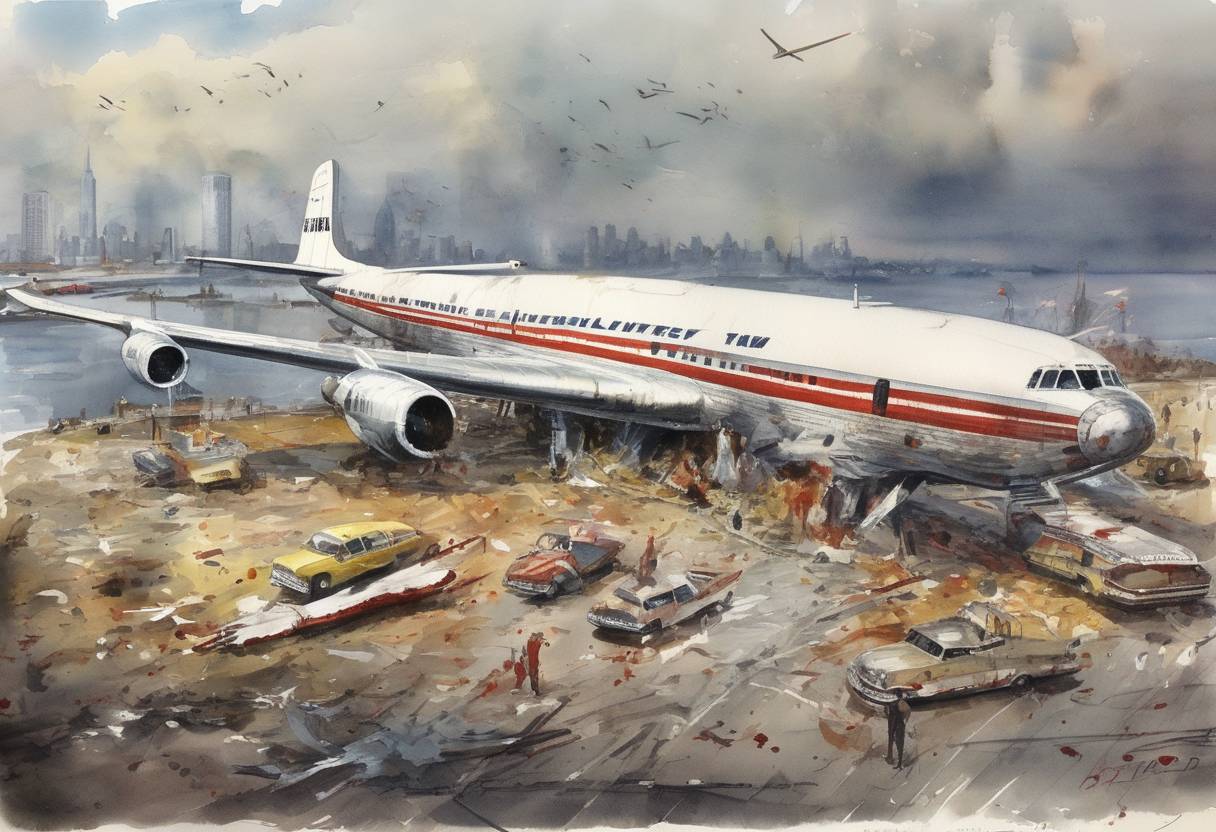
Watercolor painting based depiction of A United Airlines DC-8 and a TWA Lockheed Super Constellation collided over Staten Island, New York City, killing all 128 people on both planes and six more on the ground. (1960)

The 1960 New York City Mid-Air Collision

On December 16, 1960, a tragic mid-air collision occurred over New York City, involving a United Airlines Douglas DC-8 and a Trans World Airlines (TWA) Lockheed L-1049 Super Constellation. This catastrophic event resulted in the deaths of all 128 passengers and crew aboard both aircraft, as well as six individuals on the ground.

Background

United Airlines Flight 826

  • Aircraft: Douglas DC-8
  • Route: From Chicago O’Hare International Airport to Idlewild Airport (now John F. Kennedy International Airport) in New York City.
  • Passengers and Crew: 84 on board.

TWA Flight 266

  • Aircraft: Lockheed L-1049 Super Constellation
  • Route: From Dayton, Ohio, to LaGuardia Airport in New York City, with a stopover in Columbus, Ohio.
  • Passengers and Crew: 44 on board.

The Collision

The collision occurred in the skies over Staten Island, New York City, as both aircraft were preparing to land at their respective airports. The United DC-8 was running behind schedule and was descending faster than normal. Due to poor weather conditions, including light snow and fog, visibility was limited.

Sequence of Events

  • Miscommunication and Navigation Errors: Both aircraft were operating under instrument flight rules, and a series of miscommunications and navigation errors led to their paths intersecting.
  • Impact: At approximately 10:33 AM, the DC-8 struck the Super Constellation at an altitude of about 5,250 feet. The collision caused immediate and catastrophic damage to both planes.

Aftermath

Crash Sites

  • TWA Super Constellation: Crashed onto Miller Field, a military airfield on Staten Island.
  • United DC-8: Continued flying for a short distance before crashing into the Park Slope neighborhood in Brooklyn, causing significant damage to residential buildings and a church.

Casualties

  • Onboard Fatalities: All 128 passengers and crew members on both flights perished.
  • Ground Fatalities: Six people on the ground in Brooklyn were killed due to the crash and ensuing fires.

Investigation and Impact

  • Investigation: The Civil Aeronautics Board (CAB) conducted an investigation, which highlighted issues with air traffic control procedures and the need for improved communication and navigation systems.
  • Regulatory Changes: The disaster led to significant changes in air traffic control protocols and advancements in collision avoidance technology.

Historical Significance

The 1960 New York City mid-air collision remains one of the deadliest aviation disasters in U.S. history. It underscored the critical need for advancements in aviation safety and air traffic management, leading to reforms that have since improved the safety of air travel worldwide. The event is a somber reminder of the importance of rigorous safety standards and effective communication in aviation.