Pope Sylvester II and the Millennium Mass on December 31, 999
999 · Rome, Papal States
Pope Sylvester II celebrated a mass in Rome, marking the end of the first millennium and the beginning of the second.
December 1, 0999
Pope Sylvester II issues a decree that reorganizes the dioceses in Poland, establishing the archbishopric of Gniezno and the bishoprics of Kraków, Wrocław, and Kołobrzeg.
Rome, Papal States | Catholic Church
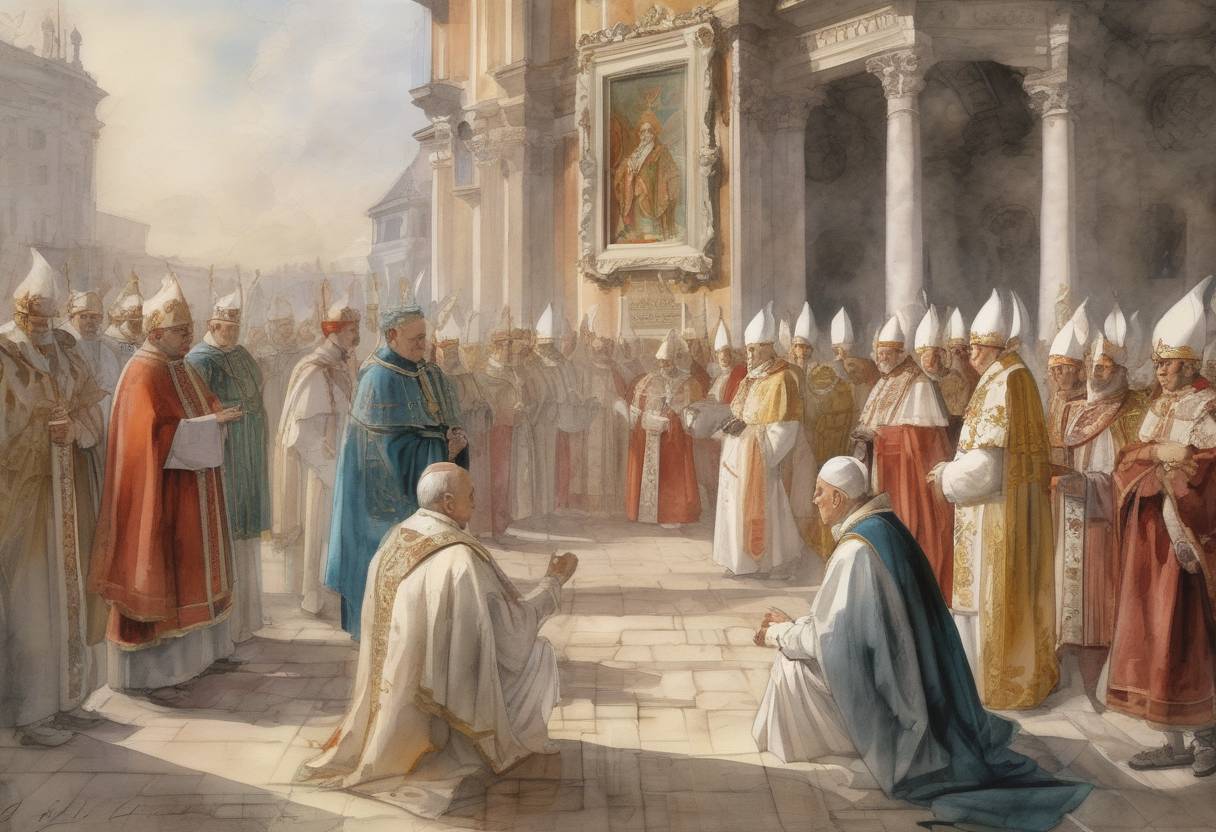
On December 1, 999, Pope Sylvester II issued a significant decree that reorganized the ecclesiastical structure in Poland, a pivotal moment in the Christianization and political consolidation of the region. This decree established the archbishopric of Gniezno and the bishoprics of Kraków, Wrocław, and Kołobrzeg, marking a crucial step in integrating Poland into the Christian world and the broader European ecclesiastical framework.
Christianization of Poland: The Christianization of Poland began in earnest in 966 with the baptism of Duke Mieszko I, the first ruler of the Polish state. This event marked Poland’s entry into the Christian community of Europe, aligning it with the Western Church and the Holy Roman Empire.
Political Ambitions: Mieszko I and his successor, Bolesław I the Brave, sought to strengthen their rule and legitimize their authority through close ties with the Church. Establishing a structured ecclesiastical hierarchy was essential for consolidating power and fostering cultural and political unity.
Archbishopric of Gniezno: The creation of the archbishopric in Gniezno was a monumental development. Gniezno became the ecclesiastical center of Poland, symbolizing the nation’s growing importance within Christendom. The archbishopric provided a direct link to the papacy, enhancing Poland’s religious and political stature.
Bishoprics of Kraków, Wrocław, and Kołobrzeg: These bishoprics were strategically established to cover significant regions of Poland. Kraków, Wrocław, and Kołobrzeg were important urban centers, and their elevation to bishoprics facilitated the spread of Christianity and ecclesiastical governance throughout the Polish territories.
Integration into Christendom: The reorganization solidified Poland’s integration into the Christian world, aligning it more closely with the Holy Roman Empire and the papacy. This alignment was crucial for Poland’s political and cultural development.
Strengthening of Monarchical Power: By establishing a national church hierarchy, the Polish monarchy could exert greater control over religious and secular matters, reinforcing the central authority of the king.
Cultural and Religious Influence: The establishment of these ecclesiastical centers promoted the spread of Christian culture, education, and literacy, contributing to the cultural development of Poland.
In summary, the decree issued by Pope Sylvester II on December 1, 999, was a transformative event in Polish history. It not only redefined the religious landscape of Poland but also played a critical role in shaping its political and cultural trajectory within medieval Europe.
Source: en.wikipedia.org