France Explodes Its First Hydrogen Bomb: August 24, 1968
1968 · Fangataufa, French Polynesia
France explodes its first hydrogen bomb, becoming the world's fifth thermonuclear power.
November 26, 1965
France launches Astérix, its first satellite, becoming the third country to enter space.
Hammaguir, Algeria | French Space Agency
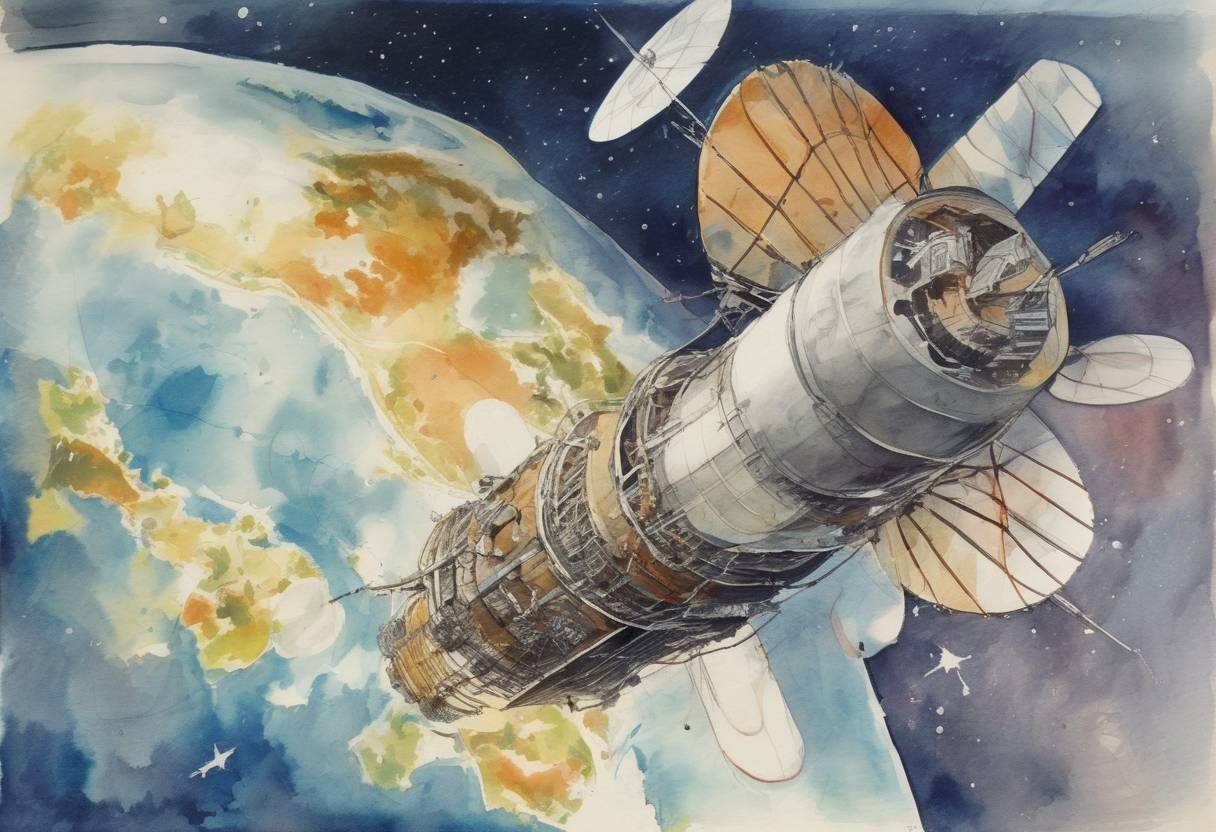
On November 26, 1965, France successfully launched its first satellite, Astérix, marking a significant milestone in the history of space exploration. With this achievement, France became the third country, following the Soviet Union and the United States, to independently launch a satellite into space. This event underscored France’s growing technological capabilities and its ambitions to establish itself as a key player in the space race during the Cold War era.
Post-War Technological Ambitions: After World War II, France was determined to rebuild its technological and military capabilities. The establishment of a national space program was seen as a crucial step in asserting its independence and technological prowess.
Creation of CNES: In 1961, France founded the Centre National d’Études Spatiales (CNES), the French government space agency, to coordinate and advance its space efforts.
Development of the Diamant Rocket: The Diamant rocket, developed by the French military, was pivotal in launching Astérix. It was part of the Pierres Précieuses (Precious Stones) series of rockets, which were designed to provide France with an independent launch capability.
Launch Details: Astérix was launched from the Hammaguir test range in the Algerian Sahara Desert, a site used by France for its early space and military tests.
Technical Specifications: The satellite, weighing approximately 42 kilograms (about 93 pounds), was primarily designed to test the capabilities of the Diamant rocket and to gather data on the launch environment.
Mission Objectives: While Astérix itself had limited scientific objectives, its successful deployment was a demonstration of France’s ability to independently develop and launch a satellite, a significant technical and strategic achievement.
Strategic Implications: The successful launch of Astérix solidified France’s position as a leading space-faring nation and demonstrated its technological independence from the superpowers of the time.
Foundation for Future Programs: This milestone laid the groundwork for future French and European space endeavors, including the development of the Ariane rocket program and the establishment of the European Space Agency (ESA).
Cultural Impact: The satellite was named after the popular French comic book character Astérix, reflecting a sense of national pride and cultural identity associated with the achievement.
In summary, the launch of Astérix on November 26, 1965, was a pivotal moment in the history of space exploration, highlighting France’s entry into the exclusive club of nations capable of launching satellites. It set the stage for future advancements in European space technology and collaboration.
Source: en.wikipedia.org