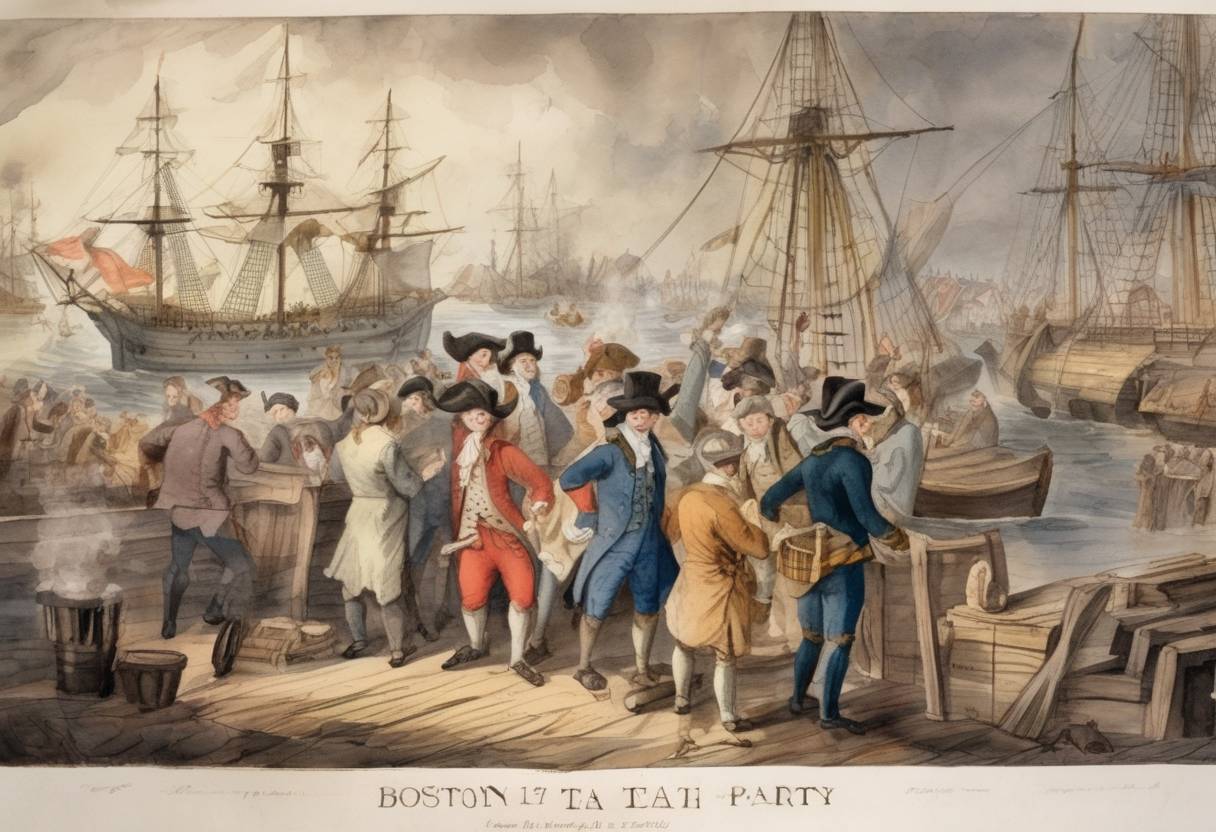
The Boston Tea Party: December 16, 1773
The Boston Tea Party was a pivotal event in American history, marking a significant escalation in the tensions between the American colonists and the British government. This act of defiance against British authority was a direct protest against the Tea Act of 1773, which had been enacted by the British Parliament earlier that year.
Context and Background
The Tea Act of 1773: This legislation was intended to aid the struggling British East India Company by allowing it to sell tea directly to the colonies, bypassing colonial merchants and effectively creating a monopoly. Although the act reduced the price of tea, it maintained the controversial tax imposed by the Townshend Acts, which the colonists opposed on principle as “taxation without representation.”
Colonial Opposition: The Tea Act was seen as another example of Britain’s overreach and infringement on colonial autonomy. Many colonists viewed it as a ploy to force them to accept Parliament’s right to tax them without their consent.
The Event
Planning the Protest: In response to the Tea Act, a group of colonists in Boston, led by the Sons of Liberty, organized a protest. Samuel Adams and other leaders held meetings at the Old South Meeting House to rally support and plan their actions.
The Night of the Tea Party: On the evening of December 16, 1773, a group of approximately 60 colonists, some disguised as Mohawk Indians to symbolize their American identity, boarded three British ships docked in Boston Harbor: the Dartmouth, the Eleanor, and the Beaver.
Destruction of the Tea: The protestors methodically dumped 342 chests of tea, valued at approximately £10,000 (equivalent to over a million dollars today), into the harbor. This act of defiance was carried out peacefully, with strict orders to avoid damage to the ships and other cargo.
Aftermath and Significance
British Response: The British government reacted with outrage, passing the Coercive Acts (known as the Intolerable Acts in the colonies) in 1774. These acts closed Boston Harbor until the tea was paid for, altered the Massachusetts Charter, and allowed royal officials accused of crimes to be tried in Britain.
Colonial Unity: The harsh British response galvanized colonial opposition and unity. The First Continental Congress convened in September 1774, bringing together representatives from twelve of the thirteen colonies to coordinate a response to British policies.
Path to Revolution: The Boston Tea Party and the subsequent punitive measures by Britain set the stage for the American Revolutionary War. It highlighted the growing divide between the colonies and the British government and underscored the colonists’ willingness to take bold action in defense of their rights.
The Boston Tea Party remains a symbol of American resistance and the fight for self-governance, illustrating the power of collective action in the face of perceived injustice.