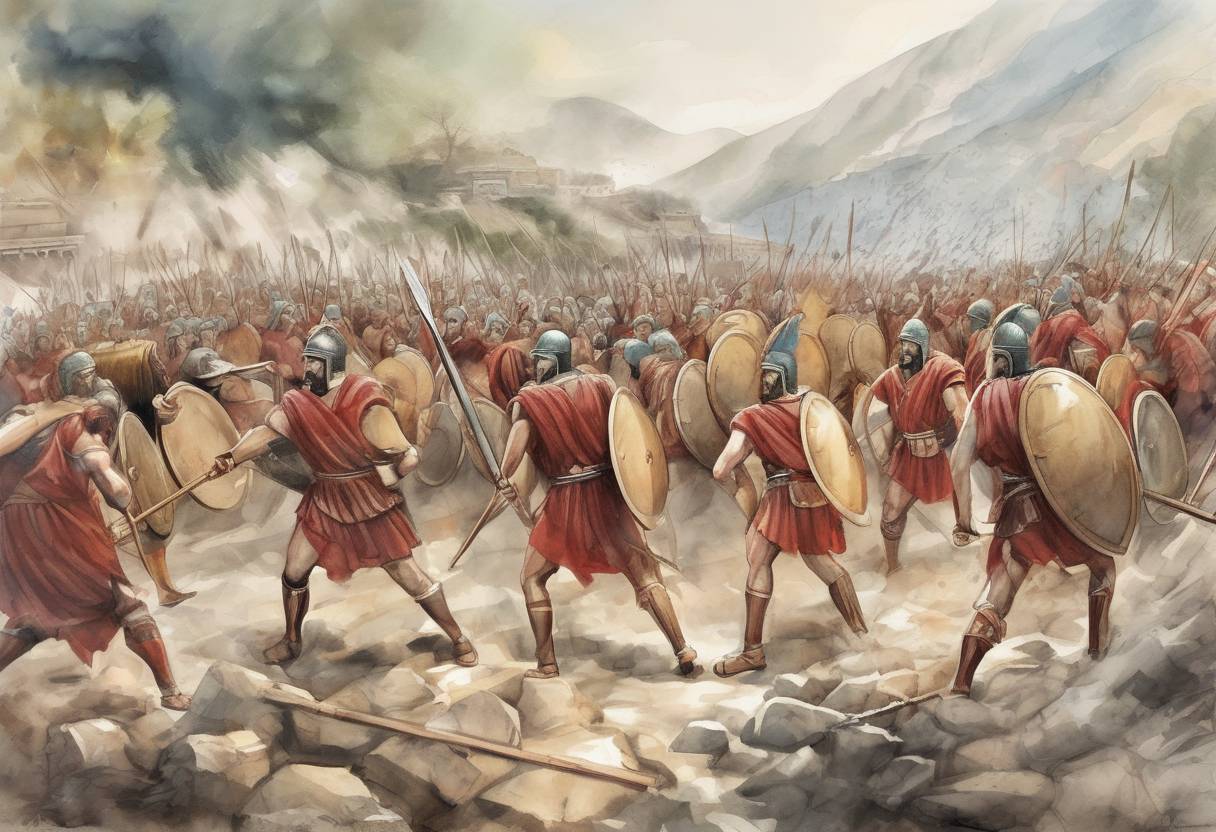
The Battle of Thermopylae: Conclusion on August 11, 480 BCE
The Battle of Thermopylae, a pivotal confrontation during the Greco-Persian Wars, concluded on August 11, 480 BCE, with a Persian victory over the Greek city-states. This battle is renowned for the heroic stand of the Greek forces, particularly the Spartans led by King Leonidas.
Context and Prelude
- Persian Expansion: The Persian Empire, under King Xerxes I, sought to expand its influence into Greece, following the earlier failed invasion attempt by his predecessor, Darius I, at the Battle of Marathon in 490 BCE.
- Greek Alliance: In response to the impending threat, a coalition of Greek city-states, including Sparta and Athens, formed to resist the Persian advance. The strategic plan involved defending the narrow pass at Thermopylae, a chokepoint that could neutralize the numerical advantage of the Persian army.
Key Events Leading to the Battle
- Strategic Location: Thermopylae, known as the “Hot Gates,” was chosen for its narrow pass between the mountains and the sea, ideal for a defensive stand.
- Greek Forces: The Greek contingent was led by King Leonidas of Sparta and consisted of approximately 7,000 men, including the famous 300 Spartans, who were supported by other Greek allies.
- Persian Forces: The Persian army, vastly outnumbering the Greeks, is estimated to have been between 100,000 to 150,000 strong, although ancient sources often exaggerate these numbers.
The Battle
- Initial Defense: For two days, the Greek forces successfully held the pass, inflicting significant casualties on the Persian forces due to their superior tactics and the advantageous terrain.
- Betrayal and Encirclement: On the third day, a local Greek named Ephialtes betrayed the defenders by revealing a mountain path that allowed the Persians to outflank the Greek position.
- Leonidas’ Stand: Realizing the inevitability of defeat, Leonidas dismissed most of the Greek army, remaining with his 300 Spartans and a few hundred other Greek soldiers to cover the retreat and fight to the death.
Aftermath and Historical Significance
- Persian Victory: The Persians ultimately overran the Greek position, but the sacrifice of Leonidas and his men became a symbol of courage and resistance.
- Strategic Impact: Although a tactical defeat, the battle delayed the Persian advance, allowing the Greek city-states time to prepare for subsequent engagements.
- Cultural Legacy: The Battle of Thermopylae has been immortalized in Western culture as an example of heroic resistance against overwhelming odds, influencing literature, art, and modern media.
The Battle of Thermopylae remains a testament to the strategic importance of terrain, the impact of leadership, and the enduring power of collective memory in shaping historical narratives.