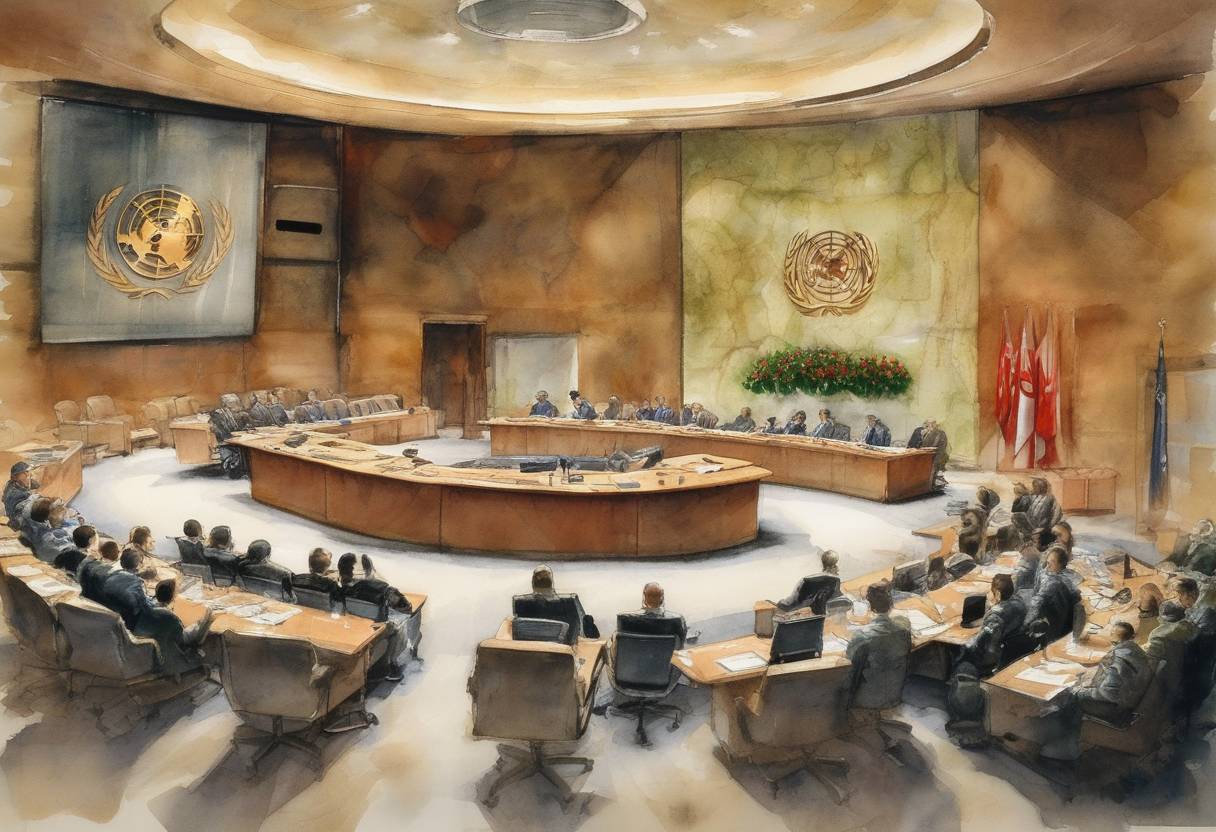
United Nations Security Council Meeting on Iraq - August 5, 2002
On August 5, 2002, the United Nations Security Council convened to address the situation in Iraq, focusing on two critical issues: Iraq’s compliance with weapons inspections and the ongoing humanitarian crisis within the country. This meeting was part of a series of discussions reflecting the international community’s growing concerns over Iraq’s alleged possession of weapons of mass destruction (WMDs) and the humanitarian impact of prolonged sanctions.
Context Leading Up to the Meeting
Background on Weapons Inspections:
- Post-Gulf War, Iraq was subjected to UN Security Council Resolution 687, which mandated the elimination of its WMDs and established the United Nations Special Commission (UNSCOM) to oversee disarmament.
- By 1998, Iraq had ceased cooperation with UNSCOM, leading to its withdrawal and subsequent airstrikes by the United States and the United Kingdom in Operation Desert Fox.
- In the years following, Iraq’s compliance with disarmament obligations remained a contentious issue, with the UN and the international community seeking to re-establish inspections.
Humanitarian Concerns:
- The sanctions imposed on Iraq since the Gulf War had severe humanitarian impacts, leading to widespread poverty and health crises.
- The Oil-for-Food Programme, initiated in 1996, aimed to alleviate these conditions by allowing Iraq to sell oil in exchange for food and medicine, but challenges persisted.
Key Discussions and Outcomes
Weapons Inspections:
- The Security Council discussed Iraq’s lack of compliance with previous resolutions and the need for renewed inspections.
- There was a push for Iraq to allow the return of inspectors from the newly formed United Nations Monitoring, Verification and Inspection Commission (UNMOVIC), which replaced UNSCOM.
Humanitarian Crisis:
- The council reviewed reports on the humanitarian situation, emphasizing the need for continued support through the Oil-for-Food Programme.
- Discussions highlighted the balance between maintaining pressure on Iraq for disarmament and addressing the humanitarian needs of its population.
Broader Historical Significance
In summary, the August 5, 2002, meeting of the United Nations Security Council was a pivotal moment in the lead-up to the Iraq War, highlighting the complex interplay between disarmament efforts and humanitarian concerns. The discussions underscored the challenges faced by the international community in addressing security threats while mitigating human suffering.