The Battle of Camden: August 16, 1780
1780 · Camden, United States
The Battle of Camden occurred during the American Revolutionary War, resulting in a decisive British victory over the American forces.
May 12, 1780
Charleston, South Carolina, fell to British forces during the American Revolutionary War, marking one of the worst American defeats of the war.
Charleston, United States | British Army
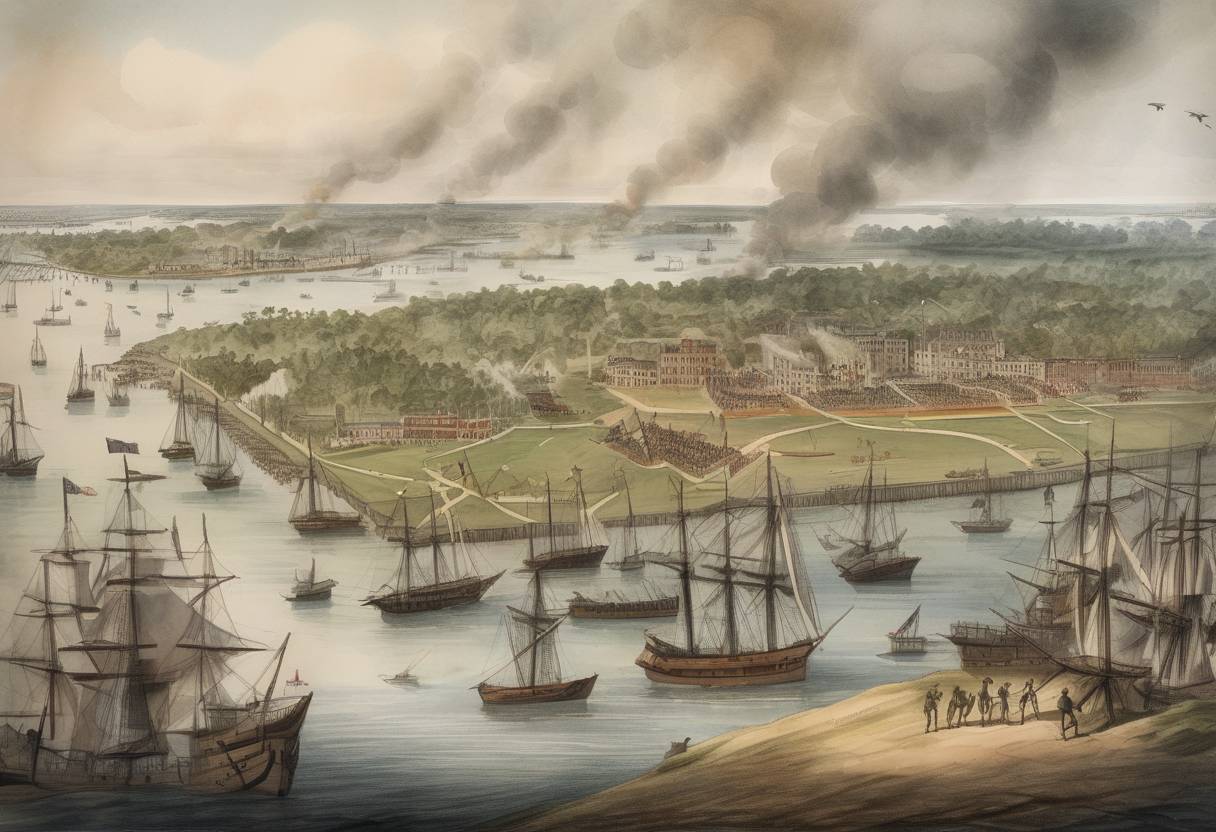
On May 12, 1780, Charleston, South Carolina, fell to British forces in what is considered one of the most significant American defeats during the American Revolutionary War. This event marked a pivotal moment in the Southern campaign of the war, with far-reaching consequences for the American struggle for independence.
Strategic Importance: Charleston was a major port city and a vital economic hub in the Southern colonies. Its capture was crucial for the British strategy to regain control over the rebellious colonies by focusing on the South, where they believed they had more Loyalist support.
British Strategy: Under the command of General Sir Henry Clinton, the British aimed to isolate the Southern colonies and rally Loyalist support. The fall of Savannah, Georgia, in 1778 had already set the stage for further advances into the South.
American Defenses: The American forces, led by General Benjamin Lincoln, were tasked with defending the city. However, they were hampered by inadequate fortifications, limited supplies, and a lack of reinforcements.
British Forces: In early 1780, General Clinton, along with Admiral Mariot Arbuthnot, led a formidable force of approximately 14,000 troops and a naval squadron to besiege Charleston.
Siege Operations: The British began their siege in March 1780, systematically cutting off the city from reinforcements and supplies. They constructed siege lines and gradually tightened their grip around Charleston.
Surrender: After enduring weeks of bombardment and facing insurmountable odds, General Lincoln was forced to surrender on May 12, 1780. Approximately 5,500 American troops were captured, making it the largest surrender of American forces during the war.
British Control: The capture of Charleston gave the British control over a significant portion of the Southern colonies. It was a major blow to American morale and disrupted Continental Army operations in the region.
Loyalist Support: The British hoped to galvanize Loyalist support in the South, but their harsh treatment of the local population often had the opposite effect, fueling resistance.
Guerrilla Warfare: The fall of Charleston led to increased guerrilla warfare in the South, with figures like Francis Marion, known as the “Swamp Fox,” leading resistance efforts against British forces.
Turning Point: Despite the defeat, the Southern campaign eventually turned in favor of the Americans, culminating in key victories at battles such as Kings Mountain and Cowpens, and ultimately leading to the British surrender at Yorktown in 1781.
The fall of Charleston was a sobering moment for the American cause, highlighting the challenges faced by the Continental Army. However, it also set the stage for a resilient and strategic response that would eventually lead to American independence.
Source: en.wikipedia.org