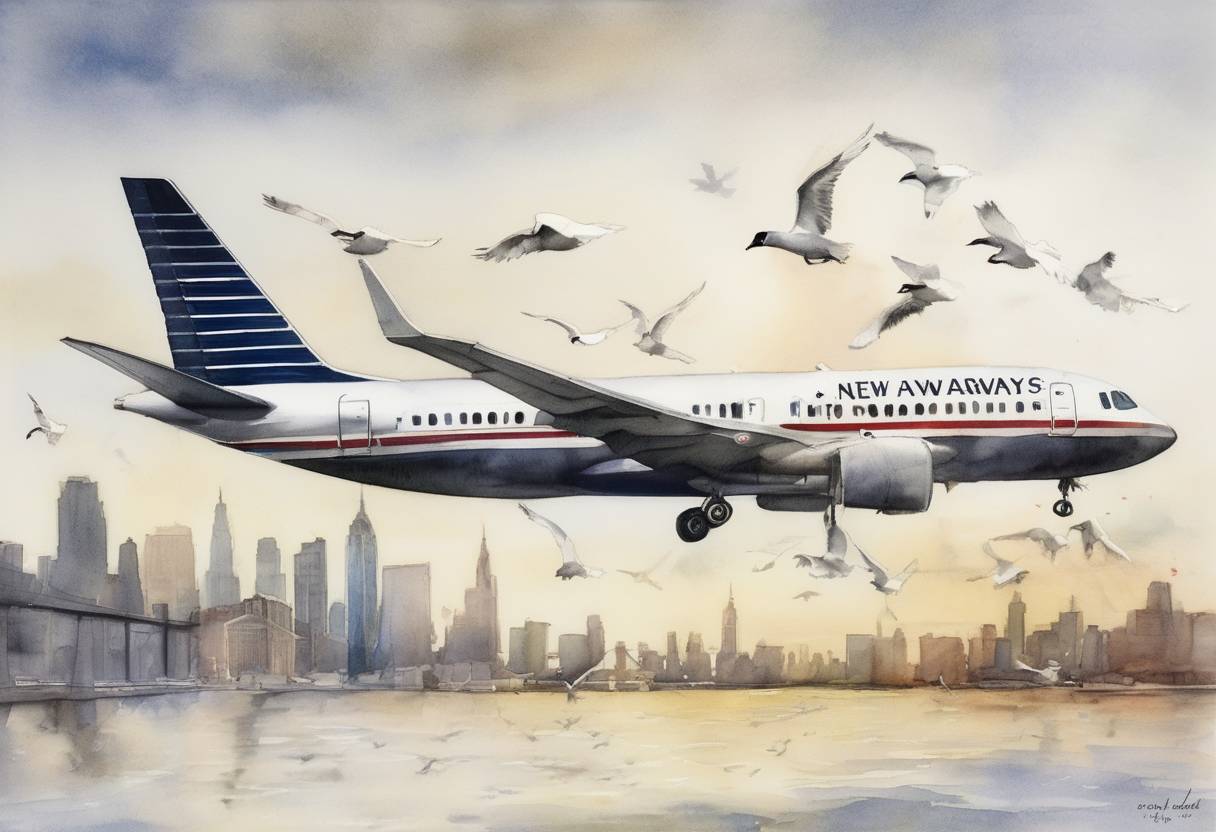
US Airways Flight 1549: The Miracle on the Hudson
On January 15, 2009, US Airways Flight 1549, an Airbus A320, made an emergency landing on the Hudson River in New York City after striking a flock of Canada geese shortly after takeoff from LaGuardia Airport. This event, often referred to as the “Miracle on the Hudson,” is celebrated for the successful ditching of the aircraft and the survival of all 155 passengers and crew on board.
Background
- Flight Details: The flight was scheduled to travel from LaGuardia Airport in New York City to Charlotte Douglas International Airport in North Carolina.
- Aircraft: The aircraft involved was an Airbus A320-214, tail number N106US.
- Crew: The flight was piloted by Captain Chesley “Sully” Sullenberger and First Officer Jeffrey Skiles. The cabin crew consisted of three flight attendants.
The Incident
- Takeoff: Flight 1549 took off from LaGuardia Airport at approximately 3:25 PM EST.
- Bird Strike: Within minutes of takeoff, at an altitude of about 2,818 feet, the aircraft struck a flock of Canada geese, resulting in the loss of engine power in both engines.
- Decision Making: Captain Sullenberger quickly assessed the situation and determined that returning to LaGuardia or diverting to nearby Teterboro Airport was not feasible.
- Ditching: Sullenberger decided to perform an emergency water landing on the Hudson River. He communicated with air traffic control, informing them of the decision.
The Landing
- Execution: At approximately 3:31 PM, Captain Sullenberger successfully ditched the aircraft in the Hudson River near midtown Manhattan.
- Evacuation: The crew efficiently managed the evacuation, with passengers exiting onto the wings and inflatable slides, which served as rafts.
- Rescue Operations: Nearby ferries and emergency responders quickly arrived at the scene, aiding in the rescue of all passengers and crew.
Aftermath
- Survival: Remarkably, all 155 individuals on board survived the incident, with only minor injuries reported.
- Investigation: The National Transportation Safety Board (NTSB) conducted an investigation, concluding that the bird strike and subsequent dual engine failure were the primary causes of the emergency landing.
- Recognition: Captain Sullenberger and the crew were widely praised for their professionalism and skill. Sullenberger, in particular, was hailed as a hero and received numerous accolades.
Historical Significance
- Aviation Safety: The incident highlighted the importance of pilot training and the effectiveness of crew resource management in crisis situations.
- Public Awareness: It brought attention to the risks of bird strikes and led to discussions on improving bird control measures around airports.
- Cultural Impact: The event was later dramatized in the 2016 film “Sully,” directed by Clint Eastwood and starring Tom Hanks as Captain Sullenberger.
The “Miracle on the Hudson” remains a testament to the skill and composure of the flight crew and serves as an enduring example of successful emergency management in aviation history.