Itō Hirobumi Becomes the First Prime Minister of Japan
1885 · Tokyo, Japan
Itō Hirobumi became the first Prime Minister of Japan.
May 3, 1947
The new post-war Constitution of Japan went into effect, establishing a parliamentary system and renouncing war.
Tokyo, Japan | Japanese Government
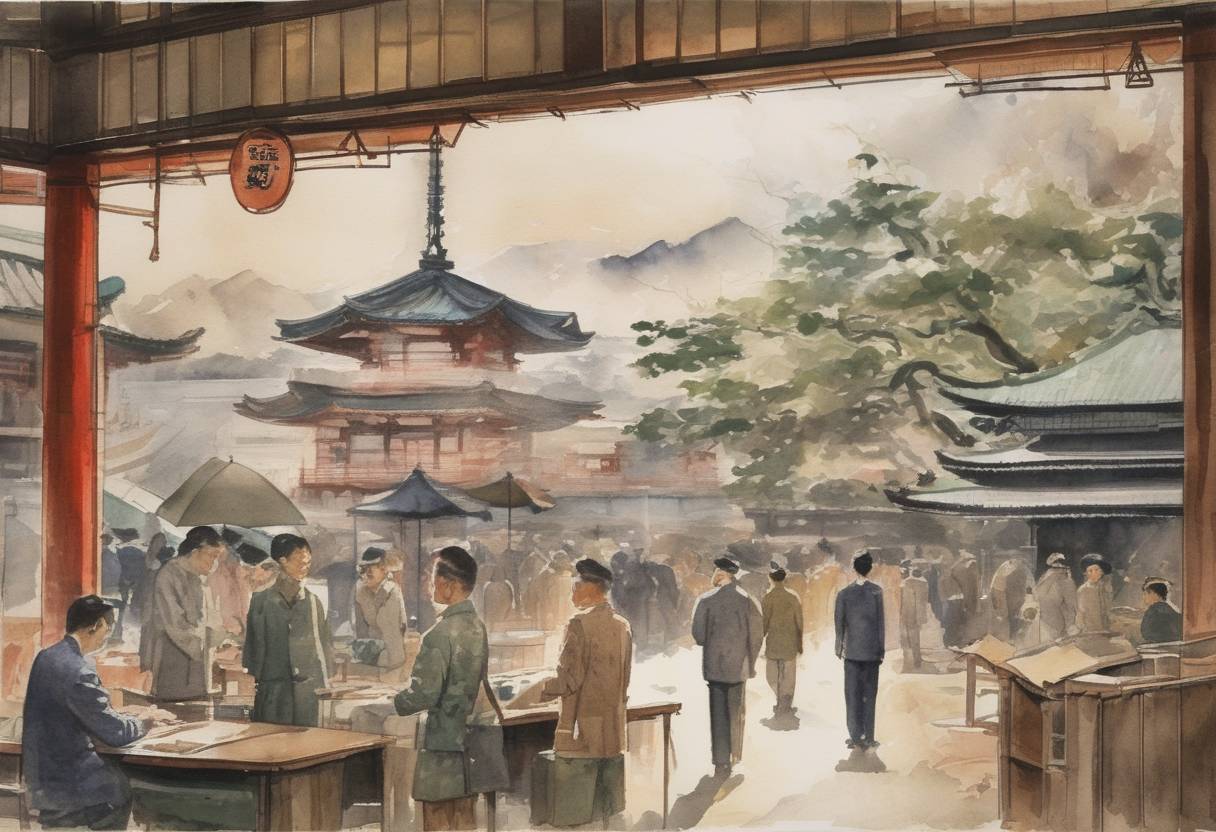
On May 3, 1947, Japan’s new post-war Constitution, often referred to as the “Constitution of Japan” or the “Postwar Constitution,” officially came into effect. This marked a significant transformation in Japan’s political and social landscape following the devastation of World War II. The Constitution introduced a parliamentary system of government and included a groundbreaking renunciation of war.
After Japan’s defeat in World War II, the country was occupied by Allied forces, led by the United States under General Douglas MacArthur. The occupation authorities aimed to demilitarize and democratize Japan, ensuring it would not become a military threat in the future. As part of these efforts, a new constitution was drafted to replace the Meiji Constitution of 1889, which had established a more autocratic form of governance.
Parliamentary System: The new Constitution established a parliamentary system, significantly reducing the powers of the Emperor, who was previously considered divine and held substantial political influence. The Emperor was redefined as a “symbol of the State and of the unity of the people,” with no governing powers.
Renunciation of War: Article 9 of the Constitution is one of its most notable features. It explicitly renounces war as a sovereign right of the nation and prohibits the maintenance of military forces for warfare. This clause was intended to ensure Japan’s commitment to peace and prevent future military aggression.
Human Rights and Democracy: The Constitution enshrined a wide range of civil liberties and human rights, including freedom of speech, assembly, and religion. It also established the principles of popular sovereignty and the rule of law, laying the foundation for a democratic society.
Separation of Powers: The Constitution created a clear separation of powers among the executive, legislative, and judicial branches of government. The National Diet, Japan’s bicameral legislature, was given significant authority, including the power to pass laws and approve the budget.
The implementation of the new Constitution was a pivotal moment in Japan’s history. It facilitated the country’s transition from an imperial power to a peaceful, democratic nation. The renunciation of war and the emphasis on human rights and democracy have had lasting impacts on Japan’s domestic and international policies.
The Constitution has remained largely unchanged since its enactment, reflecting its enduring influence and the Japanese public’s general support for its principles. However, debates over certain aspects, particularly Article 9, continue to be a topic of political discussion in Japan.
Overall, the Constitution of Japan has played a crucial role in shaping the country’s post-war identity and its position on the global stage as a proponent of peace and democracy.
Source: www.britannica.com