Discovery of Ariel and Umbriel
1851 · Liverpool, United Kingdom
William Lassell discovered Ariel and Umbriel, two moons of Uranus.
January 11, 1787
William Herschel discovered Titania and Oberon, two moons of Uranus.
Slough, England | N/A
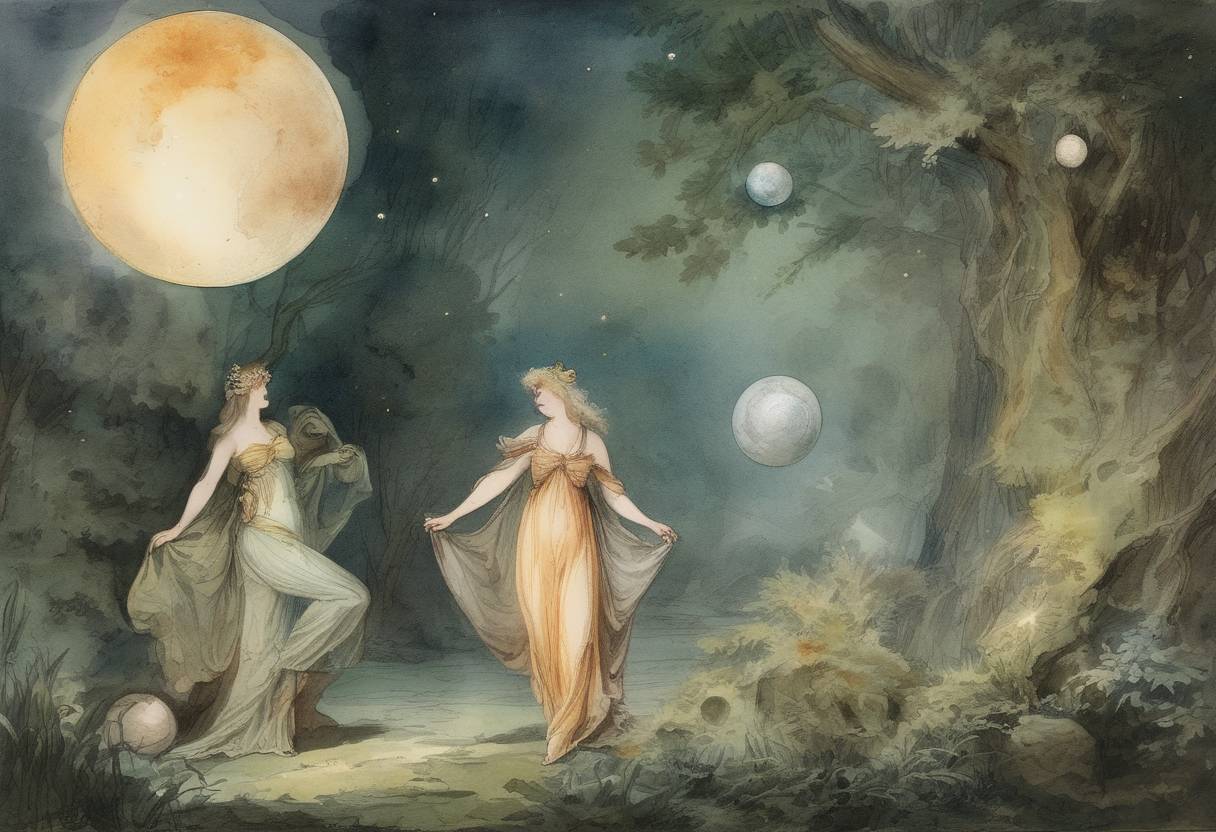
On January 11, 1787, the renowned astronomer William Herschel made a significant contribution to the field of astronomy by discovering Titania and Oberon, two of the largest moons of Uranus. This discovery was pivotal in expanding our understanding of the outer solar system and the celestial bodies that orbit the distant planet Uranus.
William Herschel, originally from Germany, was a British astronomer and composer who had already gained fame for his discovery of the planet Uranus in 1781. His work was characterized by meticulous observations and the use of powerful telescopes, which he often constructed himself. Herschel’s dedication to astronomy led him to explore the skies beyond the known planets, seeking to uncover more about the universe.
During his observations of Uranus, Herschel identified two new celestial bodies orbiting the planet. These were later named Titania and Oberon, after characters from William Shakespeare’s play “A Midsummer Night’s Dream.” This naming convention was suggested by Herschel’s son, John Herschel, and has since become a tradition for naming Uranian moons after characters from the works of Shakespeare and Alexander Pope.
The discovery of Titania and Oberon was significant for several reasons:
Following the discovery, Titania and Oberon became subjects of interest for astronomers studying the dynamics and composition of Uranian moons. Subsequent observations and space missions, such as the Voyager 2 flyby in 1986, have provided more detailed information about these moons, including their size, composition, and surface features.
In summary, William Herschel’s discovery of Titania and Oberon on January 11, 1787, marked a significant milestone in the exploration of our solar system, highlighting the importance of technological advancements in astronomy and setting the stage for future explorations of the outer planets.
Source: solarsystem.nasa.gov