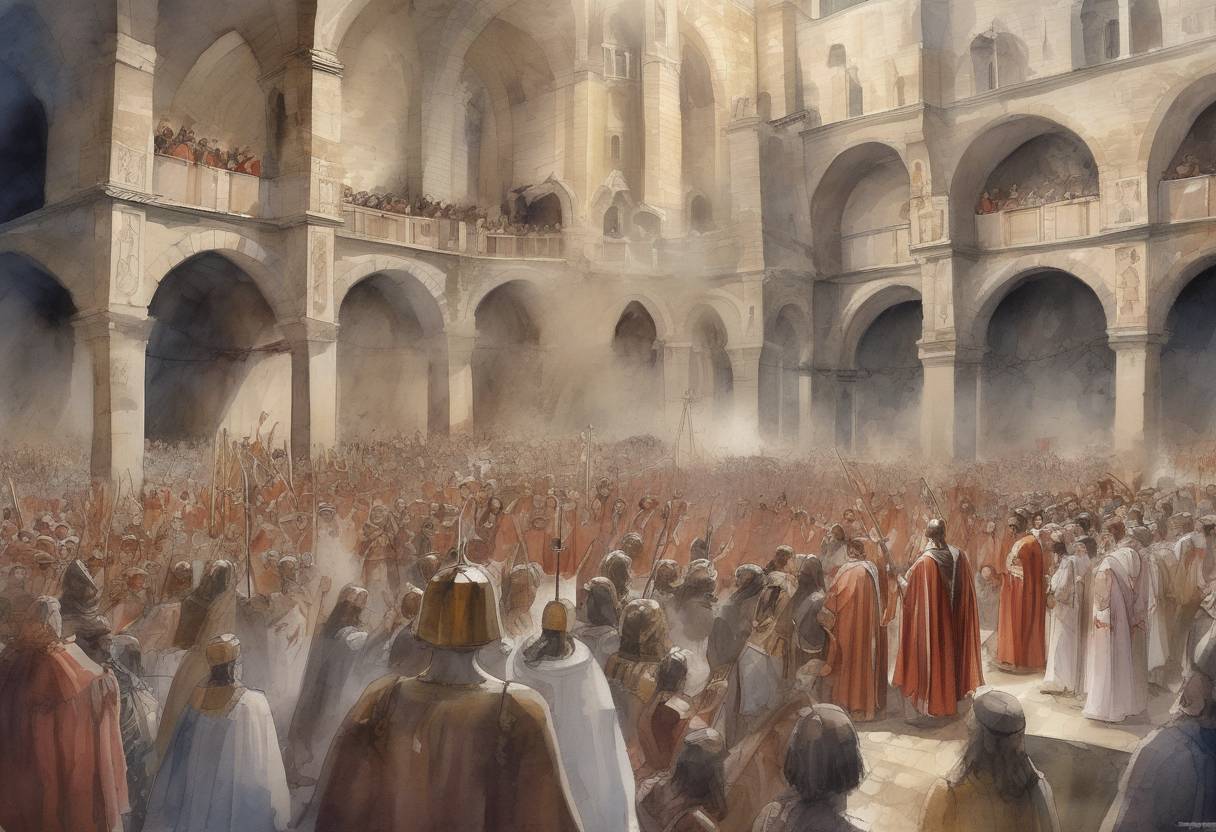
The Third Council of Toledo: A Pivotal Moment in Visigothic History
Background
The Third Council of Toledo, which began on May 8, 589, was a landmark event in the history of the Visigothic Kingdom in Hispania. This council is particularly significant for its role in the religious transformation of the kingdom, marked by the conversion of King Reccared I from Arianism to Catholicism. This shift had profound implications for the religious and political landscape of the region.
Context Leading to the Council
The Visigoths, a Germanic tribe that had settled in Hispania, initially adhered to Arian Christianity, a branch of Christianity that was considered heretical by the Roman Catholic Church. Arianism, which denied the full divinity of Jesus Christ, had been a source of tension between the Visigothic rulers and the predominantly Catholic Hispano-Roman population.
King Reccared I ascended to the throne in 586, following the death of his father, King Leovigild, who had been a staunch supporter of Arianism. Recognizing the divisive nature of religious differences within his kingdom, Reccared sought to unify his subjects under a single faith.
Key Events of the Council
The Third Council of Toledo was convened to address this religious divide. It was attended by numerous bishops and church officials from across the kingdom. The most significant outcome of the council was King Reccared’s public renunciation of Arianism and his conversion to Catholicism. This act was not only a personal declaration of faith but also a political maneuver aimed at consolidating his rule and fostering unity among his subjects.
The council issued several decrees to facilitate the transition from Arianism to Catholicism, including:
- The condemnation of Arianism and the affirmation of the Nicene Creed, which articulated the Catholic understanding of the Trinity.
- The establishment of measures to integrate Arian clergy into the Catholic Church.
- The promotion of Catholic practices and doctrines throughout the kingdom.
Aftermath and Historical Significance
The conversion of King Reccared I and the decisions made at the Third Council of Toledo had lasting effects on the Visigothic Kingdom:
- Religious Unification: The council effectively ended the religious schism within the kingdom, aligning the Visigothic rulers with the majority Catholic population and the broader Christian world.
- Political Stability: By adopting Catholicism, Reccared strengthened his political position, reducing internal dissent and fostering loyalty among his subjects.
- Cultural Integration: The religious unification facilitated greater cultural and social integration between the Visigoths and the Hispano-Roman population, contributing to the development of a more cohesive society.
The Third Council of Toledo is thus remembered as a pivotal moment in the history of the Visigothic Kingdom, marking a significant step towards the religious and cultural unification of the Iberian Peninsula.