Joan of Arc's Trial for Heresy
1431 · Rouen, France
Joan of Arc's trial for heresy began in Rouen, France. She was accused of cross-dressing and claiming divine guidance, which led to her execution later that year.
July 7, 1456
A retrial verdict acquits Joan of Arc of heresy, 25 years after her execution.
Rouen, France | Catholic Church
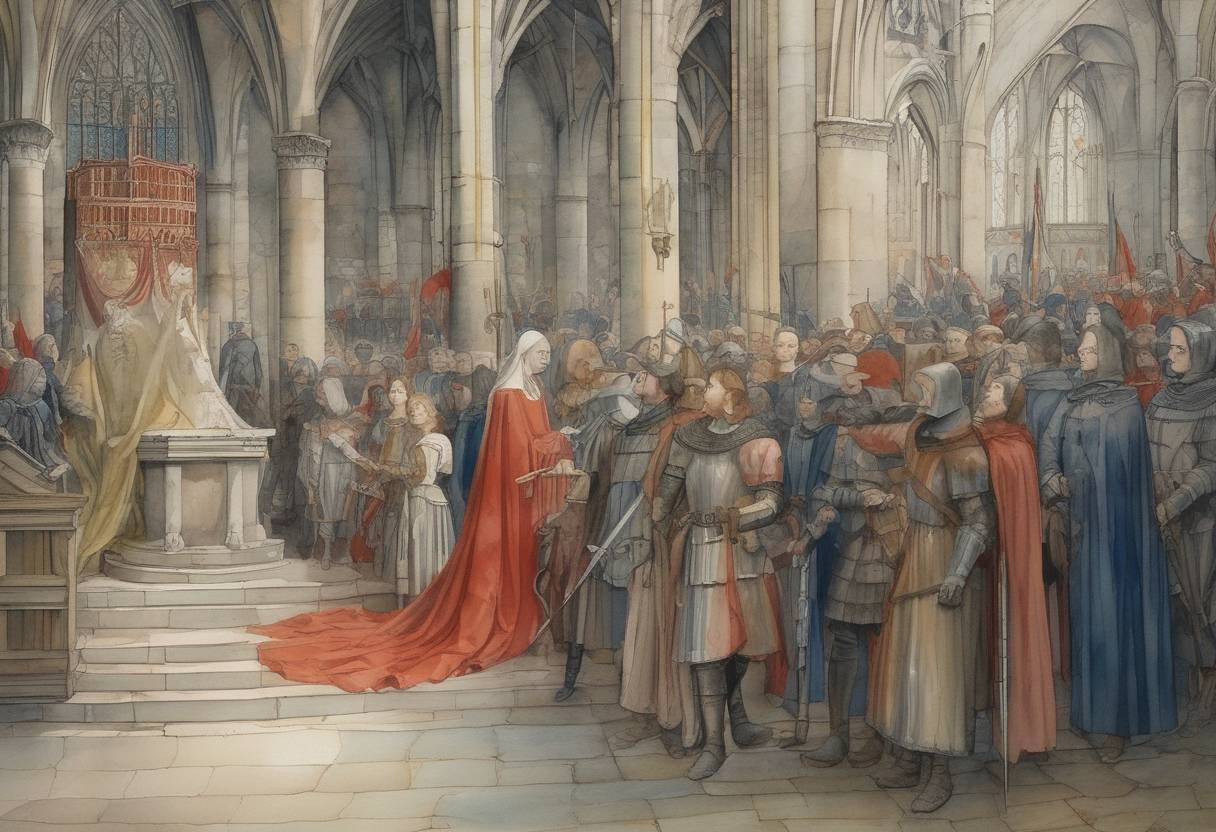
On July 7, 1456, a retrial concluded with the posthumous acquittal of Joan of Arc, overturning the heresy conviction that had led to her execution 25 years earlier. This significant event marked a pivotal moment in the reassessment of Joan’s life and legacy.
Joan of Arc, a peasant girl from Domrémy in northeastern France, claimed to have received visions from saints instructing her to support Charles VII and help expel the English from France during the Hundred Years’ War. Her leadership and military successes, notably the lifting of the Siege of Orléans in 1429, were instrumental in turning the tide in favor of the French.
However, in 1430, Joan was captured by the Burgundians, allies of the English, and handed over to the English forces. She was tried for heresy by an ecclesiastical court in Rouen, which was under English control. The trial, heavily influenced by political motives, resulted in her being convicted of heresy and witchcraft. Joan was burned at the stake on May 30, 1431, at the age of 19.
The retrial, often referred to as the “nullification trial,” was initiated by Joan’s family and supported by Charles VII, who had by then solidified his position as the King of France. The process began in 1455, driven by a desire to clear Joan’s name and rectify the injustices of the original trial.
The retrial was conducted by the Catholic Church, led by Pope Callixtus III. It involved a thorough examination of the original trial’s proceedings, including testimonies from numerous witnesses who had known Joan or had been involved in her trial. The retrial uncovered numerous procedural errors and instances of judicial misconduct, including the fact that the original trial had been politically motivated and lacked proper ecclesiastical oversight.
On July 7, 1456, the retrial court declared Joan of Arc innocent of all charges and pronounced her a martyr. The verdict nullified the original conviction, acknowledging that her trial had been unjust and her execution wrongful.
The acquittal had profound implications for Joan’s legacy. It paved the way for her eventual canonization as a saint by the Roman Catholic Church in 1920. Joan of Arc became a symbol of French unity and nationalism, celebrated for her courage, faith, and determination.
The retrial and acquittal of Joan of Arc underscore the complexities of medieval justice and the interplay between politics and religion. It also highlights the enduring impact of her story on French history and culture, as well as her role as an enduring symbol of resistance and faith.
Source: en.wikipedia.org