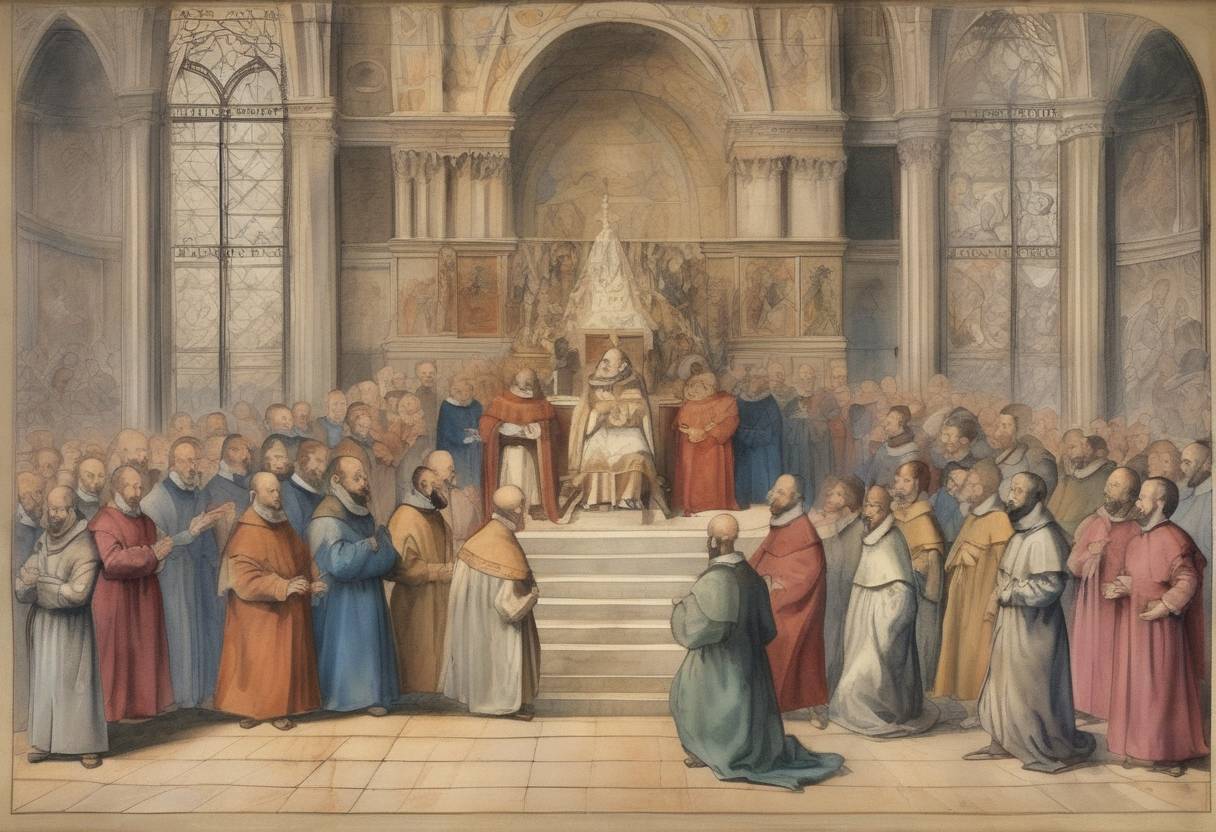
On August 15, 1534, a pivotal moment in the history of the Catholic Church occurred when Ignatius of Loyola and six companions took initial vows that would lead to the formation of the Society of Jesus, commonly known as the Jesuits. This event took place in the chapel of Saint Denis, in Montmartre, Paris, marking the beginning of a religious order that would have a profound impact on the Catholic Reformation and global missionary work.
Background
Ignatius of Loyola
- Early Life: Born in 1491 in the Basque region of Spain, Ignatius of Loyola was initially a soldier. His life took a dramatic turn after he was injured in battle in 1521, leading to a spiritual awakening during his convalescence.
- Spiritual Development: Following his recovery, Ignatius dedicated himself to a life of piety and study, eventually enrolling at the University of Paris in 1528. It was here that he began to gather a group of like-minded individuals.
The Companions
- Peter Faber: A Savoyard theologian, Faber was the first of Ignatius’s companions and played a crucial role in the group’s formation.
- Francis Xavier: A Navarrese nobleman, Xavier would later become one of the most famous Jesuit missionaries.
- Diego Laínez, Alfonso Salmerón, Nicolás Bobadilla, and Simão Rodrigues: These men, along with Ignatius, formed the core group that would commit to the vows.
The Vows
- Date and Location: The vows were taken on the Feast of the Assumption, August 15, 1534, in a small chapel in Montmartre, Paris.
- Commitments: The group vowed poverty, chastity, and a pilgrimage to the Holy Land. If the pilgrimage was not possible, they pledged to offer themselves to the Pope for apostolic work.
Significance and Aftermath
- Formal Recognition: The Society of Jesus was formally recognized by Pope Paul III in 1540 through the papal bull Regimini Militantis Ecclesiae.
- Impact: The Jesuits became a leading force in the Counter-Reformation, known for their educational, missionary, and charitable works. They established schools, universities, and missions worldwide, significantly influencing both religious and secular education.
- Legacy: Today, the Jesuits are one of the largest and most influential religious orders in the Catholic Church, known for their commitment to education, social justice, and intellectual rigor.
The initial vows taken by Ignatius and his companions laid the foundation for a religious order that would play a crucial role in shaping the modern Catholic Church and its global outreach.