The Battle of Midway: A Pivotal Naval Engagement
1942 · Midway Atoll, United States
The Battle of Midway, a pivotal naval battle in the Pacific Theater of World War II, ended with a decisive victory for the United States over Japan.
February 9, 2001
The American submarine USS Greeneville accidentally struck and sank the Japanese fishing vessel Ehime Maru near Oahu, Hawaii, resulting in the deaths of nine people.
Oahu, United States | United States Navy
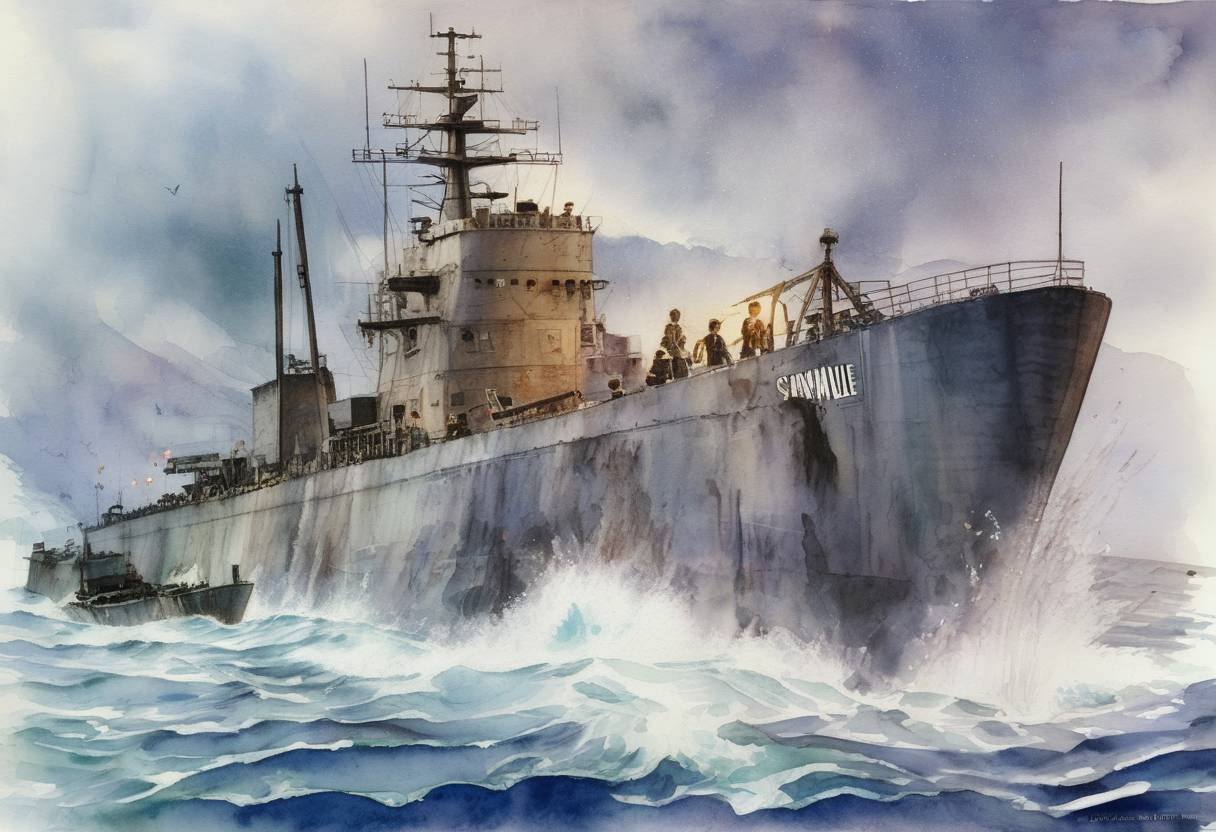
On February 9, 2001, a tragic accident occurred off the coast of Oahu, Hawaii, involving the American submarine USS Greeneville and the Japanese fishing vessel Ehime Maru. This incident resulted in the loss of nine lives and had significant diplomatic repercussions.
The USS Greeneville (SSN-772) is a Los Angeles-class nuclear-powered attack submarine of the United States Navy. On the day of the incident, the submarine was conducting a routine training exercise, which included a rapid-surfacing maneuver known as an “emergency ballast blow.” This maneuver is designed to simulate an emergency ascent to the surface.
The Ehime Maru was a Japanese high school training vessel from Uwajima Fisheries High School in Ehime Prefecture, Japan. It was on a training voyage with 35 people on board, including students, teachers, and crew members.
During the exercise, the USS Greeneville performed the emergency surfacing maneuver approximately nine miles south of Diamond Head, Oahu. Unbeknownst to the submarine’s crew, the Ehime Maru was directly above them. The rapid ascent of the submarine resulted in a collision with the fishing vessel, causing it to sink within minutes.
The collision resulted in the deaths of nine individuals aboard the Ehime Maru, including four high school students, two teachers, and three crew members. The remaining 26 people were rescued by nearby vessels and the U.S. Coast Guard.
The incident sparked international outrage, particularly in Japan, due to the loss of life and the circumstances surrounding the accident. The presence of civilian guests aboard the USS Greeneville during the exercise, who were reportedly allowed to operate some controls, raised questions about the procedures and safety protocols followed by the U.S. Navy.
United States: The U.S. government, including President George W. Bush, issued formal apologies to Japan and the families of the victims. The Navy conducted an investigation into the incident, which led to disciplinary actions against several officers, including the submarine’s captain, Commander Scott Waddle, who was relieved of his command.
Japan: The Japanese government expressed deep concern and demanded a thorough investigation. The incident strained U.S.-Japan relations, prompting discussions on military protocols and the presence of U.S. forces in Japan.
The U.S. government reached financial settlements with the families of the victims and the Japanese government. Additionally, efforts were made to recover the Ehime Maru from the ocean floor, which was successfully completed later in 2001, allowing for the retrieval of remains and personal effects.
The USS Greeneville and Ehime Maru collision highlighted the importance of strict adherence to safety protocols during military exercises, especially when involving civilian participants. It also underscored the need for effective communication and coordination between military operations and civilian maritime activities to prevent similar tragedies in the future.
This incident remains a poignant reminder of the potential consequences of military exercises and the importance of maintaining strong diplomatic relations between nations.
Source: en.wikipedia.org