1946 · Hanoi, Vietnam
Ho Chi Minh is elected the President of North Vietnam, marking a pivotal moment in Vietnamese history as the nation transitions towards Communist leadership.
March 2, 1946
Ho Chi Minh was elected the President of North Vietnam, marking a significant moment in Vietnamese history.
Hanoi, Vietnam | Viet Minh
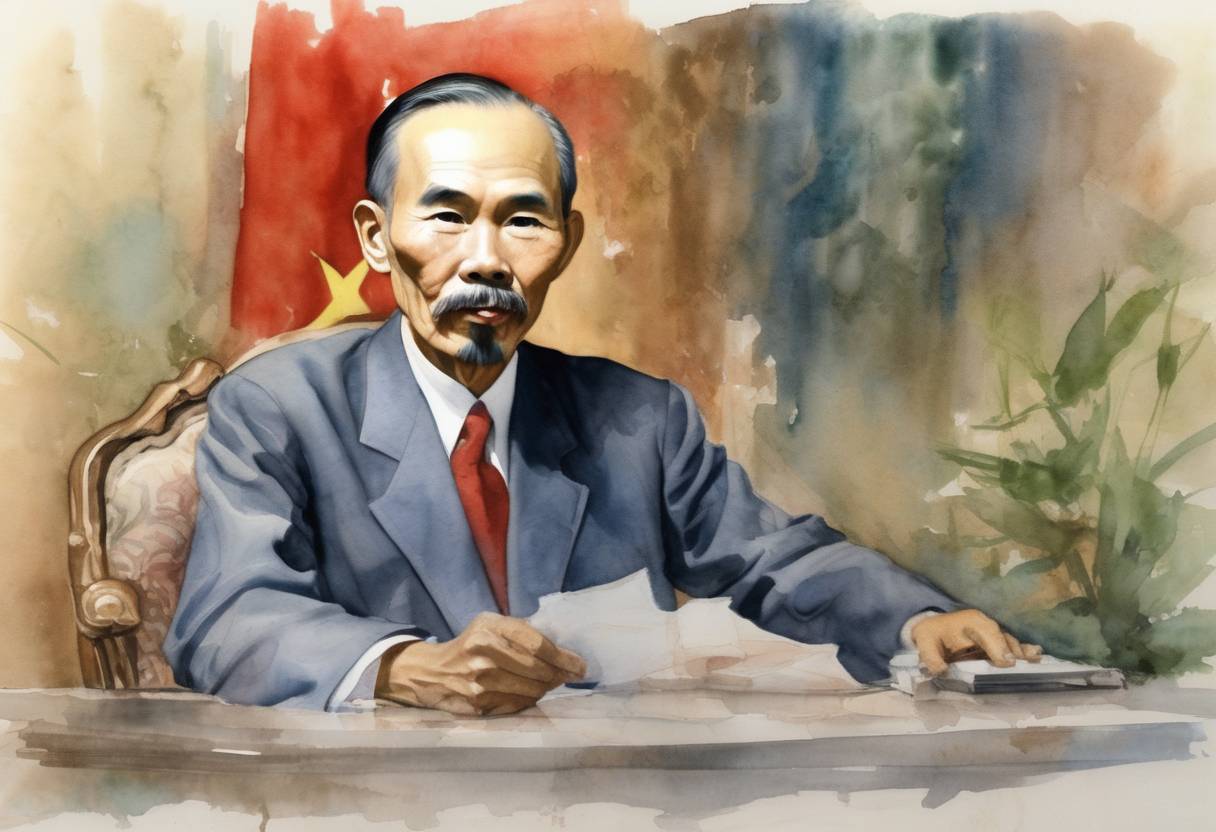
On March 2, 1946, Ho Chi Minh was elected as the President of North Vietnam, a pivotal moment in the history of Vietnam and its struggle for independence. This event marked the formal establishment of a communist government in the northern part of the country, setting the stage for decades of conflict and transformation.
Colonial Background: Vietnam had been under French colonial rule since the mid-19th century. During World War II, Japan occupied Vietnam, weakening French control and creating a power vacuum.
Rise of the Viet Minh: Ho Chi Minh, a prominent communist revolutionary leader, founded the Viet Minh (League for the Independence of Vietnam) in 1941. The organization aimed to achieve Vietnamese independence from foreign rule.
End of World War II: Following Japan’s surrender in August 1945, the Viet Minh seized the opportunity to assert control over Vietnam. On September 2, 1945, Ho Chi Minh declared Vietnam’s independence from France, establishing the Democratic Republic of Vietnam.
Formation of Government: In the months following the declaration of independence, Ho Chi Minh worked to consolidate power and establish a functioning government. The election on March 2, 1946, was a critical step in legitimizing the new regime.
National Assembly: The election was conducted by the newly formed National Assembly, which had been elected in January 1946. This body was responsible for drafting a constitution and establishing a government structure.
Ho Chi Minh’s Leadership: As President, Ho Chi Minh became the face of the Vietnamese struggle for independence. His leadership was characterized by efforts to unify the country and resist foreign intervention.
French Resistance: Despite the election, France did not recognize the independence of Vietnam and sought to reassert control, leading to the First Indochina War (1946-1954).
Division of Vietnam: The conflict eventually resulted in the Geneva Accords of 1954, which temporarily divided Vietnam at the 17th parallel, with Ho Chi Minh leading the North.
Legacy: Ho Chi Minh’s presidency laid the groundwork for the eventual reunification of Vietnam under communist rule in 1975, following the Vietnam War. His leadership remains a significant part of Vietnam’s national identity and history.
In summary, the election of Ho Chi Minh as President of North Vietnam on March 2, 1946, was a crucial event in the country’s journey towards independence and unification. It highlighted the complexities of post-colonial transitions and set the stage for future conflicts that would shape the region’s history.
Source: en.wikipedia.org