The Signing of the Voting Rights Act of 1965
1965 · Washington, D.C., United States
U.S. President Lyndon B. Johnson signed the Voting Rights Act into law, prohibiting racial discrimination in voting.
March 30, 1870
The 15th Amendment to the United States Constitution was formally adopted, granting African American men the right to vote.
Washington, D.C., United States | United States Congress
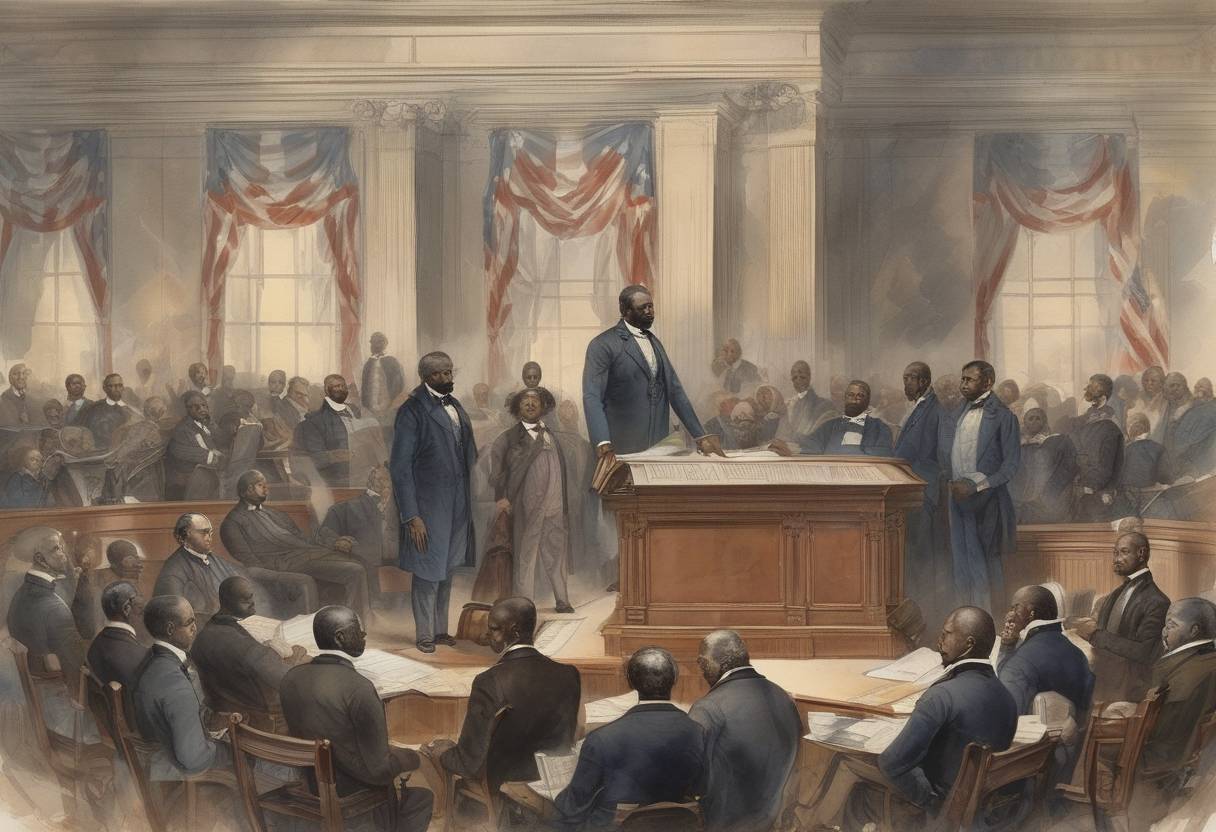
On March 30, 1870, the United States formally adopted the 15th Amendment to the Constitution, marking a pivotal moment in American history. This amendment granted African American men the right to vote, representing a significant step forward in the struggle for civil rights and equality in the post-Civil War United States.
The 15th Amendment was the third and final of the Reconstruction Amendments, following the 13th Amendment, which abolished slavery, and the 14th Amendment, which granted citizenship and equal protection under the laws to all persons born or naturalized in the United States. The period following the Civil War was marked by efforts to integrate formerly enslaved individuals into American civic life and to rebuild the Southern states.
The text of the 15th Amendment is concise but powerful:
Section 1: The right of citizens of the United States to vote shall not be denied or abridged by the United States or by any State on account of race, color, or previous condition of servitude.
Section 2: The Congress shall have power to enforce this article by appropriate legislation.
The amendment was passed by Congress on February 26, 1869, and sent to the states for ratification. It faced significant opposition, particularly from Southern states and some Northern Democrats who were resistant to extending voting rights to African American men. Despite this, the amendment was ratified by the required three-fourths of the states and was officially adopted on March 30, 1870.
The adoption of the 15th Amendment was a landmark achievement in the fight for civil rights. It enfranchised millions of African American men, allowing them to participate in the democratic process and influence the political landscape of the United States. This was a crucial step in the broader movement toward racial equality, although it did not address the voting rights of women or Native Americans.
Despite its promise, the 15th Amendment faced numerous challenges in its implementation. Many Southern states enacted discriminatory practices such as literacy tests, poll taxes, and grandfather clauses to circumvent the amendment and suppress African American voter turnout. These tactics, along with intimidation and violence, severely limited the effectiveness of the amendment for decades.
The struggle for voting rights continued well into the 20th century, culminating in the Civil Rights Movement and the passage of the Voting Rights Act of 1965, which aimed to eliminate the barriers to voting that had persisted despite the 15th Amendment.
The 15th Amendment remains a cornerstone of American civil rights legislation, symbolizing the ongoing effort to ensure equal voting rights for all citizens, regardless of race. Its adoption on March 30, 1870, is remembered as a significant milestone in the nation’s journey toward equality and justice.
Source: en.wikipedia.org