Gerasim Izmailov's Expedition to Alaska on June 11, 1788
1788 · Not applicable (expedition), United States of America
Russian explorer Gerasim Izmailov reaches Alaska during an expedition, expanding Russian claims in North America.
August 20, 1741
Danish navigator Vitus Bering discovers Alaska.
Alaska, USA | Danish Navy
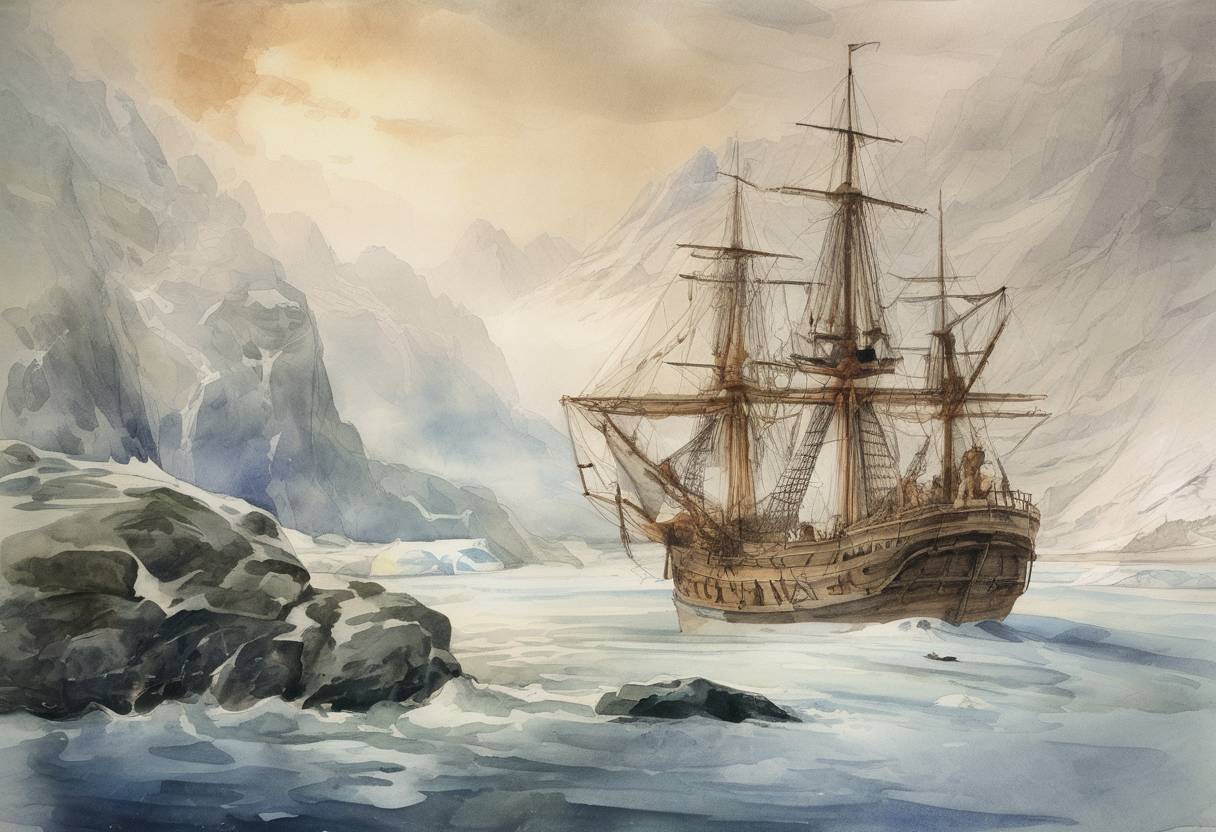
On August 20, 1741, Danish navigator Vitus Bering, serving under the Russian Empire, is credited with the European discovery of Alaska. This significant event marked a pivotal moment in the exploration of the North Pacific and the expansion of Russian influence into North America.
Vitus Bering was an experienced navigator and explorer, having previously led the First Kamchatka Expedition (1725-1730) to explore the eastern reaches of Siberia and the possibility of a land connection between Asia and North America. Following the success of this expedition, Bering was appointed to lead the Great Northern Expedition, also known as the Second Kamchatka Expedition, which aimed to further explore the North Pacific and map the uncharted territories.
Preparation: The Second Kamchatka Expedition was one of the largest and most ambitious exploratory missions of its time, involving thousands of men and spanning several years. Bering’s mission was to explore the waters east of Russia and determine the proximity of North America.
Voyage: Bering set sail from the Kamchatka Peninsula in July 1741 aboard the ship St. Peter, accompanied by the St. Paul, commanded by Aleksei Chirikov. The two ships soon became separated due to adverse weather conditions.
Discovery: On August 20, 1741, Bering and his crew sighted the southern coast of Alaska, specifically the region near what is now known as Kayak Island. This marked the first recorded European sighting of the Alaskan mainland.
Return Journey: The expedition faced numerous challenges, including harsh weather, scurvy, and dwindling supplies. Bering’s ship was forced to winter on what is now Bering Island, where Bering himself succumbed to illness and died on December 19, 1741.
Legacy: Despite the hardships, the expedition provided valuable information about the geography and natural resources of the North Pacific region. The discovery of Alaska paved the way for Russian fur traders and settlers, leading to the establishment of Russian America.
Historical Impact: Bering’s voyage significantly contributed to the mapping of the North Pacific and the eventual Russian colonization of parts of North America. The Bering Strait, which separates Russia and Alaska, is named in his honor, symbolizing his lasting impact on the exploration of the region.
Bering’s discovery of Alaska on August 20, 1741, remains a landmark event in the history of exploration, highlighting the era’s spirit of discovery and the complex interplay of European powers in the New World.
Source: en.wikipedia.org