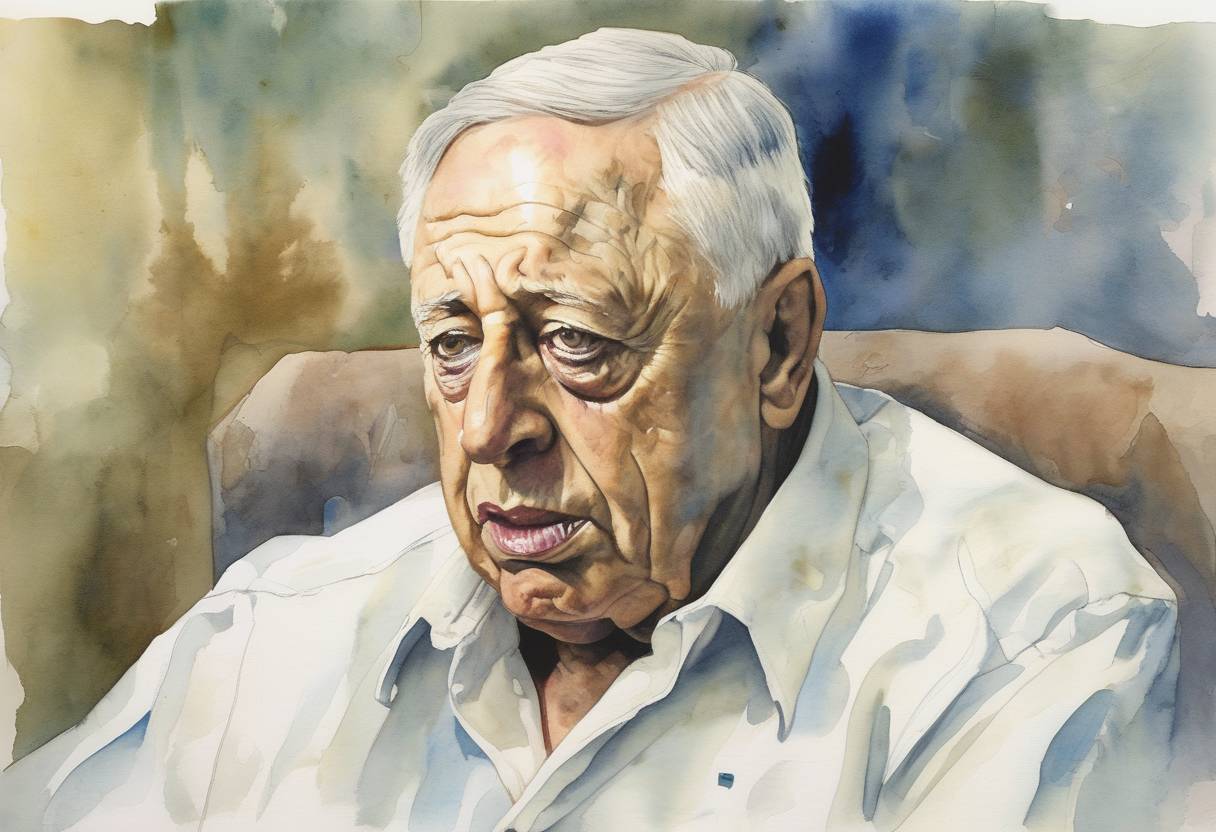
Ariel Sharon’s Severe Stroke: January 4, 2006
On January 4, 2006, Israeli Prime Minister Ariel Sharon suffered a severe stroke that led to his incapacitation and effectively ended his political career. This event marked a significant turning point in Israeli politics and had lasting implications for the region.
Background
Ariel Sharon, a prominent figure in Israeli politics and military history, had been serving as Prime Minister since March 2001. Known for his military prowess and controversial political decisions, Sharon played a crucial role in shaping Israel’s policies. In 2005, he orchestrated the unilateral disengagement from the Gaza Strip, a move that was both praised and criticized domestically and internationally.
In November 2005, Sharon left the Likud party, which he had helped found, to establish a new centrist party called Kadima. This move was seen as a strategic effort to gain broader support for his policies, particularly the peace process with the Palestinians.
The Stroke
On the evening of January 4, 2006, Ariel Sharon suffered a massive hemorrhagic stroke. He was rushed to Hadassah Medical Center in Jerusalem, where he underwent several hours of surgery to stop the bleeding in his brain. Despite the medical team’s efforts, Sharon’s condition remained critical, and he was placed in a medically induced coma.
This stroke was Sharon’s second in less than a month; he had suffered a minor ischemic stroke on December 18, 2005, but had returned to work shortly thereafter. The severity of the January stroke, however, left him incapacitated and unable to resume his duties as Prime Minister.
Political Consequences
Following Sharon’s incapacitation, Deputy Prime Minister Ehud Olmert assumed the role of Acting Prime Minister. Olmert later became the official Prime Minister after Kadima won the largest number of seats in the March 2006 elections.
Sharon’s absence from the political scene had significant ramifications:
- Kadima’s Future: The party Sharon founded continued to play a central role in Israeli politics under Olmert’s leadership, although it faced challenges without Sharon’s charismatic leadership.
- Peace Process: Sharon’s incapacitation stalled momentum on the peace process with the Palestinians, as his vision for a two-state solution and further unilateral withdrawals were left unfulfilled.
- Political Landscape: Sharon’s departure from politics led to a realignment within Israeli political parties, influencing the balance of power and the direction of future policies.
Aftermath
Ariel Sharon remained in a coma for the rest of his life, passing away on January 11, 2014, at the age of 85. His legacy is complex, with supporters praising his strategic acumen and detractors criticizing his military actions and settlement policies.
Sharon’s stroke and subsequent incapacitation underscored the unpredictability of political leadership and its impact on national and international affairs. His absence left a void in Israeli politics that shaped the country’s trajectory in the years that followed.