The End of the Warsaw Uprising: October 2, 1944
1944 · Warsaw, Poland
The Warsaw Uprising officially ends as the remaining Polish resistance in Warsaw surrenders to the German forces.
June 27, 1944
The Battle of Osuchy took place, one of the largest battles between Polish resistance and Nazi Germany during World War II.
Osuchy, Poland | Polish resistance
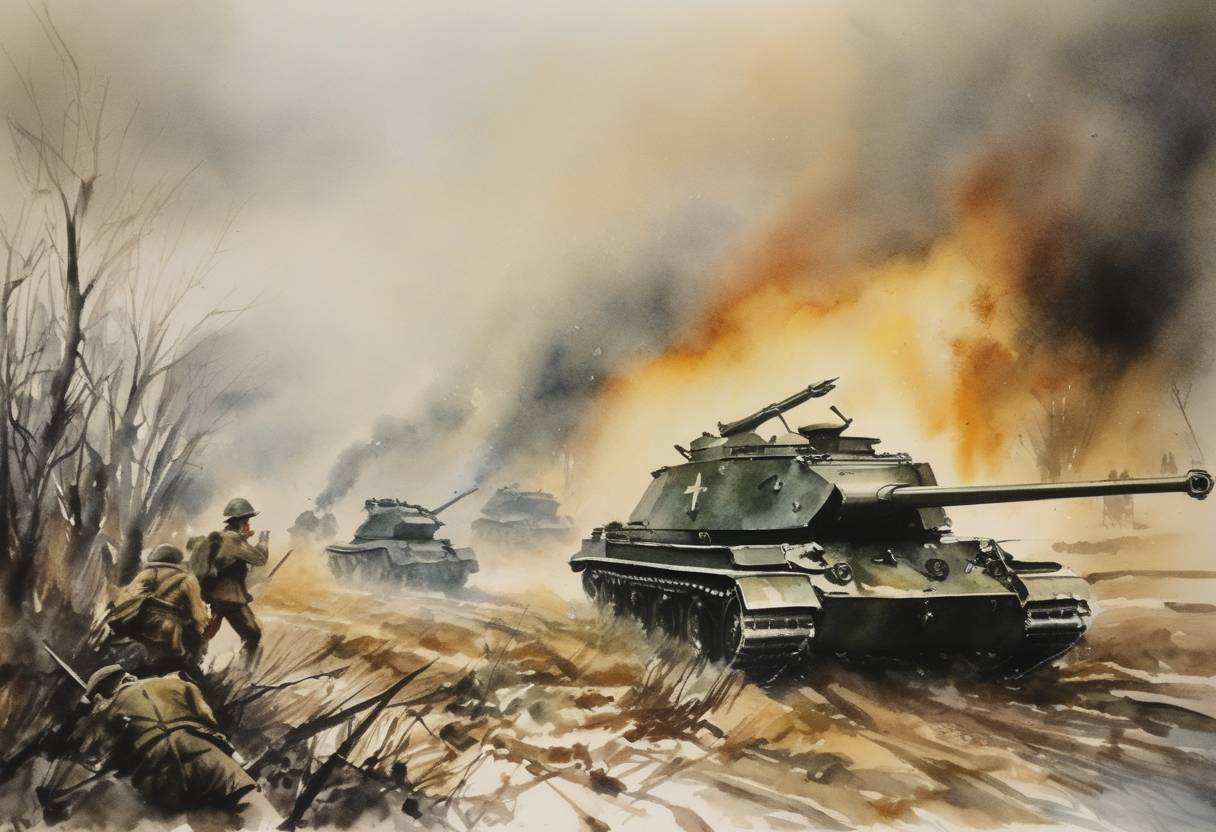
The Battle of Osuchy is recognized as one of the largest engagements involving the Polish resistance and Nazi Germany during the Second World War. The battle took place in the region of Osuchy, a small village located in southeastern Poland, during the phase of intense guerrilla warfare in 1944.
In the summer of 1944, Poland was under brutal occupation by Nazi Germany, with the Soviet Union advancing from the east. The Polish resistance movement, particularly the Home Army (Armia Krajowa or AK), was ramping up its activities to concurrently resist the Germans and prepare for liberation. As part of their efforts, the resistance organized several partisan units in the dense forests of the Lublin region, aiming to disrupt German communications and facilitate the Soviet advance.
Prior to the Battle of Osuchy, an operation known as “Operation Sturmwind II” (“Hurricane”) was launched by the German military. Its aim was to eliminate the growing Polish and Soviet partisan presence in the area. The Polish partisan forces, composed primarily of the Home Army and other local units, had established strongholds in the Solska Forest, where they engaged in ambush tactics against the Germans.
The battle commenced on June 25 and culminated on June 27, 1944. The Germans deployed overwhelming force, including infantry, artillery, and air support, encircling the partisan units in the forested terrain. Vastly outnumbered and outgunned, the Polish forces faced enormous odds but fought tenaciously to break the siege.
During the peak of the battle on June 27, the situation became dire for the Polish partisans. German forces systematically compressed the encirclement. Despite the near hopeless scenario, Polish resistance fighters made several desperate attempts to break through the encirclement.
By the end of June 27, the battle resulted in a catastrophic loss for the Polish partisans. Many were killed, captured, or forced to retreat further into the forest. The precise number of casualties is difficult to estimate but is considered to be one of the heaviest suffered by the Polish resistance during the war. The resistance at Osuchy demonstrated the resilience and determination of the Polish partisans despite overwhelming adversity.
The Battle of Osuchy highlights the fierce and costly struggle of the Polish resistance against the German occupation. While it was a tactical defeat, the battle underscored the persistent and widespread opposition the German forces faced across occupied Europe. It also set a precedent for the growing partisan warfare that characterized much of the eastern front in the latter stages of the war.
Remembered for its bravery and the heavy losses sustained, the Battle of Osuchy is commemorated as a symbol of Polish resistance. It contributes to the narrative of relentless and multifaceted opposition to Nazi occupation during WWII, embodying the larger theme of resistance movements that played a significant role in the Allied victory.
Source: en.wikipedia.org