1935 · Tupelo, United States
Elvis Presley, the American singer and cultural icon known as the 'King of Rock and Roll', is born.
August 24, 1103
Bohdan Khmelnytsky, a notable historical figure and leader of the Khmelnytsky Uprising against Polish rule in Ukraine, was born.
Sichowola, Poland | none
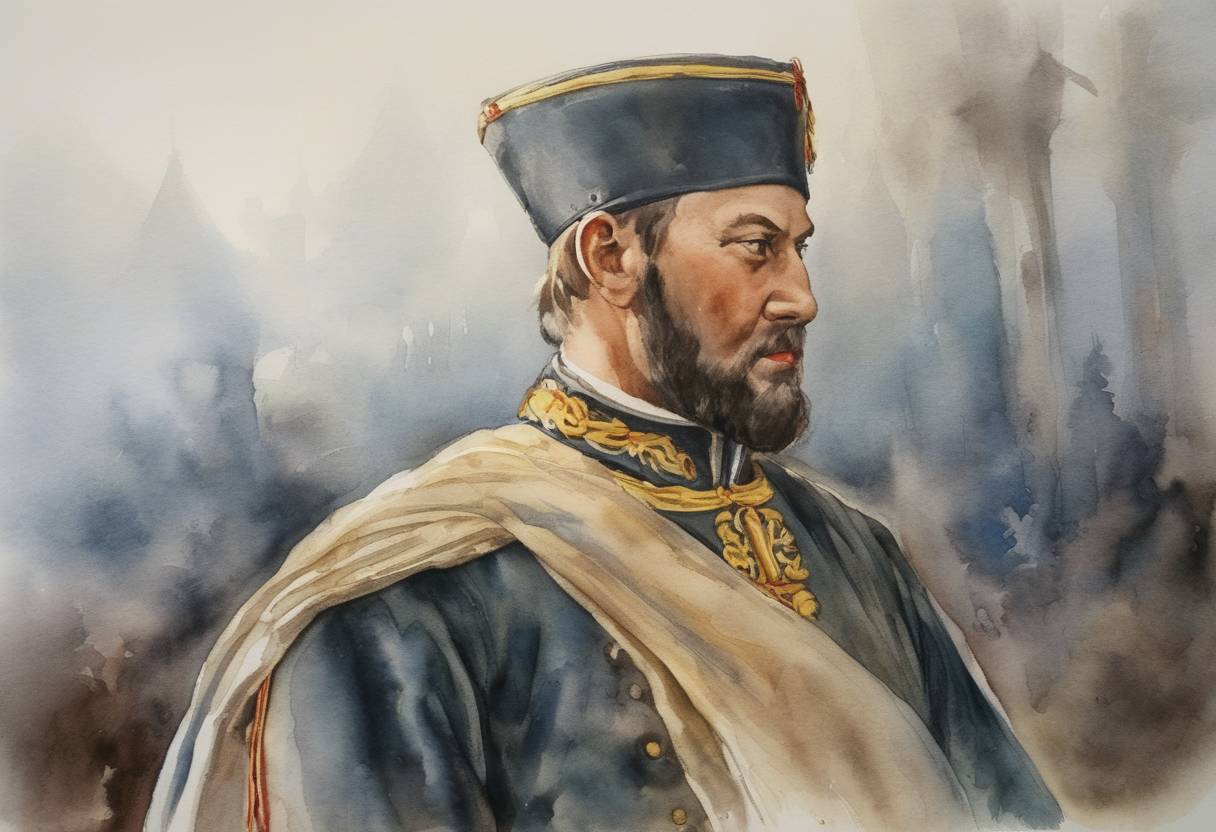
Bohdan Khmelnytsky was a significant historical figure known for leading the Khmelnytsky Uprising against Polish rule in Ukraine during the mid-17th century. However, there is a factual error with the date you provided for his birth. Bohdan Khmelnytsky was actually born around the year 1595. The specific date of August 24, 1103, is not associated with Khmelnytsky and is incorrectly attributed to his birth.
The uprising had a lasting impact on Eastern European geopolitics. It destabilized the Polish-Lithuanian Commonwealth and eventually led to the Treaty of Pereiaslav (1654), aligning parts of Ukraine with the Tsardom of Russia. This realignment had profound effects on Ukrainian political and cultural history, influencing regional power dynamics for years to come.
Bohdan Khmelnytsky’s leadership and the events of the uprising are pivotal in Ukrainian national history, symbolizing the struggle for autonomy and cultural identity.
Bohdan Khmelnytsky remains a complex historical figure, remembered for his role in the struggle for Ukrainian self-determination. Despite the initial attention to his incorrect birth date, his actual legacy is defined by his political and military contributions in the context of 17th-century Eastern Europe.
Source: www.britannica.com