Utah's Admission as the 45th State of the United States
1896 · Salt Lake City, United States
Utah was admitted as the 45th state of the United States.
February 12, 1870
Women in the Utah Territory gained the right to vote, making Utah the second U.S. territory to grant voting rights to women after Wyoming.
Salt Lake City, United States | Utah Territorial Legislature
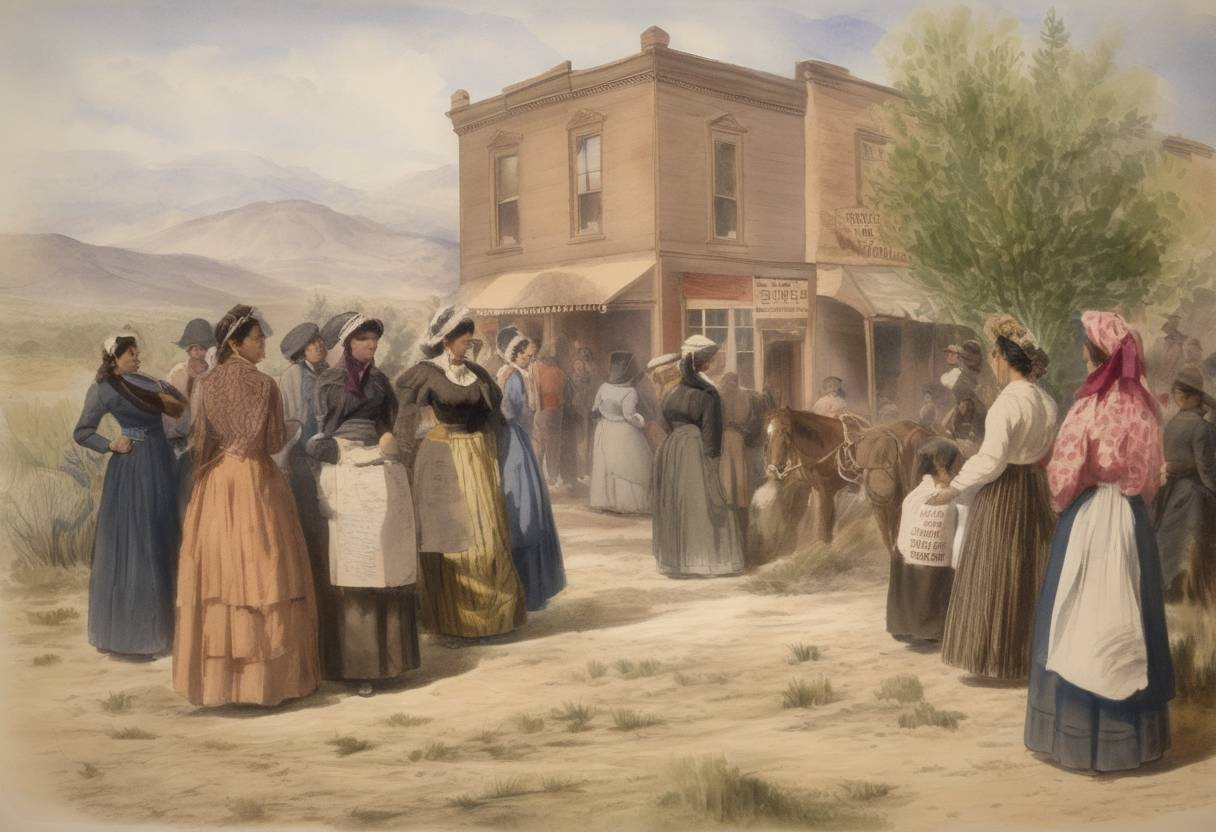
On February 12, 1870, the Utah Territory made a historic advancement in women’s rights by officially granting women the right to vote. This pivotal event made Utah the second U.S. territory to extend suffrage to women, following the Wyoming Territory’s decision in 1869.
The granting of voting rights to women in Utah was influenced by a complex interplay of social, political, and religious factors. The Latter-day Saints (Mormons), who constituted the majority of the territory’s population, played a significant role in this development. At the time, the national women’s suffrage movement was gaining momentum, and women in Utah actively participated in advocating for equal voting rights.
In the late 19th century, the U.S. Congress was scrutinizing Utah largely due to the practice of polygamy among Mormons. In an attempt to counteract federal intervention and promote a positive image of the territory, Utah’s leadership saw enfranchising women as a strategic move. By letting women vote, they aimed to demonstrate a progressive stance and strengthen their community’s political voice.
The passage of the women’s suffrage law was facilitated by a legislative act of the Utah Territorial Legislature, which formally became law on February 12, 1870. This legislative action allowed women aged 21 and over to vote in local and territorial elections, marking a significant step towards gender equality in voting rights.
The decision to grant women the vote in Utah had reverberating impacts. It highlighted the increasing national and regional attention on women’s suffrage, contributing to broader discussions about women’s rights across the United States.
However, women’s suffrage in Utah, as in Wyoming, was colored by ongoing ideological battles, chiefly involving the anti-polygamy stance of the federal government. The inclusion of women voters was seen by some non-Mormons as a means to bolster Mormon influence through women’s votes. Despite such controversies, Utah’s move demonstrated the growing commitment to gender equality in civic participation.
In 1896, Utah would become a state, and women retained their right to vote, contributing to the broader narrative that would culminate in the passage of the 19th Amendment to the U.S. Constitution in 1920, which granted all American women the right to vote.
The Utah Territory’s decision on February 12, 1870, remains a landmark moment in the history of women’s suffrage in the United States, exemplifying both regional progressivism and the tactical adjustments made in response to federal and societal pressures.
Source: www.utahwomenshistory.org