Discovery of the Magnetic North Pole by James Clark Ross
1831 · Magnetic North Pole, Canada
James Clark Ross discovered the Magnetic North Pole.
November 14, 1770
James Bruce, a Scottish explorer, discovered what he believed to be the source of the Nile, the Blue Nile's origin at Lake Tana in Ethiopia.
Lake Tana, Ethiopia | British exploration party
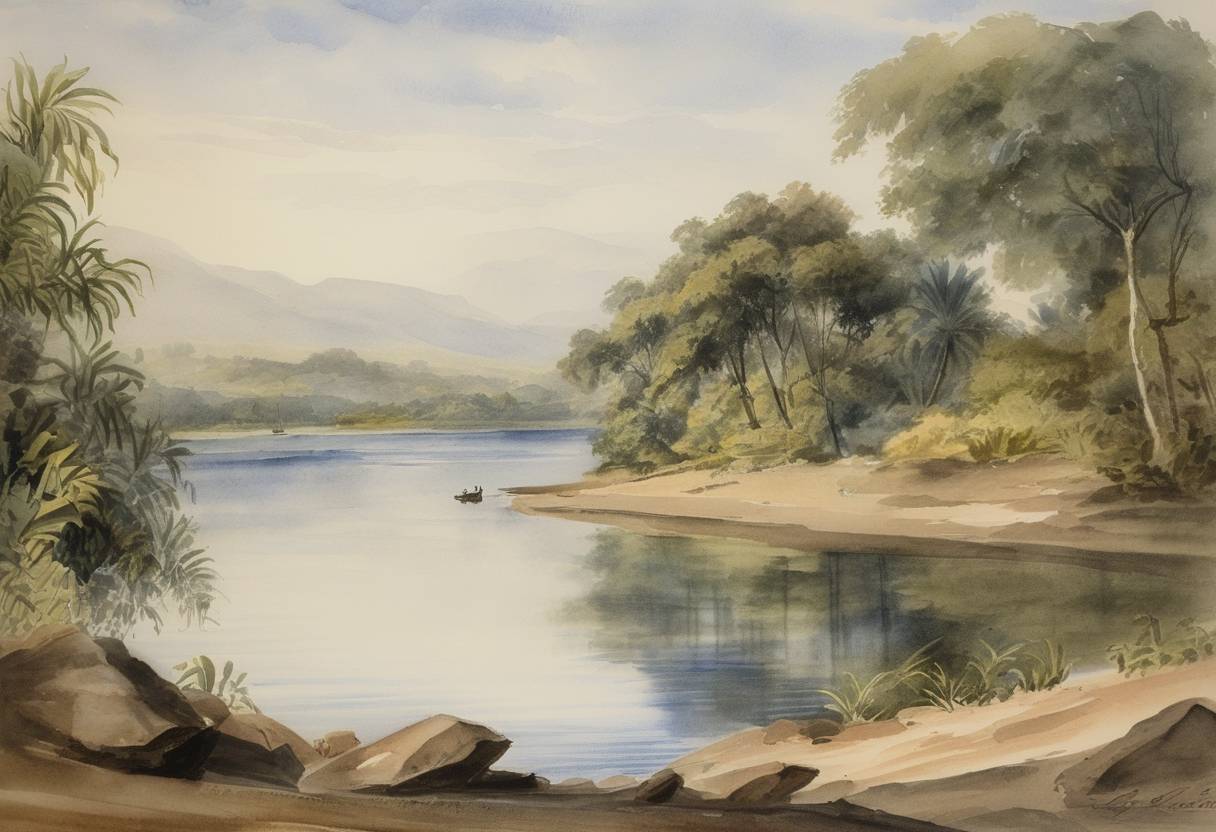
James Bruce, a Scottish explorer, embarked on an ambitious journey in the mid-18th century to locate the source of the Nile River, which was a matter of great intrigue and mystery in the geographies of the time. The Nile, one of the longest rivers in the world, held significant historical and economic importance, making its source a sought-after discovery.
Bruce’s voyage began in 1768 when he left for Egypt. He traveled through North Africa, eventually reaching Ethiopia, a region less explored by Europeans at the time. His goal was to follow the river to its origins, a daunting task due to the challenging terrain and political dynamics in Ethiopia.
On November 14, 1770, James Bruce reached what he believed to be the source of the Blue Nile at Lake Tana, in modern-day Ethiopia. This lake is indeed one of the major tributaries of the Blue Nile, which contributes significantly to the Nile River system. Bruce’s assertions and prolific documentation of his findings were grounded in detailed observations and local assistance during his trek through the Ethiopian highlands.
Bruce’s journey was a remarkable feat of exploration, expanding European knowledge about the Nile River and Ethiopia. However, upon his return to Europe, Bruce faced skepticism from the scientific community and the public, as his accounts seemed extraordinary and difficult to verify at the time. It wasn’t until later that his recordings were confirmed, solidifying his role in the history of African exploration.
Despite initial doubts, James Bruce’s contributions significantly advanced geographical understanding and set a precedent for future explorers seeking to unravel the mysteries of the Nile and other uncharted territories. His detailed journals and writings remain valuable historical documents, offering insights into 18th-century exploration methodologies and cross-cultural interactions.
Source: www.britannica.com