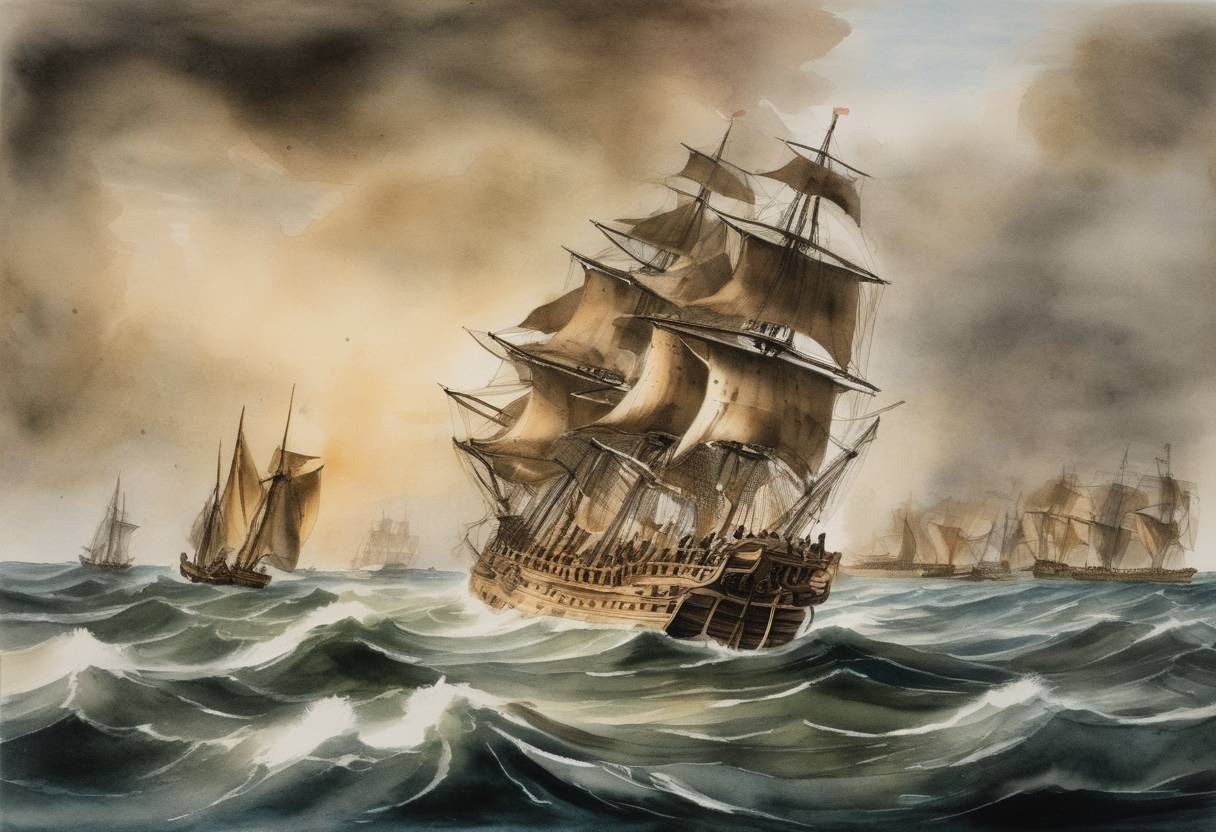
The Amistad Slave Ship Uprising - July 30, 1839
The Amistad case is one of the most well-known incidents involving African captives in the fight against slavery during the 19th century. On July 30, 1839, a rebellion took place on the Spanish schooner La Amistad, marking a turning point for abolitionist movements and raising awareness of the injustices of the transatlantic slave trade.
Background
La Amistad was a Spanish vessel that transported 53 African captives from Havana, Cuba, under the false pretense of them being legal slaves. These Africans, primarily the Mende people from what is now Sierra Leone, had been abducted from their homeland and sold into slavery in defiance of international treaties against the slave trade.
The Uprising
On the night of July 30, 1839, led by Sengbe Pieh, more commonly known as Joseph Cinqué, the captives aboard La Amistad managed to free themselves from their chains. Utilizing sugarcane knives found on the ship, they launched a revolt against their captors. During the uprising, they killed the ship’s captain, Ramon Ferrer, and another crew member, and took control of the ship.
Cinqué and the other insurgents spared the lives of José Ruiz and Pedro Montez, the two Spanish survivors on board, believing they could navigate the ship back to Africa. However, Ruiz and Montez deceptively steered the ship northeast, up the North American coast, hoping to reach land under the cover of darkness.
Consequences and Significance
After more than two months at sea, and with dwindling supplies, La Amistad was intercepted by the USS Washington, a U.S. Navy brig, near Long Island, New York. The Africans were taken into custody and charged with murder and piracy.
The subsequent court case drew international attention and became a pivotal moment in the abolitionist movement. Abolitionists in the United States rallied to the defense of the captives, arguing for their right to freedom. The case eventually reached the U.S. Supreme Court, which ruled in favor of the Africans, acknowledging their right to resist unlawful enslavement and ordering their release.
Aftermath
The Amistad incident highlighted the brutal realities of the transatlantic slave trade and energized abolitionist campaigns in America and Europe. The captives, following their release, were returned to Sierra Leone in 1842, supported by abolitionist funds.
The Amistad case not only challenged the legal parameters of slavery but also underscored the power of individual and collective resistance against oppression, contributing significantly to the broader abolitionist narrative and the quest for human rights.
Broader Impact
The events aboard La Amistad underscored the need for increased scrutiny and eventual abolition of the slave trade, reaffirming the rights of all individuals to freedom and self-determination. The uprising is a lasting testament to the courage and resilience of those who fought against oppression, influencing both contemporary and subsequent dialogues on human rights and justice.