The First-Ever International Football Match: Scotland vs. England
1872 · Glasgow, Scotland
The first-ever international football match took place between Scotland and England at Hamilton Crescent in Glasgow, ending in a 0-0 draw.
March 12, 1881
Andrew Watson became the world's first black international football captain, leading Scotland to a 6-1 victory against England.
London, United Kingdom | Scottish Football Association
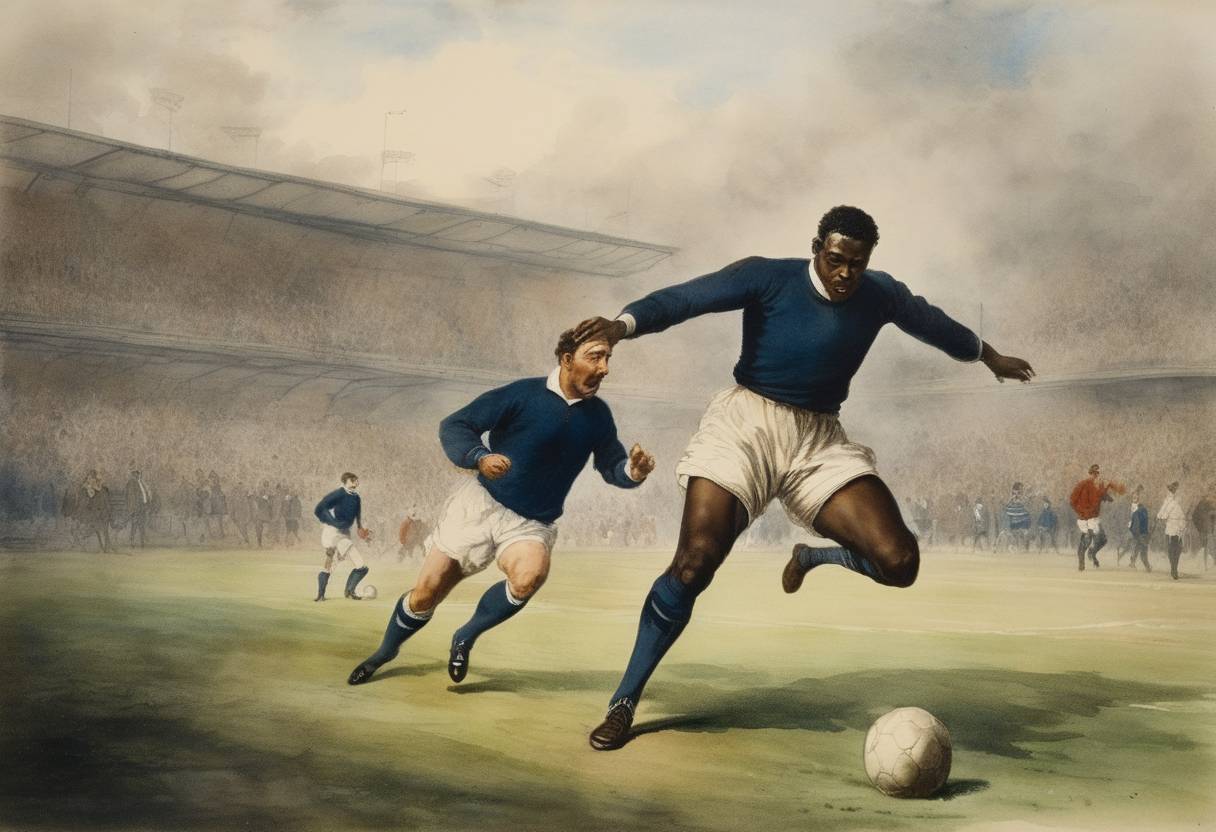
On March 12, 1881, Andrew Watson made history by becoming the world’s first black international football captain. On this date, Watson led the Scottish national team to an impressive 6-1 victory over England in a match held at The Oval in London. This triumph marked a significant moment in both sports and social history.
Andrew Watson was born in May 1856 in Georgetown, British Guiana (now Guyana). He was the son of a wealthy Scottish sugar planter and a local woman of African descent. Watson moved to the United Kingdom for his education and later attended the University of Glasgow. An exceptional footballer, Watson was known for his versatility on the field and his strategic understanding of the game.
He played for various esteemed clubs, including Maxwell and Parkgrove, and later moved to Queen’s Park, which at the time was the preeminent team in Scotland. His performance on the field quickly gained him recognition as a skilled player and a natural leader.
The 1881 fixture between Scotland and England was part of a burgeoning rivalry that solidified international football as a major sporting event. Scotland’s decisive victory, led by Watson, was a testament to their dominance on the field. Watson’s captaincy played a crucial role; his tactical vision and ability to inspire his teammates helped Scotland secure their comprehensive win.
Andrew Watson’s role as a captain and his contributions to the team’s victory were groundbreaking. At a time when racial barriers were prevalent, Watson’s achievements challenged societal norms and laid the groundwork for future generations of black athletes in football and other sports.
His pioneering legacy is seen as an inspiring story of talent and leadership rising above the racial prejudices of the era. Watson remains an iconic figure in football history, celebrated for his skill and his role in paving the way for greater inclusion and diversity in the sport.
Following the historic victory, Watson continued to make significant contributions to football. He played several more matches for Scotland and later relocated to London, where he joined the Corinthians, a club known for promoting the spirit of the amateur game. His influence extended beyond his playing career, inspiring future generations of players and contributing to the evolving narrative of football as a sport for all.
Andrew Watson’s story serves as a powerful reminder of the progress made over the years and the ongoing journey towards equality and representation in sports.
Source: www.fifa.com