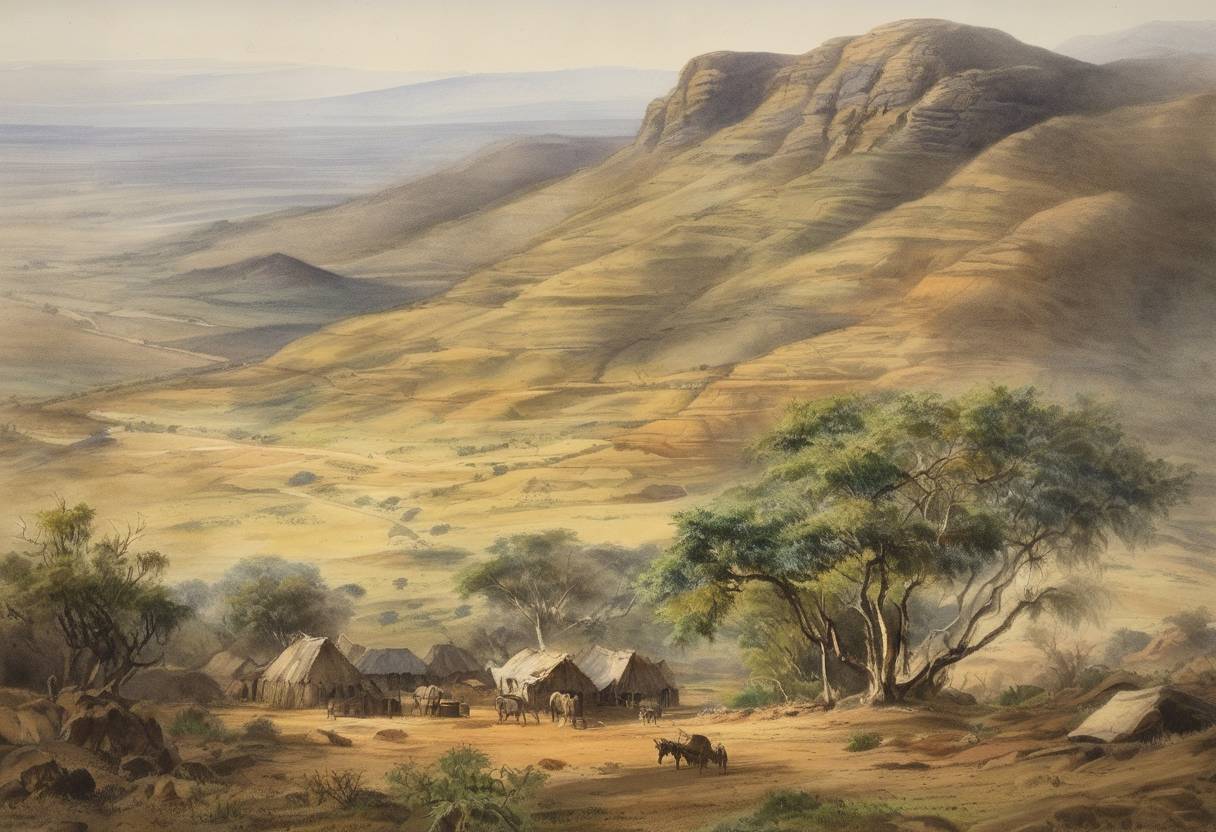
Annexation of Griqualand West - October 27, 1871
On October 27, 1871, the diamond-rich region of Griqualand West in present-day South Africa was officially annexed by the British Empire. This event marked a significant turning point in the colonial history of Southern Africa, as it set the stage for increased British influence due to the economic importance of the area.
Historical Context
In the late 19th century, the discovery of diamonds in the Griqualand West region of South Africa prompted waves of prospectors and settlers to the area. The land was initially inhabited by the Griqua people, a semi-nomadic community of mixed descent. Leadership under their leader, Nicolaas Waterboer, sought to maintain control over the lands amid competing interests.
Events Leading to Annexation
The diamond discoveries in the Kimberley region, beginning in 1866, ushered in a “diamond rush,” attracting fortune-seekers from around the world. Various parties, including the Griqua, the Boer settlers from the Orange Free State, and the British Cape Colony, laid claim to the territory. Disputes over rightful ownership intensified, leading to a complex legal battle that was ultimately escalated to the British colonial authorities.
The Keate Award
A significant development occurred with the intervention of the British-appointed Lieutenant Governor of Natal, Henry Barkly, who was tasked with arbitrating the territorial disputes through a process known as the Keate Award. On October 17, 1871, Barkly announced the award, which recognized Griqua ownership of the land, but in practice, the award favored British annexation due to the underlying interests in securing diamond resources.
Consequences and Significance
The annexation of Griqualand West had several immediate and long-term impacts:
- Economic Impact: The region’s annexation facilitated control over the burgeoning diamond trade and spurred economic growth, which would later enhance the significance of mining to the South African economy.
- Colonial Expansion: It exemplified British expansionist policies in Southern Africa, further consolidating their influence in the region.
- Griqua Displacement: The annexation marginally disenfranchised the Griqua people, leading to their eventual displacement and diminishing influence.
- Political Development: Griqualand West was incorporated as a separate crown colony, and later, it became integrated into the Cape Colony in 1880, thus altering the socio-political landscape of the area.
The annexation underscored the geopolitical importance of mineral wealth and its role in shaping colonial strategies in Africa, laying groundwork for future conflicts and developments in South African history.