1660 · Boston, United States
The controversial trial and execution of Mary Dyer, an English Quaker, in Boston. She was hanged for defying a Puritan law banishing Quakers from the colony.
November 4, 1646
The Massachusetts Bay Colony passed a law making it illegal for the Quakers to enter the colony, reflecting the religious intolerance and strict Puritanical governance of the time.
Boston, Massachusetts Bay Colony | General Court of the Massachusetts Bay Colony
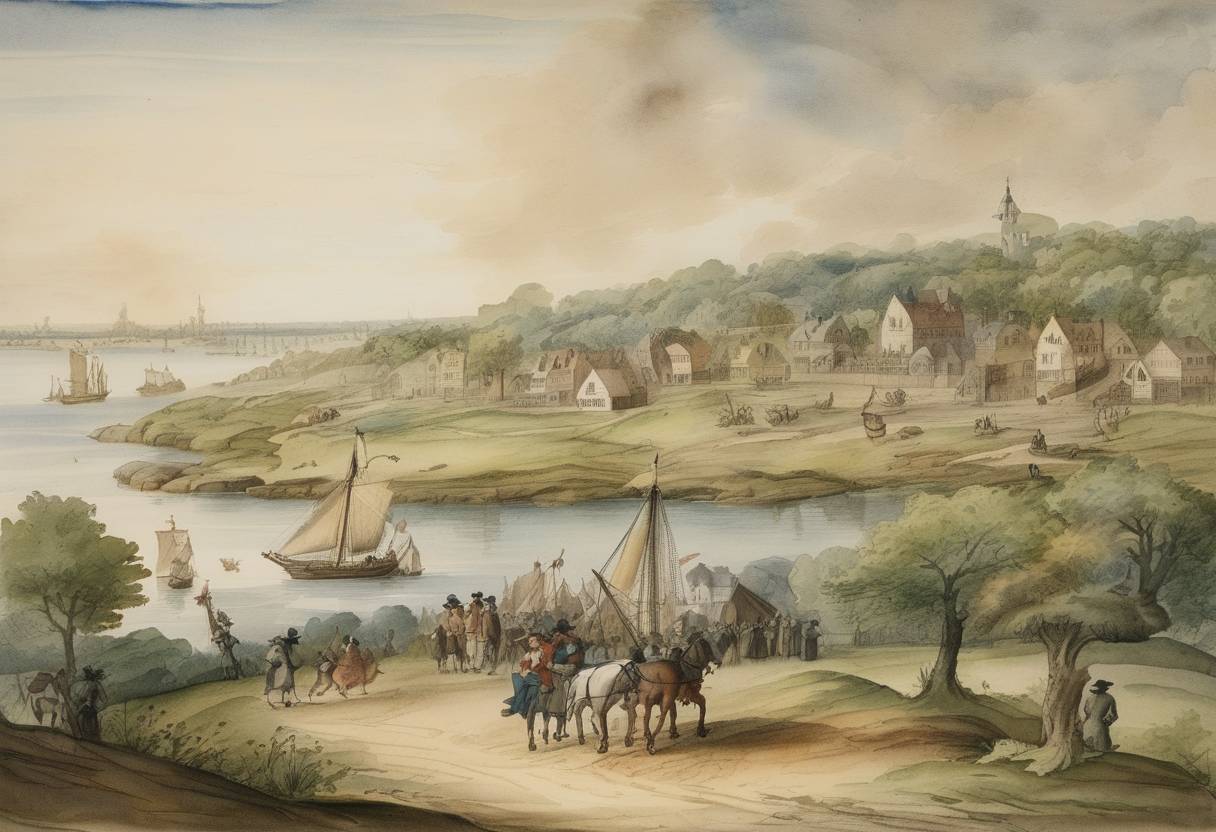
On November 4, 1646, the Massachusetts Bay Colony enacted its first law specifically targeting the Quakers, reflecting the colony’s rigidly Puritanical governance and its broader context of religious intolerance. The Puritans, who had fled England to escape religious persecution and establish a society based on their religious principles, paradoxically found themselves enacting similar restrictive measures to preserve their vision of an ideal Christian community.
The Massachusetts Bay Colony was founded in 1630 by Puritan settlers seeking religious freedom. However, this freedom was narrowly defined within the parameters of Puritan beliefs. By the mid-17th century, the colony had established a theocratic government where church leaders wielded significant influence over both spiritual and civic matters.
Quakers, or the Religious Society of Friends, emerged as a Christian sect in the mid-17th century with doctrines emphasizing direct, personal encounters with God, the inner light, and pacifism. They rejected formal ministry and traditional sacraments, and they practiced plain speech and attire. These beliefs stood in stark contrast to the hierarchical and doctrinal rigidity of Puritanism.
The law passed on November 4, 1646, was the Massachusetts Bay Colony’s first attempt to legally prevent Quakers from entering and spreading their beliefs within its borders. This move aimed to suppress what was seen as a destabilizing influence to the colony’s established religious and social order. The legislation stipulated penalties for both Quakers who entered the colony and those who provided them aid.
The intolerance underscored by this legislation reflected the pervasive atmosphere of religious exclusivity and control that marked early colonial governance in New England. The initial law of 1646 paved the way for even harsher measures over the following years, including the 1656 statute that imposed fines and corporal punishment on Quakers and culminated in the execution of several Quaker missionaries later in the 1650s under the “Boston Martyrs” cases.
This period of persecution highlighted the complex dynamics of religious freedom and intolerance that characterized early American colonial history. The anti-Quaker laws in Massachusetts were emblematic of the broader challenges that religious pluralism posed to established order, and they became part of a historical narrative that informs discussions of religious liberty in the United States.
While these laws reflected the Puritan colony’s commitment to maintaining its religious orthodoxy, they also underscored the ironies and contradictions inherent in the colony’s origins and ideals. Such historic episodes contributed to the ongoing evolution of religious tolerance and the eventual emergence of a more inclusive approach to religious diversity in America.
Source: www.history.com