Election of Pope Adrian II on December 14, 867
867 · Rome, Papal States
Adrian II was elected as the Pope of the Roman Catholic Church.
January 9, 1522
Pope Adrian VI was elected as the 218th pope, the last non-Italian pope until John Paul II in 1978.
Rome, Papal States | Roman Catholic Church
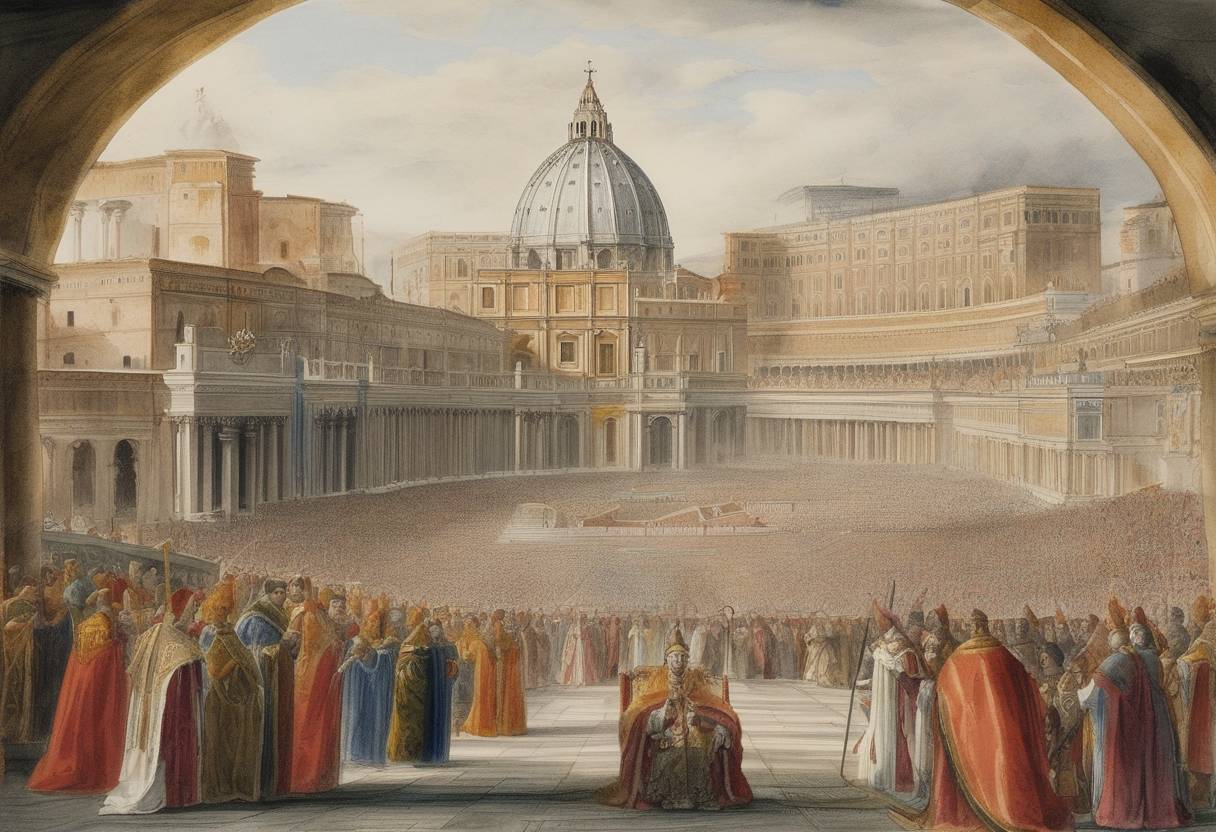
On January 9, 1522, Adrian Florenszoon Boeyens, known as Adrian of Utrecht, was elected the 218th pope of the Roman Catholic Church, taking the name Adrian VI. His election marked a significant moment in the history of the papacy as he became the last non-Italian pope until the election of John Paul II in 1978.
Adrian was born on March 2, 1459, in Utrecht, which was then part of the Holy Roman Empire, now in the Netherlands. He was deeply rooted in academia, having studied at and later taught theology at the University of Louvain in Belgium. Adrian was a respected theologian and became an advisor to important figures of the time, including Emperor Charles V, who played a critical role in his rise within the church.
Adrian’s climb through the ecclesiastical ranks was steady and prestigious. He was appointed bishop of Tortosa in Spain in 1516 and shortly after was made a cardinal. During his time in Spain, Adrian served as the regent for the Spanish territories on behalf of Charles V, further solidifying his influence and leadership credentials.
The papal conclave of December 1521 lasted until January 1522 and was deeply divided. The election of Adrian, who was not present at the conclave, was a compromise choice, reflecting the influence of Emperor Charles V. His selection as pope was unexpected, largely due to the fact that he was a foreigner and had not participated in the Italian-centered politics traditionally dominating the papal courts.
Pope Adrian VI faced a challenging pontificate starting on his election. His papacy occurred during a time of significant upheaval within the Church, marked by the Protestant Reformation initiated by Martin Luther in 1517. Adrian was committed to reforming the Catholic Church and addressing the criticism posed by reformers. However, his attempts to reform the Curia and address widespread corruption met with limited success during his short tenure.
His efforts also faced immense resistance from the entrenched Italian curial officials and other powerful factions within the Church. This was compounded by the political complexities of the time, including the ongoing conflict between Francis I of France and the Holy Roman Emperor Charles V, which strained the Church’s diplomatic resources.
Adrian VI’s papacy lasted until his death on September 14, 1523. Although his reign was brief and his reform efforts were mostly unrealized, his election underscored the influence of external European powers on the Vatican. It also prefigured later reformist pontificates, most notably that of Paul III, who convened the Council of Trent to address many of the Church’s issues.
His foreign origin highlighted the persistent tension between the Italian-dominated papacy and the broader European political landscape. Adrian VI’s election as pope and subsequent attempts at reform reflect the complexities of the Catholic Church during one of its most transformative periods, as well as the global ambitions of the papacy in the face of emerging Protestantism.
Source: en.wikipedia.org