Nationalization of the Suez Canal by Gamal Abdel Nasser
1956 · Cairo, Egypt
Egyptian President Gamal Abdel Nasser nationalized the Suez Canal, leading to the Suez Crisis.
June 23, 1956
Gamal Abdel Nasser becomes President of Egypt.
Cairo, Egypt | Egyptian government
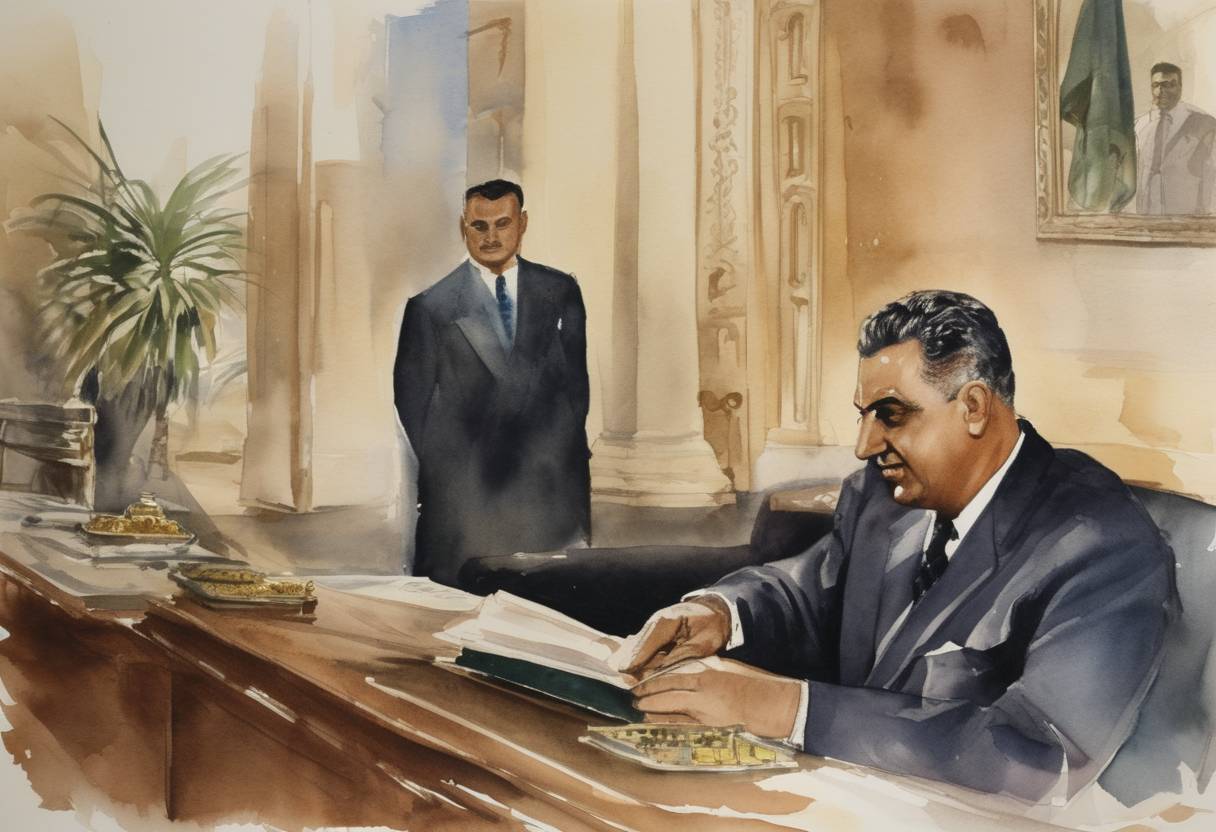
On June 23, 1956, Gamal Abdel Nasser officially assumed the presidency of Egypt, marking a significant turning point in the country’s modern history. This event was the culmination of a series of transformative changes that began with the Egyptian Revolution of 1952, which ended the centuries-long monarchy and established a republic.
Nasser’s ascent to leadership was closely tied to the revolution led by the Free Officers Movement, a group of nationalist military officers who overthrew King Farouk in July 1952. The revolution aimed to end foreign dominance and corruption, establish a republic, and introduce reforms to modernize Egypt. Initially, the figurehead leader was General Muhammad Naguib, the first President of Egypt. However, internal conflicts within the leadership and Naguib’s increasing unpopularity due to his inability to manage the complexities of governance led to his disempowerment.
Gamal Abdel Nasser, an influential leader of the Free Officers and a charismatic proponent of Arab nationalism, quickly rose through the ranks. By March 1954, Naguib was essentially sidelined after a power struggle, and Nasser emerged as the dominant figure in the government. In January 1956, a new constitution was approved by referendum, and Nasser formally took over the leadership of Egypt through public support.
In June 1956, a national referendum officially confirmed Nasser’s presidency, affirming his position as Egypt’s leader and marking the first time the position of president was filled by a vote in Egypt. This move secured his authority and enabled him to pursue significant domestic and foreign policy initiatives that would reshape Egypt’s role on the global stage.
As president, Nasser embarked on ambitious programs of industrialization, agrarian reform, and economic modernization aimed at breaking away from colonial influence and improving the lot of the Egyptian people. He nationalized the Suez Canal in July 1956, a decision that played a central role in the Suez Crisis later that year, bringing him international prominence and earning him widespread support from the Arab world.
Nasser’s presidency was also marked by his pursuit of a pan-Arab ideology, advocating for unity and cooperation among Arab nations. His policies and leadership were instrumental in establishing Egypt as a leader within the Non-Aligned Movement during the Cold War, thereby maintaining a degree of independence from both the United States and the Soviet Union.
Nasser’s presidency left a lasting legacy on Egypt and the Middle East. He is remembered as a pivotal nationalist leader who sought to balance modern statecraft with a vision for Arab solidarity. Despite challenges and controversies, including issues related to freedom of speech and political repression, his efforts significantly shaped the political landscape of the region.
Gamal Abdel Nasser remained in power until his death in 1970, leaving behind a complex legacy marked by continued debates over his contributions to Egypt’s national identity and his impact on regional geopolitics.
Source: www.britannica.com