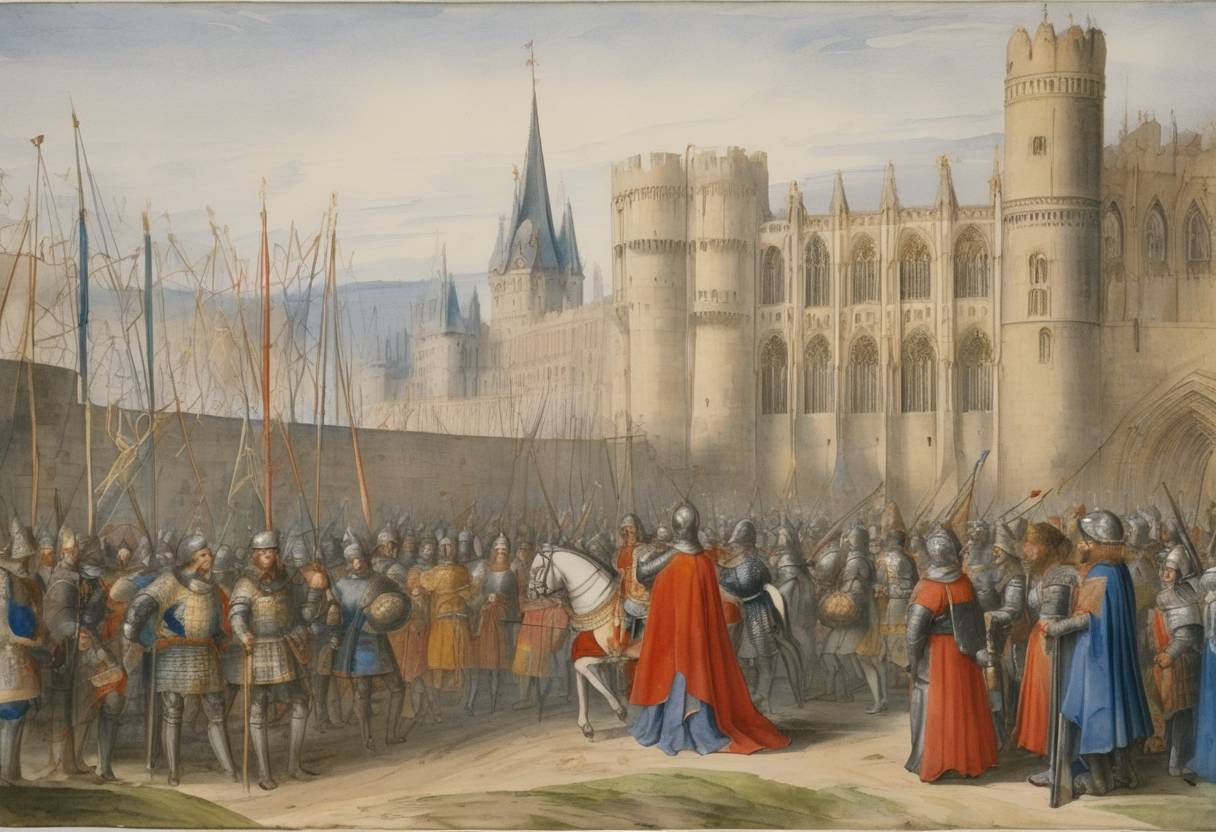
Edward III Declared King of France
On January 26, 1340, King Edward III of England formally proclaimed himself King of France, a pivotal declaration that significantly escalated tensions between England and France and became a major catalyst for the Hundred Years’ War.
Historical Context
- Dynastic Claims: Edward III’s claim to the French throne was rooted in dynastic ties. He was the grandson of Philip IV of France through his mother, Isabella of France, daughter of the former French king.
- Capetian Succession: The death of Charles IV in 1328, Edward’s uncle and the last direct Capetian king, led to a succession crisis. The French nobility favored Philip VI from the rival Valois branch due to Salic law, which excluded women from inheriting the French throne.
- Anglo-French Relations: Prior to his declaration, Edward III had a strained relationship with France, primarily due to territorial disputes in the duchy of Aquitaine and French support for Scotland against England.
Events Leading to the Declaration
- Renewed Hostilities: Tensions intensified when Philip VI confiscated Edward’s lands in Aquitaine in 1337, prompting Edward to assert his claim to the French throne as a legitimate grandson of Philip IV.
- Support and Strategy: To strengthen his position, Edward sought alliances with Flemish nobles and German principalities, challenging Philip VI’s legitimacy and preparing for armed conflict.
Consequences and Significance
- Hundred Years’ War: Edward’s declaration contributed directly to the outbreak of the Hundred Years’ War (1337–1453), a series of conflicts marked by intermittent battles and shifting alliances.
- Political and Military Strategies: Edward’s claim and subsequent military campaigns underscored the complex feudal loyalties and the growing impact of centralized monarchies. Battles like Crécy and Poitiers became pivotal moments in medieval warfare.
Broader Impact
- Legacy of Conflict: The war led to significant political, social, and economic changes in both England and France, laying the groundwork for the evolution of national identities and the eventual decline of feudal systems.
- Cultural and Historical Footprint: The protracted conflict influenced cultural narratives, with figures like the Black Prince emerging as emblematic of chivalric ideals and evolving military tactics.
The declaration of January 26, 1340, thus stands as a critical moment in medieval European history, illustrating the intricate web of kinship, power, and territorial ambition that defined the era.