Venezuelan Declaration of Independence - July 5, 1811
1811 · Caracas, Venezuela
Venezuela declared independence from Spain, marking the beginning of the Venezuelan War of Independence.
July 24, 1783
Simón Bolívar, a revolutionary leader who played a key role in Latin America's successful struggle for independence from the Spanish Empire, was born.
Caracas, Spanish Empire (present-day Venezuela) | none
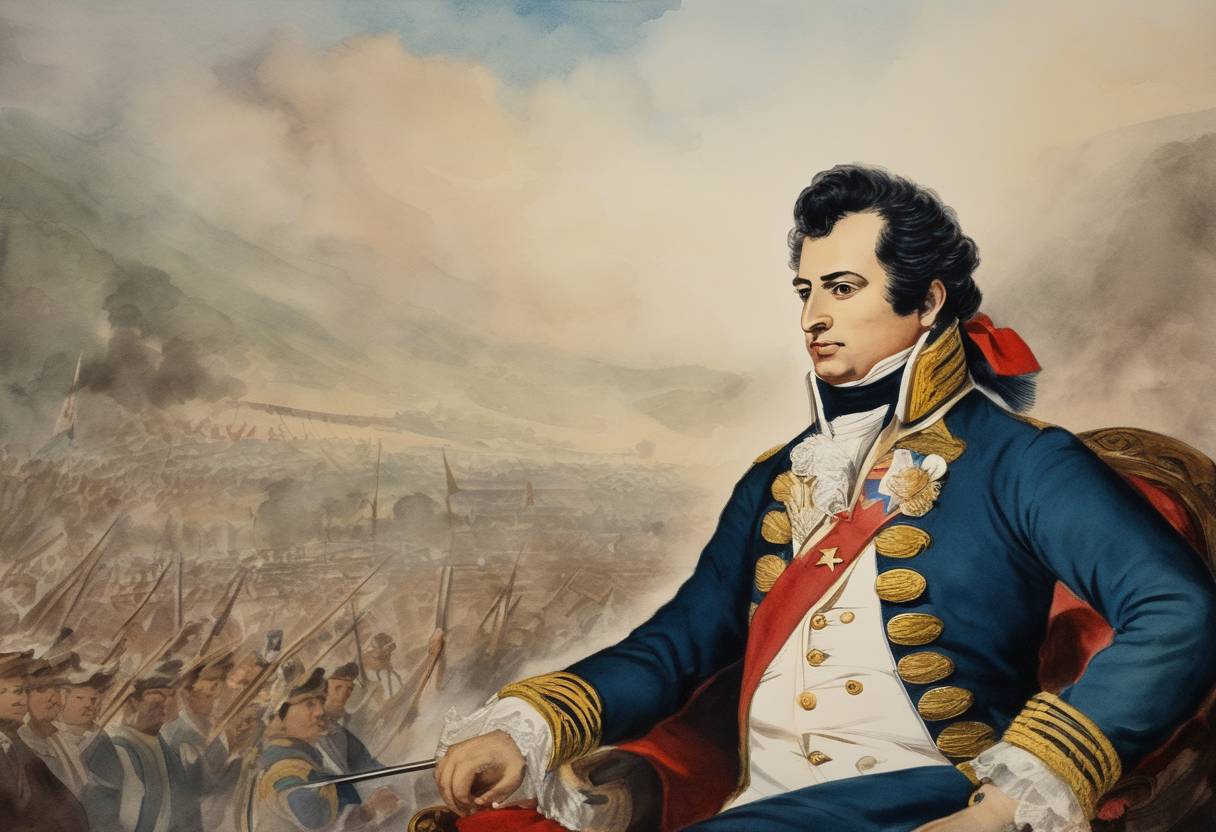
Simón Bolívar, one of the most renowned leaders of Latin America’s struggle for independence from the Spanish Empire, was born on July 24, 1783, in Caracas, which was then part of the Spanish colonial province of the Captaincy General of Venezuela. Bolívar emerged as the foremost revolutionary leader who inspired and mobilized diverse populations across the continent against colonial rule.
Born into a wealthy and aristocratic Criollo family, Simón José Antonio de la Santísima Trinidad Bolívar y Palacios was shaped by privilege but also by profound personal experiences and education. Orphaned at an early age, he was raised by his uncle and became deeply influenced by his tutors, most notably Simón Rodríguez, who instilled in him the enlightenment ideals of liberty and freedom that would later permeate his revolutionary vision.
Bolívar played a critical role in the independence movements across South America during the early 19th century. He was instrumental in the fight against Spanish rule in several countries, earning him the epithet, “El Libertador” (The Liberator). His efforts were pivotal in the independence of what are now Venezuela, Bolivia (named in his honor), Colombia, Ecuador, Peru, and Panama.
Bolívar’s vision extended beyond mere independence; he aimed to create a unified and prosperous Latin America. His dream of a united continent was encapsulated in his efforts to form Gran Colombia, a confederation of liberated territories founded in 1821. Though this federation eventually dissolved due to political and regional rivalries, Bolívar’s ideals continued to resonate and inspire subsequent generations of leaders and activists in Latin America.
Despite facing significant opposition and challenges, Bolívar’s leadership has left an indelible mark on the history of South America. His legacy endures not only in the countries he helped liberate but also in the ideals of liberty and unity he championed. Today, numerous monuments, educational institutions, and currencies across Latin America bear his name, reflecting the profound impact he had on the region’s history and identity.
Source: en.wikipedia.org