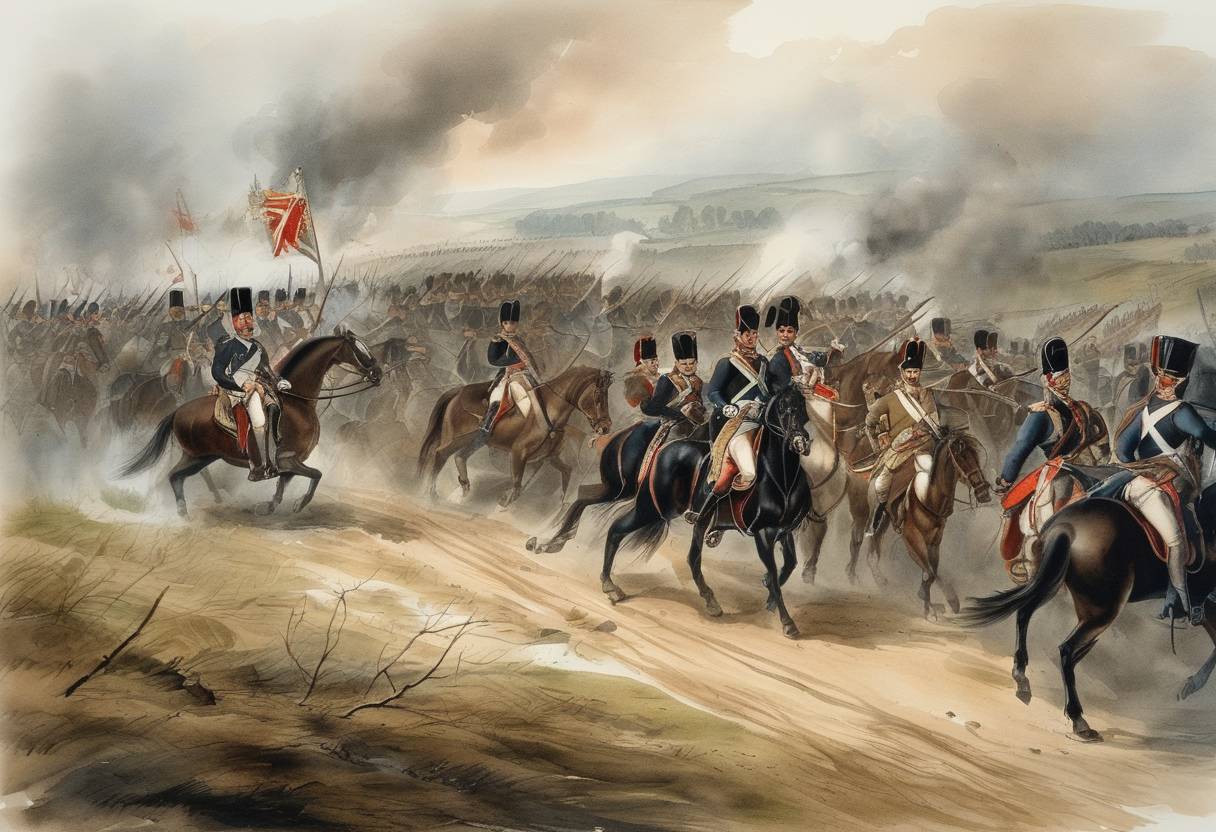
The Battle of Lützen: May 2, 1813
The Battle of Lützen, fought on May 2, 1813, was a significant military engagement during the War of the Sixth Coalition, a pivotal conflict within the broader Napoleonic Wars. This confrontation saw Emperor Napoleon I leading the French Imperial forces against a coalition army comprised of Prussian and Russian troops.
Background
After his disastrous Russian campaign in 1812, Napoleon returned to France to rebuild his army. Despite facing considerable challenges, including depleted resources and manpower, Napoleon quickly raised a new conscript army, which he set into the field to confront the advancing coalition forces.
The coalition, primarily composed of Prussian and Russian soldiers, aimed to capitalize on the weakened state of Napoleon’s forces. Under the leadership of Russian General Peter Wittgenstein and Prussian Field Marshal Gebhard Leberecht Blücher, the coalition sought to push Napoleon’s influence out of Germany.
Key Events of the Battle
Location and Initial Movements: The battle unfolded near the town of Lützen, in present-day Saxony-Anhalt, Germany. Napoleon’s forces, though numerically inferior and made up largely of inexperienced recruits, moved to preemptively strike the coalition forces, hoping to surprise them and secure a strategic advantage.
Engagement Details: The battle began in a confused manner, with both sides initiating skirmishes in the fields surrounding Lützen. The coalition forces attacked aggressively, attempting to gain a foothold against the French.
Napoleon’s Command: Napoleon demonstrated his tactical prowess by effectively utilizing the terrain and rallying his troops with decisive cavalry charges. His ability to reinforce weak points quickly and inspire his new army was crucial to holding the line against the coalition attacks.
Decisive French Counter-Attack: As the battle wore on, Napoleon launched a coordinated counter-attack. Utilizing the Young Guard and other elite units, he managed to overwhelm the coalition troops and force their retreat.
Aftermath and Consequences
The Battle of Lützen ended with a French tactical victory, allowing Napoleon to maintain his strategic position in Central Europe temporarily. Despite the victory, Napoleon did not achieve a decisive breakthrough, as the coalition forces managed to retreat in relatively good order. This meant the war continued, with subsequent battles being fought in the coming months.
The engagement underscored Napoleon’s continued military skill and the resilience of his rebuilt Grande Armée. However, it also highlighted the growing effectiveness and tenacity of the coalition forces, which would ultimately contribute to his eventual downfall. The unresolved conflicts signaled the beginning of a protracted campaign that would further weaken Napoleon’s empire.