Josiah Winslow's Raid Against the Narragansett - November 2, 1675
1675 · Narragansett, United States
Plymouth Colony governor Josiah Winslow led a colonial militia in a raid against the Narragansett during King Philip's War.
August 12, 1676
King Philip's War comes to an end with the death of the Wampanoag leader Metacomet, also known as King Philip, near Mount Hope, Rhode Island.
Mount Hope, Colony of Rhode Island and Providence Plantations | Wampanoag
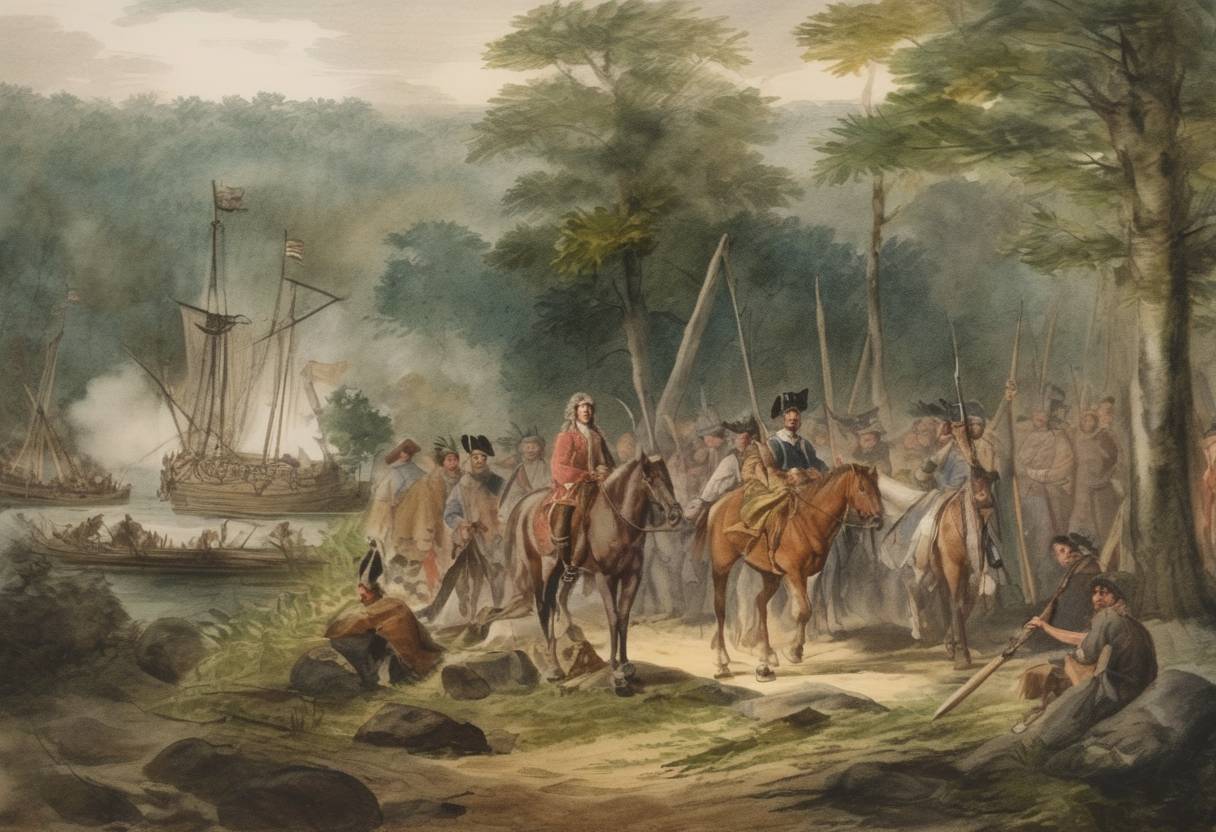
On August 12, 1676, King Philip’s War, a brutal conflict between Native American inhabitants of New England and English settlers, effectively came to an end with the death of Metacomet, also known as King Philip. This significant event took place near Mount Hope, Rhode Island.
King Philip’s War (1675-1676) was a pivotal conflict initiated largely due to tensions over land and the cultural intrusion of English settlers into Native territories. The war is named after Metacomet, a leader of the Wampanoag Confederacy. He was known as King Philip by the English.
The war began after a series of violent incidents, including the trial and execution of three of Metacomet’s men by English authorities. In response, Metacomet mobilized forces from various tribes, including the Wampanoag, Narragansett, and Nipmuck, aiming to halt the expansion of colonial settlements.
The conflict endured for over a year, characterized by brutal warfare and high casualties on both sides. The decisive event occurred on August 12, 1676, when Metacomet was killed during a skirmish near Mount Hope, Rhode Island. A Wampanoag informer named John Alderman, guided by information from a “praying Indian” (a Native American who had converted to Christianity and aligned with the English), shot Metacomet in a swamp where he was hiding.
Metacomet’s death marked the collapse of coordinated Native resistance in the region. His head was displayed in Plymouth Colony for two decades as a grim symbol of the English victory. The conflict resulted in the decimation of Native American populations in New England, with vast numbers of Native peoples killed, sold into slavery, or displaced from their lands.
King Philip’s War was one of the deadliest conflicts, per capita, in American history. It significantly altered the power dynamics in the region, establishing English dominance and diminishing Native American influence. The war also set a precedent for future relations between Native peoples and European settlers, affecting policies and attitudes for centuries to come.
Source: en.wikipedia.org