Trial of Knights Templar Leaders on June 9, 1310
1310 · Paris, France
The French Order of the Knights Templar leaders, including Jacques de Molay, were tried for heresy and sentenced to life imprisonment.
November 22, 1307
Pope Clement V issued the papal bull 'Pastoralis Praeeminentiae,' which instructed the monarchs of Europe to arrest the Knights Templar and seize their assets.
Poitiers, France | Catholic Church
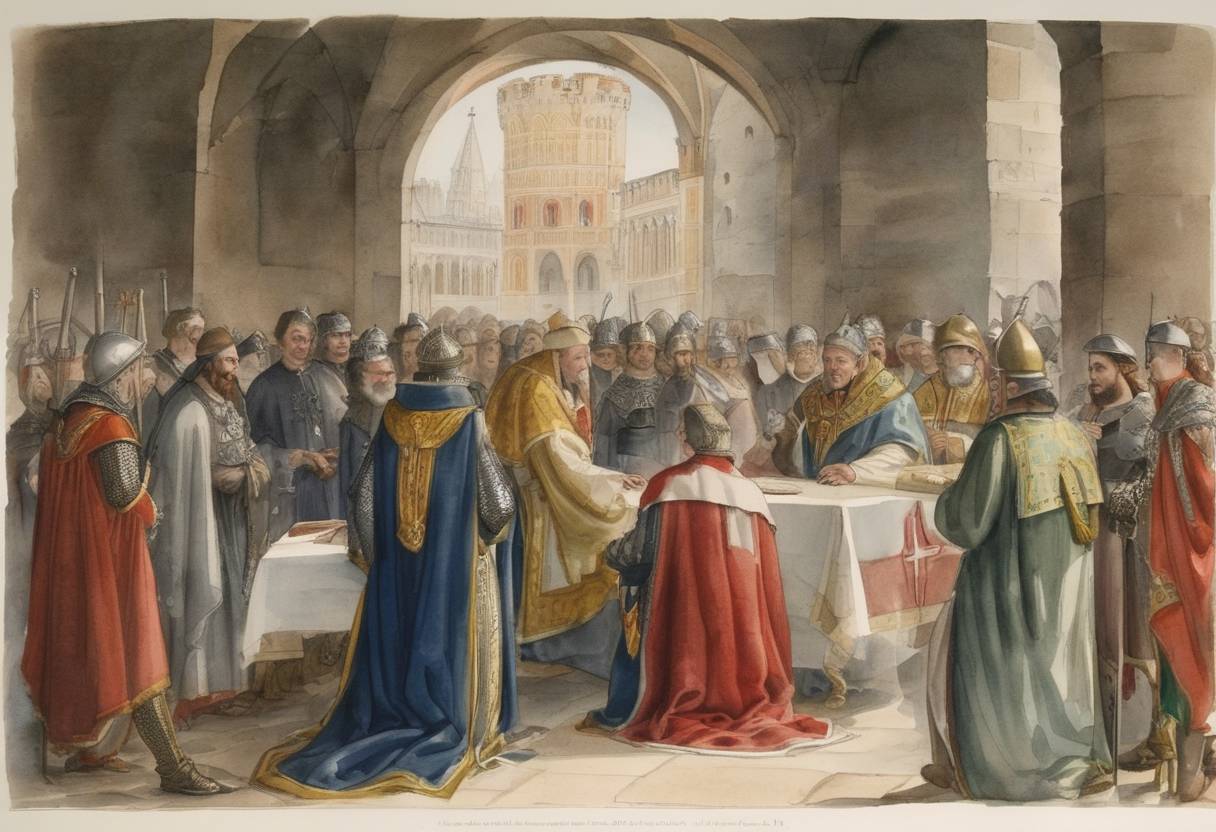
On November 22, 1307, Pope Clement V issued the papal bull Pastoralis Praeeminentiae, a critical document in medieval European history. This bull instructed monarchs across Europe to arrest the members of the Knights Templar and to seize their assets, marking a pivotal moment in the dismantling of this once-powerful military and religious order.
The Knights Templar was established around 1119, originally created to protect Christian pilgrims traveling to the Holy Land following the First Crusade. Over the subsequent centuries, the order grew in military and economic power, acquiring significant assets and establishing a vast financial network across Europe.
However, by the early 14th century, the order’s increased wealth and influence attracted envy and suspicion. King Philip IV of France, heavily indebted to the Templars, intensified pressures to dissolve the order, partly driven by financial motives and partly due to ongoing conspiracies regarding the Templars’ practices and beliefs.
In October 1307, under the influence of King Philip IV, French authorities began arresting members of the Templar order. The arrests were based on accusations of heretical and blasphemous activities. Despite questionable evidence, these actions marked the beginning of the end for the order.
Recognizing the gravity and potential for widespread disturbance across Christendom, Pope Clement V sought to assert papal authority over the issue. His bull, Pastoralis Praeeminentiae, was a directive to all Christian rulers to engage in similar arrests and confiscations, leveraging the Pope’s role as a unifying ecclesiastical leader to ensure a coherent approach across Europe.
The issuance of the papal bull effectively legitimized the actions taken by King Philip IV and extended them beyond France, leading to widespread persecution and eventual trials of the Templars throughout Europe. Many members were tortured, coerced into confessions, and some were executed. The order was officially dissolved by Pope Clement V in 1312 at the Council of Vienne.
The fall of the Knights Templar had significant repercussions, affecting the power dynamics within the Catholic Church and wider European political landscapes. The order’s vast wealth was transferred to the Catholic Church and other knightly orders, such as the Hospitallers, further altering economic and social structures.
This event remains one of the most discussed and scrutinized in medieval history, embodying the complex interplay of power, religion, and politics during the era.
Source: en.wikipedia.org