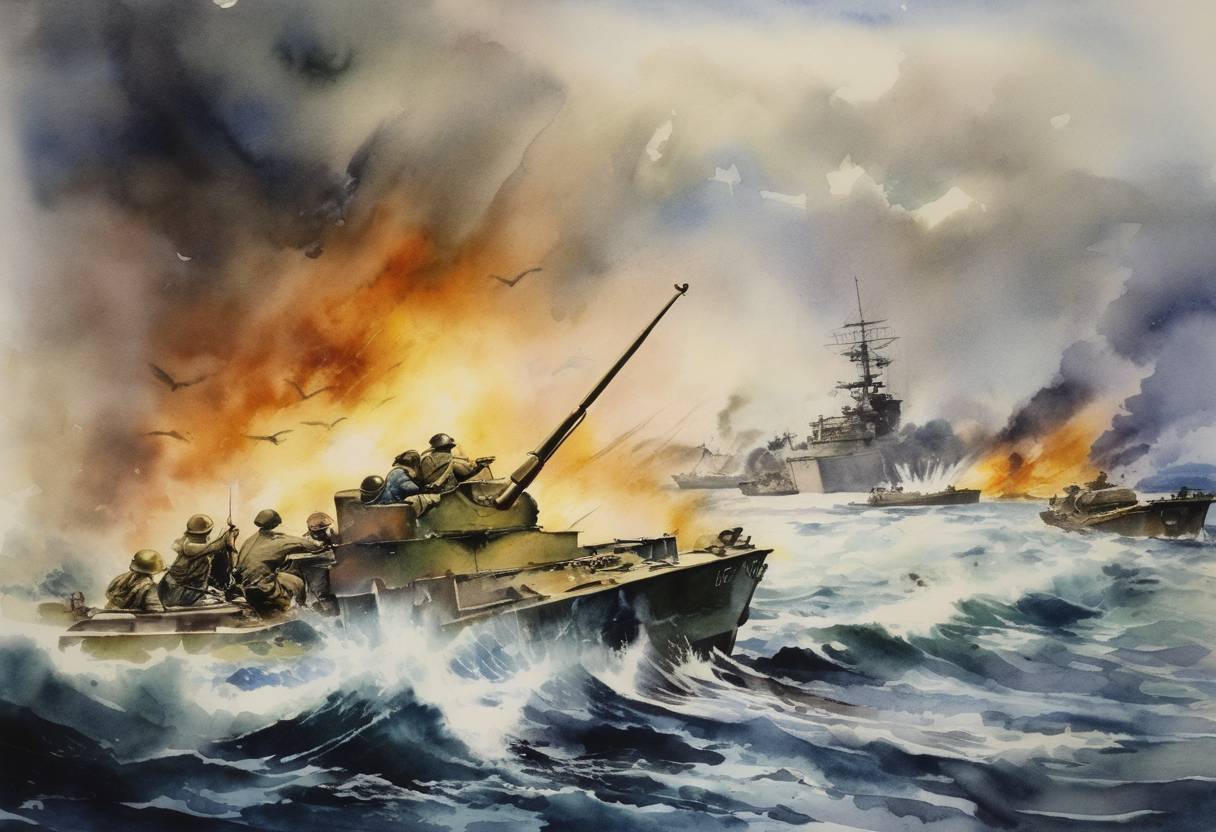
Battle of Iwo Jima - March 6, 1945
On March 6, 1945, the Battle of Iwo Jima entered its 16th day as fierce fighting continued between United States Marine Corps and Imperial Japanese Army forces. This engagement was part of the Pacific Campaign during World War II, characterized by intense combat on the small volcanic island of Iwo Jima, strategically located halfway between the American-held Mariana Islands and the Japanese home islands.
Context and Importance
The Battle of Iwo Jima was launched on February 19, 1945, with the United States aiming to capture the island due to its strategic importance. Iwo Jima offered valuable airfields for emergency landings and as a base for fighter escorts and bomber missions over Japan. The heavily fortified island was defended by around 21,000 Japanese troops under the command of General Tadamichi Kuribayashi.
Operations on March 6, 1945
By March 6, American forces had gained control of the southern part of the island, including Mount Suribachi, but the northern section remained heavily contested. The Japanese defenders, employing elaborate underground defenses and fighting from a series of strongpoints, imposed high casualties on the advancing American forces. On this date, U.S. Marines continued to face fierce resistance as they pushed northward, tackling the complex network of fortified caves and bunkers.
The American strategy involved air and naval bombardments, combined with relentless ground assaults aimed at eradicating Japanese strongholds. Despite being outnumbered and facing inevitable defeat, Japanese soldiers fiercely defended their positions, fighting to the last man rather than surrendering.
Consequences
The battle would not end for another two weeks, finally concluding on March 26, 1945. Iwo Jima became the first American attack on Japanese home territory and resulted in a U.S. victory at a great cost: almost 7,000 American Marines were killed, and over 19,000 wounded. Japanese forces suffered around 20,000 casualties, with very few survivors.
The capture of Iwo Jima provided the United States with crucial airfields that facilitated the bombing campaign against Japan, contributing significantly to the Allied victory in the Pacific. The battle also highlighted the intense resistance the Allies would face in future operations closer to the Japanese mainland, influencing strategic decisions regarding subsequent campaigns, including Okinawa and the eventual use of atomic bombs.
Legacy
The iconic image of U.S. Marines raising the American flag atop Mount Suribachi would become one of the most enduring symbols of American tenacity and sacrifice during World War II. The battle firmly demonstrated the strategic importance and the human cost of the Pacific War as the Allies drew closer to Japan’s home islands.