1715 · Various, Various
A total solar eclipse occurred, known as the 'Eclipse of Thales.' Although not widely documented in that year, eclipses were points of significant interest providing impetus for scientific inquiry.
August 19, 1887
Dmitri Mendeleev made a balloon ascent to an altitude of 11,500 feet (3,500 meters) to observe a solar eclipse.
Moscow, Russia
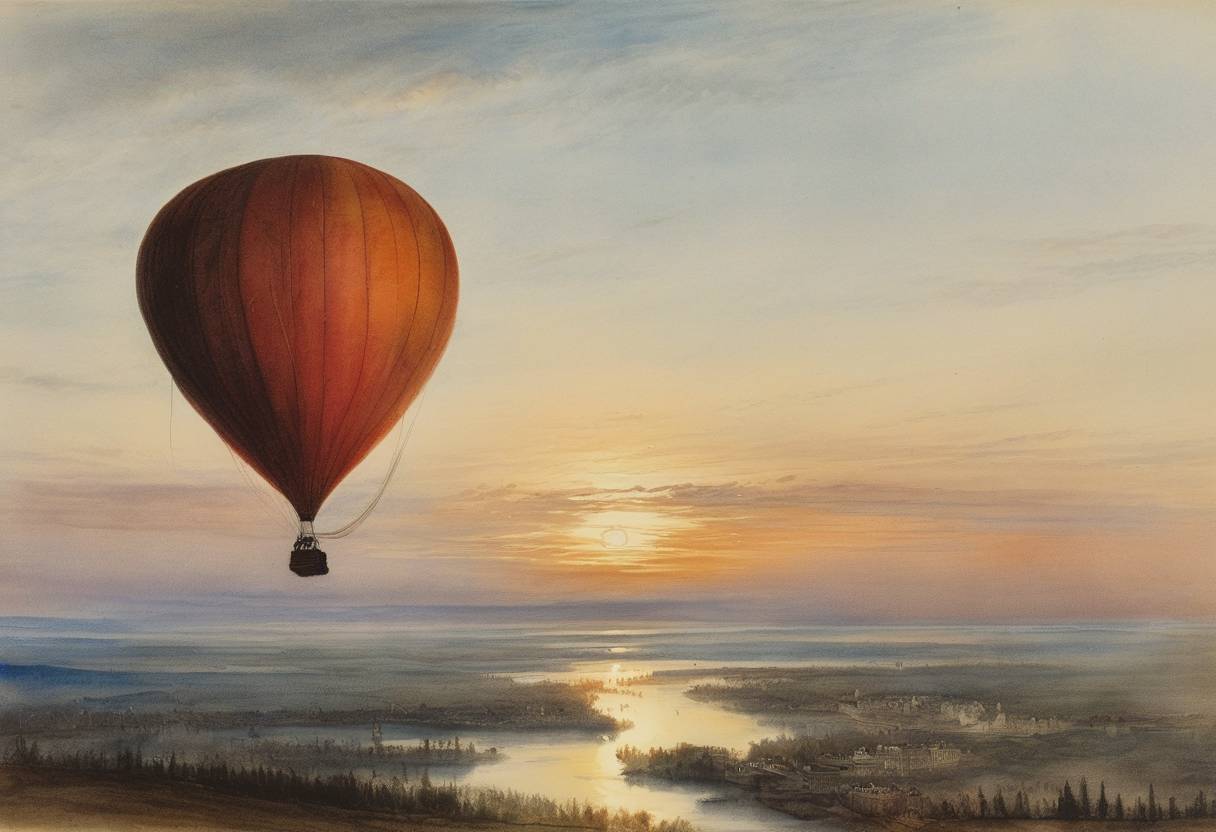
On August 19, 1887, Dmitri Mendeleev, the renowned Russian chemist best known for creating the Periodic Table of Elements, undertook a remarkable scientific endeavor by ascending in a hot air balloon to observe a total solar eclipse. Mendeleev ascended to an altitude of approximately 11,500 feet (3,500 meters) to conduct this observation.
During the late 19th century, ballooning was a cutting-edge method for obtaining unique vantage points necessary for astronomical observations. Mendeleev, already a prominent figure in the scientific community, sought to leverage this approach to study the solar corona—an opportunity presented by the total solar eclipse visible across parts of Siberia.
Mendeleev meticulously prepared for this voyage, considering both the technical challenges of ballooning and the scientific equipment required for his observations. His scientific curiosity went beyond chemistry, venturing into atmospheric physics and solar phenomena.
On the day of the eclipse, Mendeleev embarked on his ascent from the town of Klin near Moscow. The balloon allowed him to rise above cloud cover that might have otherwise obscured the eclipse from ground observers. At around 11,500 feet, he was positioned to have an unobstructed view of the celestial event.
During the brief, roughly two-minute period of totality, Mendeleev focused on observing the solar corona. This was a key interest of astronomers at the time, as it holds insights into solar phenomena that influence space weather and can impact Earth.
Mendeleev’s successful observation from a balloon marked a notable achievement in the interdisciplinary application of science and technology. His ascent demonstrated the potential of using aerostatic balloons in scientific exploration, laying groundwork for future scientific methods in high-altitude observations.
This event contributed to the body of knowledge regarding solar eclipses and the behaviour of the solar corona. It underscored Mendeleev’s diverse scientific interests beyond his chemical research achievements.
Dmitri Mendeleev’s balloon ascent remains a remarkable footnote in the history of 19th-century science, highlighting the innovative spirit of its era and the burgeoning interest in applying technology to expand human understanding of natural phenomena.
Source: en.wikipedia.org