Adoption of SOS as International Distress Signal
1908 · global, international
SOS distress signal was adopted as the worldwide standard for radio distress calls.
January 7, 1904
The distress signal 'CQD' is established, later replaced by 'SOS'.
, | International Maritime Organization
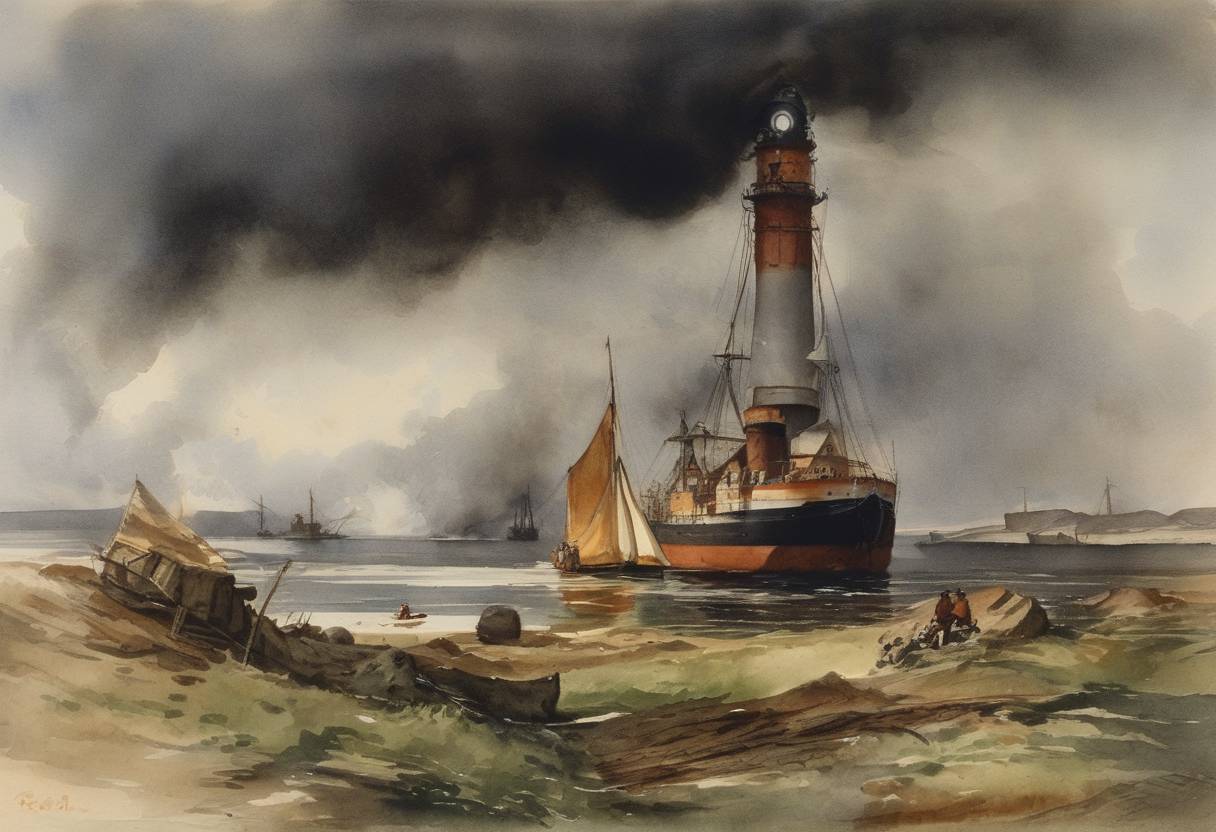
On January 7, 1904, the Marconi International Marine Communication Company established ‘CQD’ as the first internationally recognized distress signal. This development marked a significant advancement in maritime communication and safety.
Before the introduction of ‘CQD’, ships did not have a standard protocol for signaling distress, which often led to confusion and inefficiencies in rescue operations. The adoption of a distress signal aimed to standardize communication procedures, providing a clear and easily recognizable alert in emergencies.
The ‘CQD’ signal derived from the general call ‘CQ’, which means “calling all stations,” with the additional ’D’ indicating “distress.” When transmitted in Morse code as “-.-. –.- -..”, it was promptly adopted for use in international maritime navigation, allowing ships in distress to communicate their need for assistance effectively.
The implementation of ‘CQD’ not only improved maritime safety but also represented a move toward greater international cooperation in the field of radio communication. This standardization was a precursor to further developments in international maritime regulations.
In 1906, just two years after the introduction of ‘CQD,’ the International Radiotelegraphic Convention convened in Berlin, resulting in a decision to replace ‘CQD’ with ‘SOS’ as the universal distress signal. ‘SOS’, represented by the Morse code sequence “… — …”, was chosen for its simple and unmistakable pattern. The transition began in 1908 and was completed by the time of the Titanic disaster in 1912, after which ‘SOS’ became the globally accepted distress signal.
The initial adoption and eventual replacement of ‘CQD’ showcase the evolving nature of maritime communication standards and the continual efforts to enhance the safety and efficiency of sea travel.
Source: en.wikipedia.org