The Mormon Handcart Pioneers Begin Their Journey
1856 · Iowa City, United States
The Mormon handcart pioneers begin their journey from Iowa City to Salt Lake City.
May 30, 1876
In Namibia, under German colonial rule, the Dorsland Trekkers reached the town of Otjitambi in a difficult migration across the arid region. This migration was part of a larger movement of Boer families moving northward from South Africa.
Otjitambi, Namibia | Dorsland Trekkers
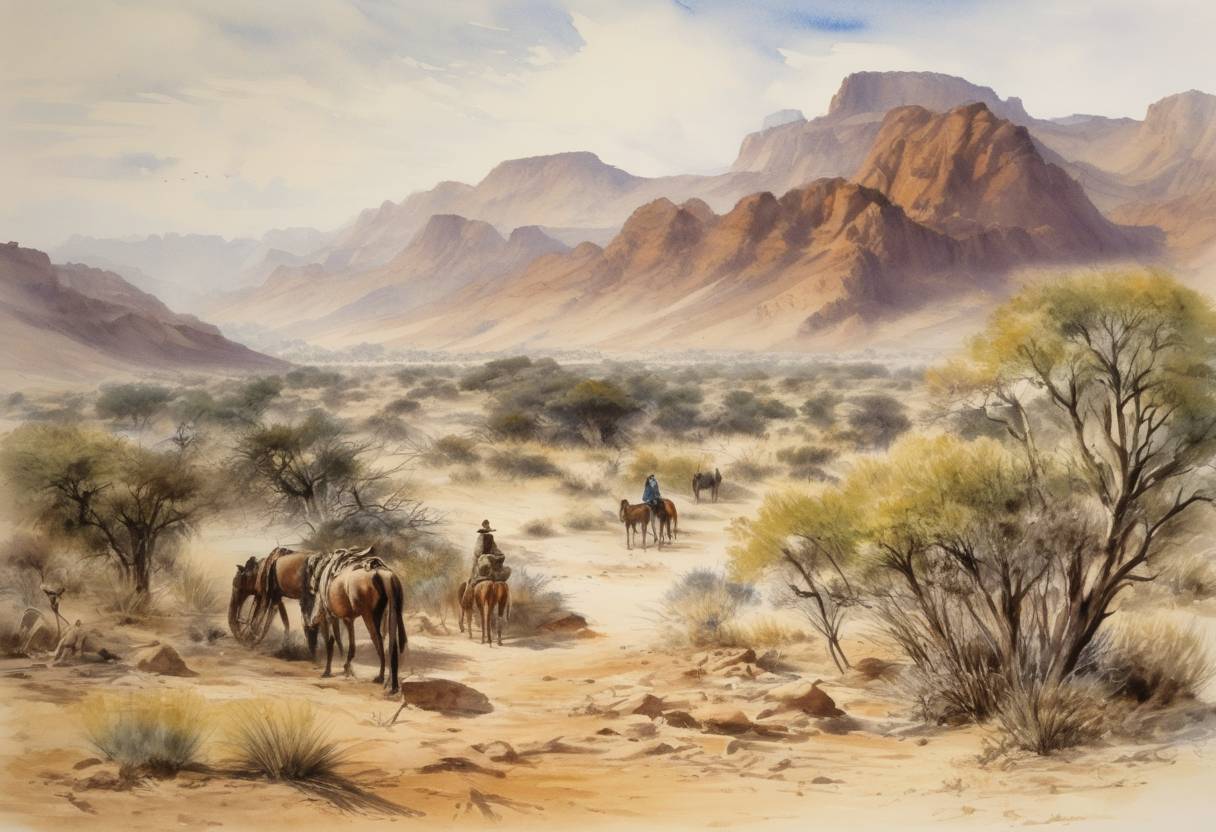
The Dorsland Trek was a series of migrations by groups of Boer families during the late 19th century, primarily motivated by a desire to escape British colonial rule in South Africa. These families were seeking greater autonomy and freedom to practice their cultural and political beliefs. The term “Dorsland” translates to “Thirstland,” alluding to the harsh, dry conditions of the regions these trekkers traversed.
On May 30, 1876, the Dorsland Trekkers reached Otjitambi in present-day Namibia. Their journey had been arduous, characterized by the extreme arid environment and lack of reliable water sources. The travelers faced numerous hardships, including harsh weather, difficult terrain, disease, and occasional conflicts with local indigenous groups.
The trek was emblematic of the Boers’ resilience and determination to forge a new life beyond British oversight. Despite the immense challenges, these motivated groups traveled hundreds of miles, often utilizing ox-drawn wagons, and relied heavily on limited resources and their communal support.
Reaching Otjitambi represented a significant milestone for the trekkers and their quest for independence and self-governance. It was part of a broader movement that would eventually lead some Boer communities to establish settlements in Southern Africa’s more isolated regions.
The Dorsland Trek would also play a role in the socio-political dynamics between European settlers and indigenous peoples, marking a period of increased European expansionism in Southern Africa. Their migration contributed to a lasting legacy of cultural influence and demographic change in the region. This event was part of the larger narrative of colonial exploration and settlement that characterized much of Africa during this period.
Source: www.namibianhistory.com