Bridget Bishop: The First Execution of the Salem Witch Trials
1692 · Salem, United States
Bridget Bishop became the first person executed for witchcraft during the Salem witch trials.
March 1, 1692
Sarah Good, Sarah Osborne, and Tituba were accused of witchcraft during the Salem witch trials.
Salem, American Colonies | Salem Town
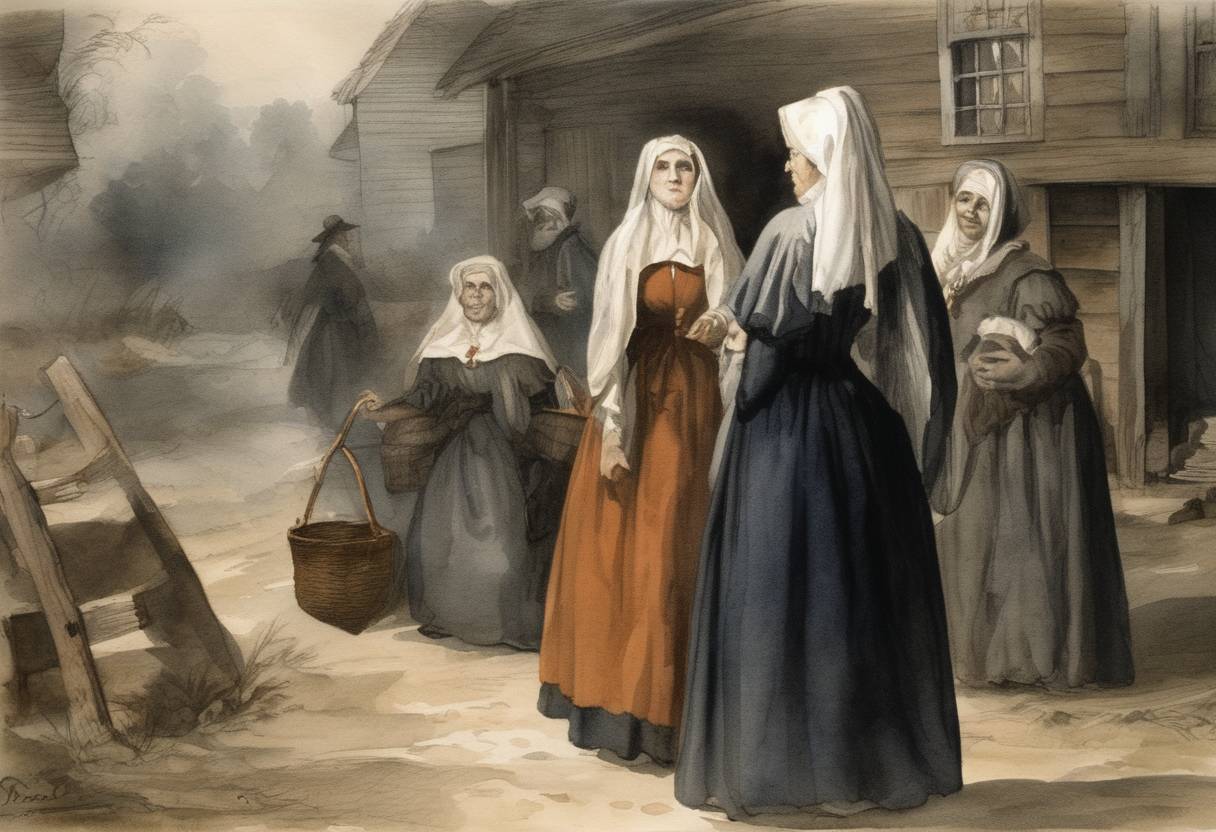
On March 1, 1692, a pivotal event in the infamous Salem witch trials unfolded as Sarah Good, Sarah Osborne, and Tituba were formally accused and examined for witchcraft in the small Puritan community of Salem Village, Massachusetts. This event marked the beginning of a series of accusations and trials that would lead to widespread hysteria and tragic outcomes.
The Salem witch trials occurred within a framework of religious fervor and social tension in Colonial New England. In the late 17th century, Salem Village was already embroiled in disputes over land, religious disagreements, and strained personal relationships. The Puritan belief system, which underscored the community, emphasized a strict moral code, and an absolute conviction in the existence of the devil and his agents on Earth.
Sarah Good: A destitute woman known for her aggressive demeanor, Sarah Good was an easy target for accusations. Her family’s reliance on charity and her tendency to respond abrasively to those who refused her requests for aid contributed to her being perceived as an outsider and a social misfit.
Sarah Osborne: Unlike Good, Osborne was part of the village’s socio-economic fabric but had become estranged from the community since her remarriage brought her into a dispute over her late husband’s estate. Her infrequent attendance at church services further isolated her.
Tituba: A slave of Reverend Samuel Parris, Tituba’s role was critical in the Salem events. Of Arawak or Afro-Caribbean descent, her practices and folklore stories were perceived as foreign and suspicious by the Puritans. Under duress, she provided a vivid confession of witchcraft that reinforced existing fears and suspicions.
The examinations took place before the local magistrates John Hathorne and Jonathan Corwin. The setting was tense as the girls who initially displayed symptoms attributed to witchcraft were present. The confessions and accusations that emerged during this examination set a precedent for subsequent witch trials.
Tituba’s Confession: Perhaps in an effort to protect herself, Tituba confessed to practicing witchcraft, stating that there were other witches cavorting throughout Salem. Her elaborate account included descriptions of the devil and witches’ meetings, vividly feeding the paranoia that had taken root in the village.
Responses of Good and Osborne: Both Sarah Good and Sarah Osborne denied the allegations against them. However, the community was already deeply influenced by fear and the credibility given to the afflicted girls’ outcries, which made their denials insufficient to stem the tide of belief in their guilt.
The accusations on March 1, 1692, set off a chain reaction throughout Salem and the surrounding areas, leading to the arrest of dozens and the execution of 20 people, most of whom were women. The trials became a dark chapter in American history, reflecting the dangers of mass hysteria, religious extremism, and the breakdown of due process. These events continue to serve as a cautionary tale about the perils of extremism and the societal consequences of injustice.
Source: www.salem.org