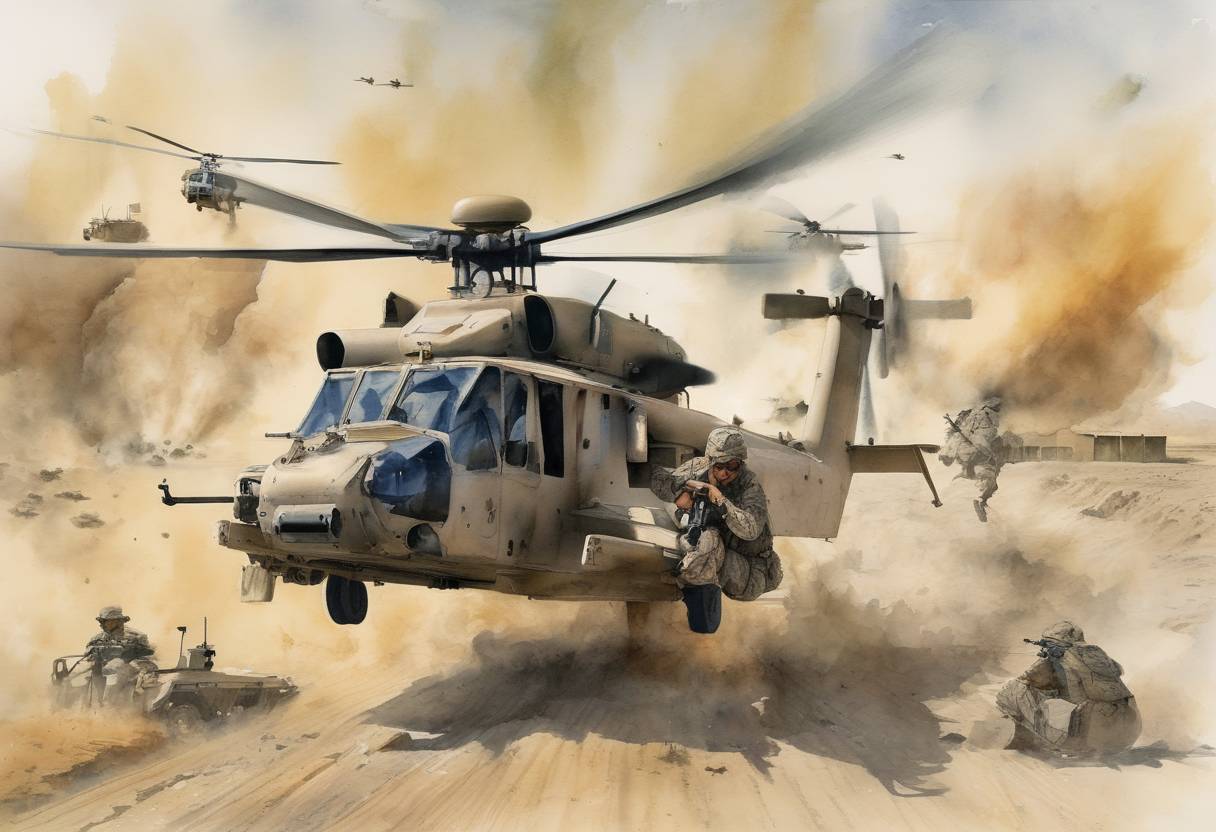
Operation Cobra’s Anger: November 10, 2009
On November 10, 2009, the United States Marine Corps launched Operation Cobra’s Anger in the Helmand Province of Afghanistan. This military operation was a significant effort aimed at disrupting Taliban supply lines and communications within the region, which had been a stronghold for insurgent activities.
Context and Background
- Helmand Province: Known for its strategic importance, Helmand Province had been a focal point of Taliban operations. The region’s terrain and the presence of opium poppy fields made it a challenging area for coalition forces.
- Taliban Influence: By 2009, the Taliban had established strong control over several districts in Helmand, using the area to facilitate logistics and communications for their operations across Afghanistan.
Objectives of Operation Cobra’s Anger
- Disruption of Supply Lines: The primary goal was to sever the Taliban’s supply routes, which were crucial for their operational capabilities.
- Communication Interference: By targeting communication networks, the operation aimed to hinder the Taliban’s ability to coordinate attacks and movements.
- Establishing Security: Another objective was to establish a more secure environment for local populations, thereby enabling reconstruction and governance efforts.
Key Events
- Deployment: The operation involved a significant deployment of U.S. Marines, along with Afghan National Army forces. It was characterized by air assaults and ground operations.
- Tactical Approach: The Marines employed a combination of direct assaults and strategic blockades to cut off key routes and isolate Taliban fighters.
- Engagements: The operation saw several engagements with Taliban forces, who were entrenched in the region. The use of precision airstrikes and artillery was pivotal in overcoming resistance.
Aftermath and Consequences
- Impact on Taliban Operations: Operation Cobra’s Anger successfully disrupted Taliban logistics and communications, albeit temporarily. It forced the insurgents to adapt their strategies and seek alternative routes.
- Security Improvements: The operation contributed to short-term security improvements in the region, allowing for increased coalition presence and efforts to stabilize the area.
- Long-term Challenges: Despite the immediate successes, the operation highlighted the ongoing challenges of counterinsurgency in Afghanistan, including the need for sustained efforts to maintain security and support local governance.
Broader Significance
Operation Cobra’s Anger was part of a larger strategy by coalition forces to weaken the Taliban’s influence in southern Afghanistan. It underscored the complexities of military operations in the region and the importance of integrating military actions with broader political and developmental strategies to achieve lasting peace and stability.
This operation exemplifies the tactical and strategic efforts undertaken by the U.S. and its allies during the Afghanistan conflict, reflecting the ongoing challenges of counterinsurgency warfare.