The Beginning of the Franco-Dutch War: April 29, 1672
1672 · Netherlands, Netherlands
King Louis XIV of France invades the Netherlands, marking the beginning of the Franco-Dutch War.
October 17, 1660
The Nine Years' War began with France declaring war on Spain, marking the start of a series of conflicts involving major European powers.
, France | France
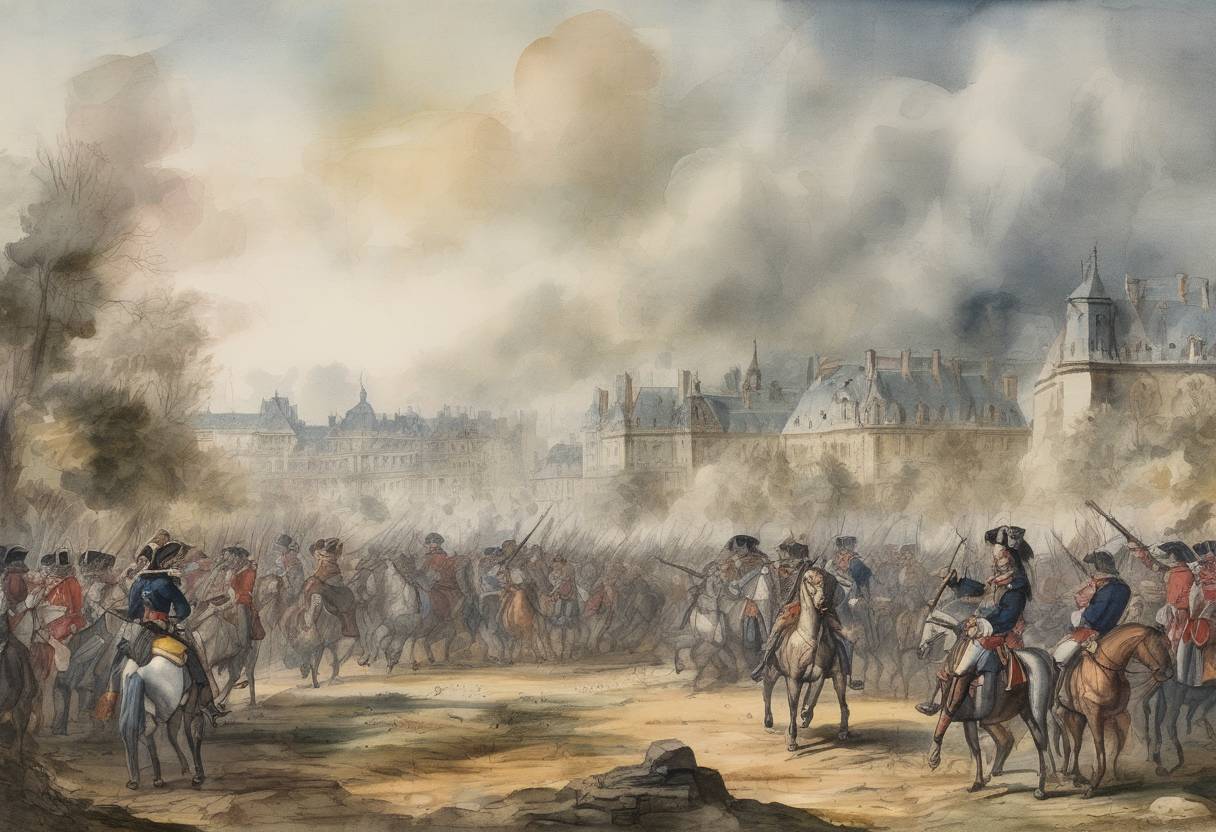
The Nine Years’ War, also known as the War of the Grand Alliance or the War of the League of Augsburg, was a major conflict that took place from 1688 to 1697. It involved many of the great European powers of the time, including France, Spain, England, the Holy Roman Empire, and the Dutch Republic, among others. However, the date you mentioned, October 17, 1660, does not correspond to the beginning of the Nine Years’ War. Instead, the war began in 1688.
The Nine Years’ War was primarily a struggle for power and territorial control in Europe. It was largely driven by the ambitions of Louis XIV of France, who sought to expand French influence and territory. The war was also a response to the formation of the League of Augsburg, an alliance of European powers formed to counterbalance France’s growing dominance.
Expansionist Policies of Louis XIV: Throughout the 1670s and 1680s, Louis XIV pursued aggressive expansionist policies, annexing territories in the Spanish Netherlands and the Rhineland.
Formation of the League of Augsburg (1686): In response to French aggression, several European powers, including the Holy Roman Empire, Spain, Sweden, and several German states, formed the League of Augsburg to resist French expansion.
The Glorious Revolution (1688): The overthrow of King James II of England and the ascension of William III and Mary II to the English throne shifted the balance of power. William III, a staunch opponent of Louis XIV, brought England into the conflict against France.
The Nine Years’ War officially began in 1688 when Louis XIV launched an invasion of the Rhineland, prompting the League of Augsburg to declare war on France. The conflict quickly spread across Europe and even extended to colonial territories in North America, where it was known as King William’s War.
The war concluded with the Treaty of Ryswick in 1697, which restored many of the territorial boundaries to their pre-war status. The treaty marked a temporary halt to French expansion but set the stage for future conflicts, including the War of Spanish Succession.
The Nine Years’ War was significant in shaping the balance of power in Europe. It demonstrated the limits of French expansion under Louis XIV and highlighted the effectiveness of coalitions in countering dominant powers. The war also had lasting impacts on military tactics and the development of professional standing armies.
In summary, while the Nine Years’ War was a pivotal conflict in European history, it did not begin on October 17, 1660. Instead, it started in 1688 and involved a complex web of alliances and rivalries that shaped the continent’s political landscape for years to come.
Source: en.wikipedia.org