The Battle of Okinawa: Conclusion and Significance
Overview
The Battle of Okinawa, which concluded on June 22, 1945, was one of the most intense and bloodiest battles of the Pacific War during World War II. It marked a significant Allied victory against Japan and was pivotal in the final stages of the war.
Context and Prelude
- Location: Okinawa, the largest of the Ryukyu Islands, was strategically important due to its proximity to Japan, serving as a potential staging ground for an invasion of the Japanese mainland.
- Forces Involved: The battle involved a massive Allied force, primarily composed of United States Army and Marine Corps units, against a well-entrenched Japanese defense.
- Japanese Strategy: The Japanese defenders, numbering around 100,000 troops, were commanded by Lieutenant General Mitsuru Ushijima. They employed a strategy of deeply fortified positions and kamikaze attacks to inflict maximum casualties on the advancing Allied forces.
Key Events
- Commencement: The battle began on April 1, 1945, with the largest amphibious assault in the Pacific Theater. The initial landings were relatively unopposed, but fierce resistance soon followed.
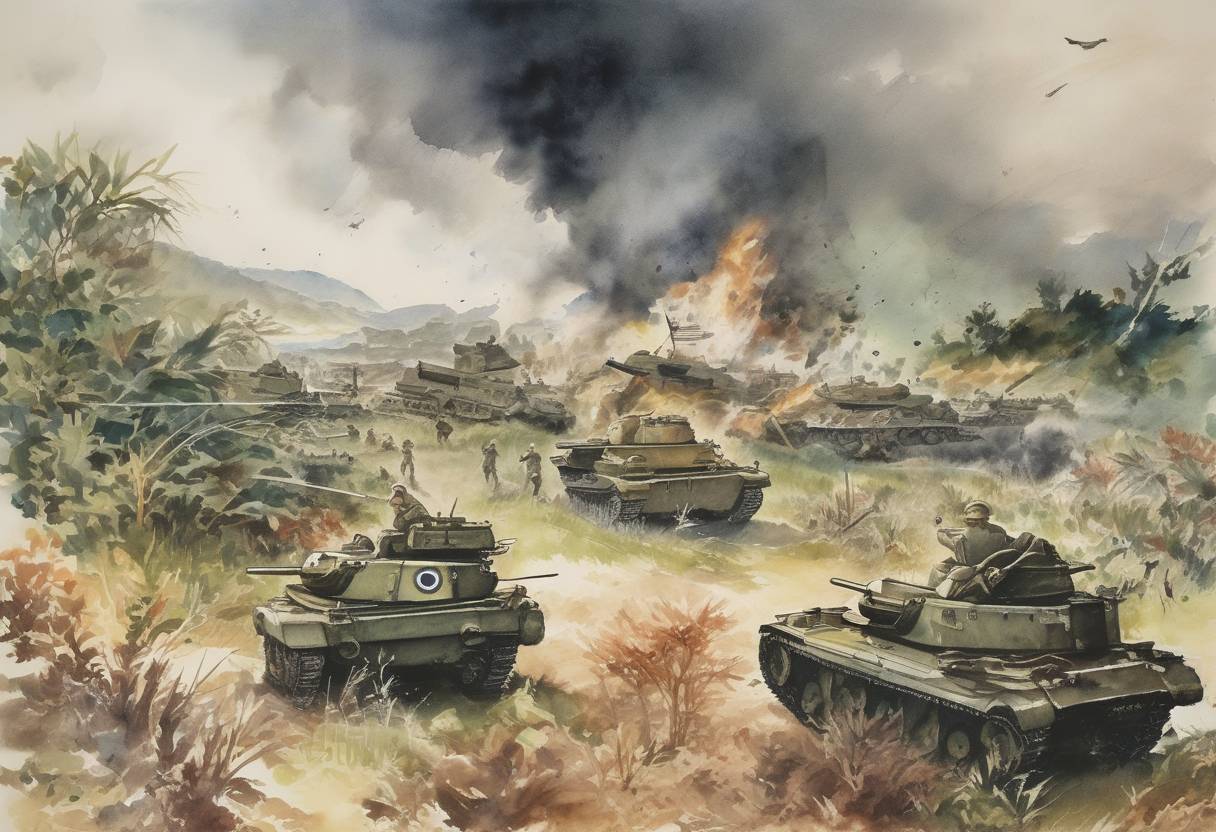
- Intense Combat: The battle was characterized by brutal ground combat, with significant casualties on both sides. The terrain of Okinawa, with its ridges and caves, favored the defenders and made the advance costly.
- Kamikaze Attacks: The Japanese launched numerous kamikaze attacks against the Allied naval forces, causing significant damage and loss of life.
Conclusion and Aftermath
- End of Battle: By June 22, 1945, organized Japanese resistance had effectively ended with the death of General Ushijima and his chief of staff, who committed ritual suicide.
- Casualties: The battle resulted in approximately 12,000 American deaths and over 36,000 wounded. Japanese military casualties were estimated at over 77,000, with tens of thousands of civilian deaths.
- Strategic Impact: The capture of Okinawa provided the Allies with a critical base for air operations and a staging area for a potential invasion of Japan. However, the high cost in human life influenced the decision to use atomic bombs in an effort to bring a swift end to the war.
Historical Significance
The Battle of Okinawa highlighted the ferocity of the Pacific War and the determination of Japanese forces to defend their homeland. It underscored the potential human cost of a mainland invasion, contributing to the decision to deploy atomic weapons against Hiroshima and Nagasaki in August 1945. The battle remains a poignant reminder of the war’s devastating impact on both military personnel and civilians.