Margaret Thatcher Addresses U.S. Congress on February 7, 1990
1990 · Washington D.C., United States
Margaret Thatcher became the first British Prime Minister in 160 years to be permitted to address a Joint Meeting of the U.S. Congress.
December 5, 1933
The 21st Amendment to the United States Constitution was ratified, repealing the 18th Amendment and effectively ending Prohibition in the United States.
Washington D.C., United States | U.S. Congress
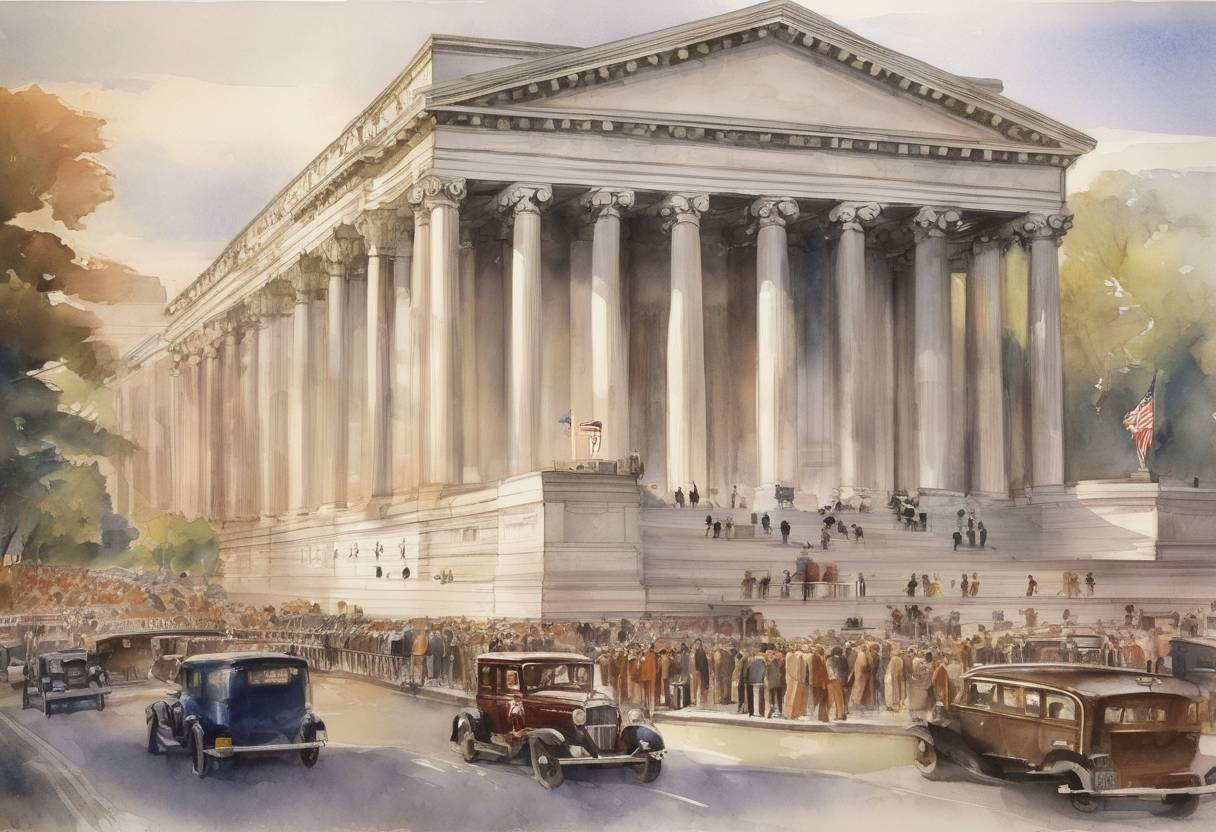
On December 5, 1933, the United States ratified the 21st Amendment to the Constitution, marking the end of Prohibition. This significant event repealed the 18th Amendment, which had been in effect since January 17, 1920, and had prohibited the manufacture, sale, and transportation of alcoholic beverages.
18th Amendment and Prohibition: The 18th Amendment, ratified in 1919, was the result of a long-standing temperance movement that aimed to curb alcohol consumption in the United States. The Volstead Act, passed later in 1919, provided for the enforcement of Prohibition.
Impact of Prohibition: While intended to reduce crime and improve health and morals, Prohibition led to unintended consequences. It gave rise to illegal speakeasies, bootlegging, and a significant increase in organized crime. Enforcement proved difficult and costly, and public opinion began to shift against the ban.
Economic Factors: The onset of the Great Depression in 1929 further fueled the push for repeal. Legalizing alcohol was seen as a way to create jobs and generate tax revenue for the struggling economy.
Political Movement: The Democratic Party, led by Franklin D. Roosevelt, included the repeal of Prohibition in its platform during the 1932 presidential election. Roosevelt’s victory signaled a mandate for change.
21st Amendment Proposal: Congress proposed the 21st Amendment on February 20, 1933. It was unique in that it was the first and only amendment to be ratified through state conventions rather than state legislatures, a method chosen to expedite the process.
Ratification Process: The amendment required the approval of 36 states to be ratified. Utah became the 36th state to ratify the amendment on December 5, 1933, officially ending Prohibition.
Consequences: The repeal of Prohibition led to the re-establishment of the alcohol industry, which provided much-needed jobs and tax revenue. It also marked a shift in public policy, acknowledging the limitations of legislating morality.
Legacy: The 21st Amendment remains a pivotal moment in U.S. history, illustrating the dynamic nature of the Constitution and the ability of the American political system to adapt to changing societal values.
The end of Prohibition is often celebrated as a triumph of pragmatism over idealism, highlighting the complexities of social reform and the importance of aligning laws with public sentiment.
Source: www.archives.gov