Apollo 15 and the First Lunar Rover Ride
1971 · Moon, Space
Apollo 15 astronauts David Scott and James Irwin become the first to ride in a lunar rover on the Moon.
August 23, 1966
The Lunar Orbiter 1 took the first photograph of Earth from the Moon.
Moon, Space | NASA
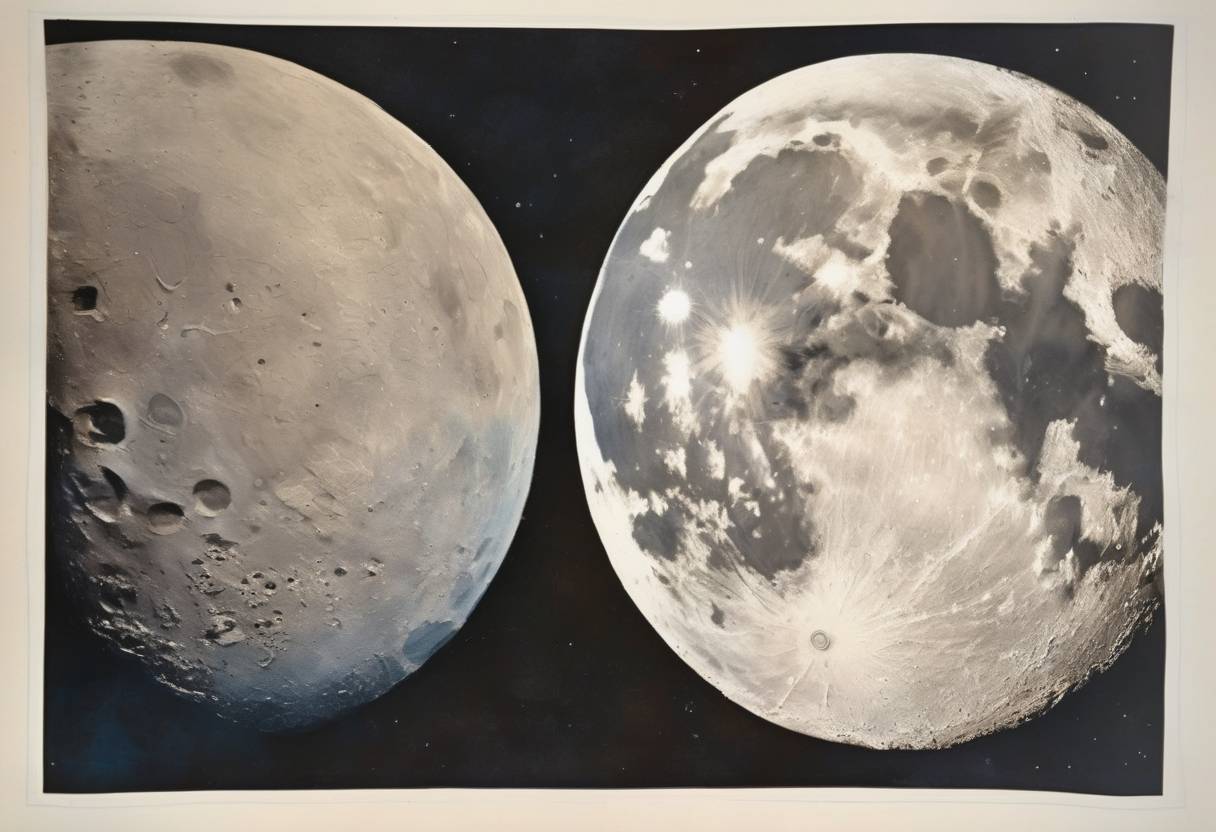
On August 23, 1966, a significant milestone in space exploration was achieved when the Lunar Orbiter 1 spacecraft captured the first photograph of Earth from the Moon. This event marked a pivotal moment in the history of space exploration and provided humanity with a new perspective on our planet.
The Lunar Orbiter program was initiated by NASA in the 1960s with the primary goal of mapping the Moon’s surface to identify potential landing sites for the Apollo missions. Lunar Orbiter 1 was the first of five spacecraft in this series, launched on August 10, 1966, from Cape Kennedy (now Cape Canaveral) aboard an Atlas-Agena rocket.
On August 23, 1966, while orbiting the Moon, Lunar Orbiter 1 took a photograph that would become iconic. The image was captured from a distance of approximately 236,000 miles (380,000 kilometers) from Earth. This photograph was the first to show Earth rising above the Moon’s horizon, a view that had never been seen before by human eyes.
The photograph taken by Lunar Orbiter 1 was more than just a technical achievement; it was a profound moment that underscored the fragility and isolation of Earth in the vastness of space. This image helped to foster a sense of global unity and environmental awareness, as it visually emphasized the interconnectedness of all life on our planet.
In conclusion, the first photograph of Earth from the Moon taken by Lunar Orbiter 1 on August 23, 1966, remains a testament to human ingenuity and curiosity. It not only advanced our understanding of space but also deepened our appreciation for the planet we call home.
Source: en.wikipedia.org